
Learning from Apartheid –Secondary Schools (A-Level focus)
Suitable for: KS5 (Year 12–13) but accessible for KS4 students (years 10-11)
Themes: Resistance • Political change • Activism • International pressure • Justice • Democracy
Curriculum Specification Alignment: Edexcel A-Level History, Route F, Option 2F.2 “South Africa 1948-1994”
Film Length: 31-minute film + 12 short clips
Resource: Aside the film, this resource offers study-topic themed clips, student-led questions and discussion prompts
Introduction
This short film features Lord Peter Hain, a former anti-apartheid activist who grew up in South Africa under apartheid and went on to become a leading campaigner for justice, MP and member of Prime Minister Tony Blair’s cabinet.
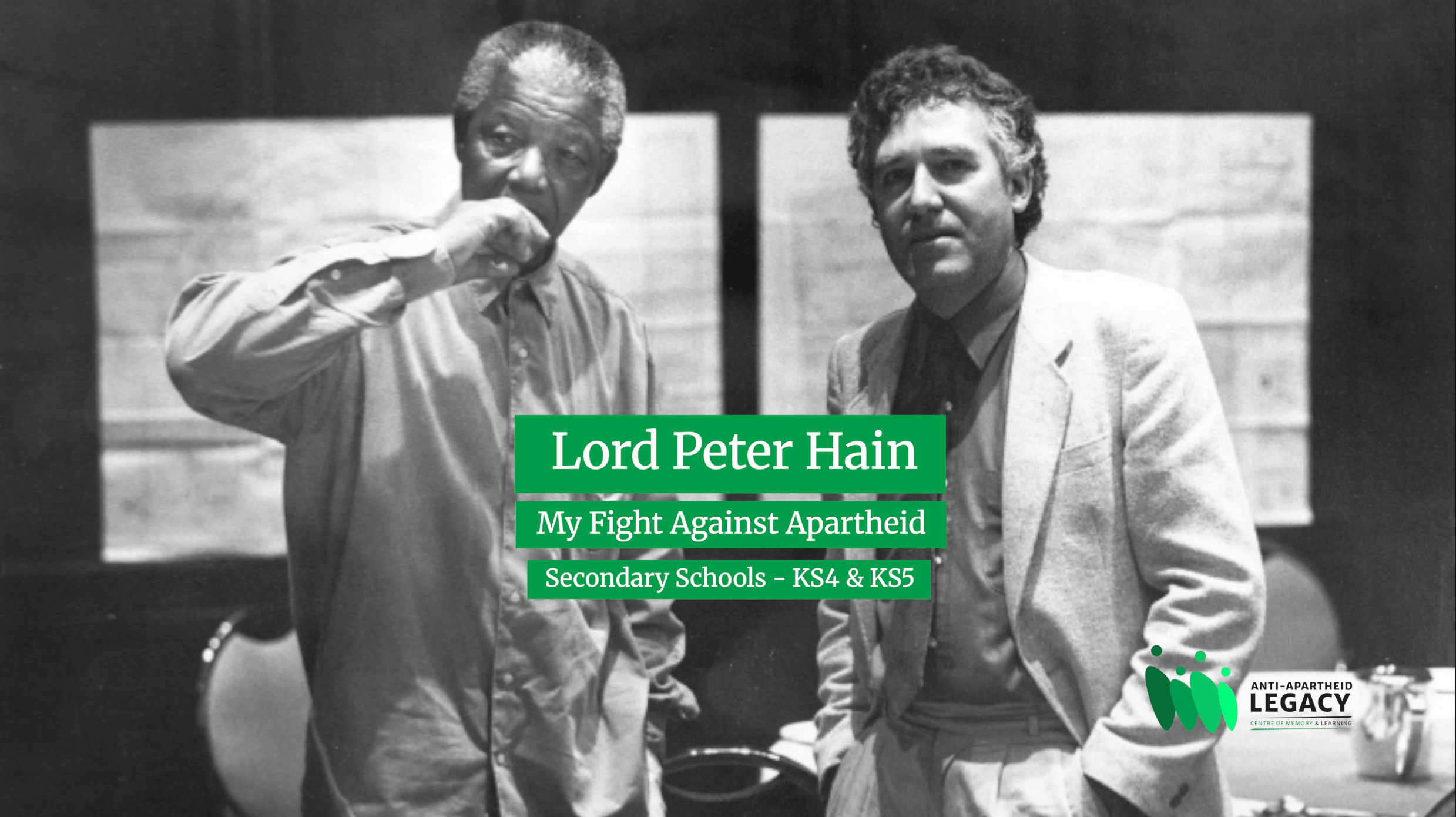
Following banning orders served on his parents by the apartheid government due to their anti-apartheid activism, Peter and his family came to live, as political exiles, in Britain. Teenage Peter soon became involved in anti-apartheid activities, including leading the Stop the Tour campaign, which used non-violent protest to convince the world to isolate South Africa’s racist government.
This short film explores Peter’s perspectives on the structures and policies of apartheid, its effects on the population of South Africa, insights into the anti-apartheid activities of his family and of the many others who stood up to apartheid, and his family’s unique relationship with Nelson Mandela.
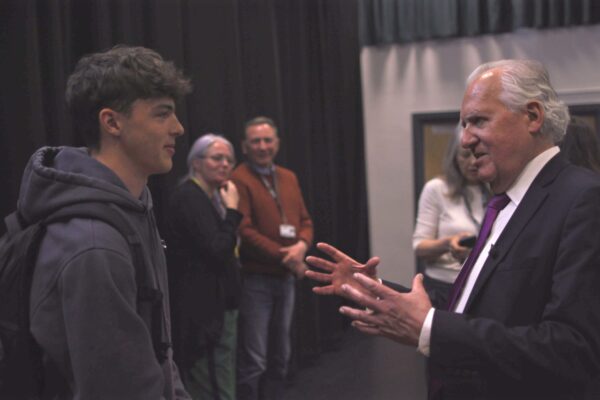
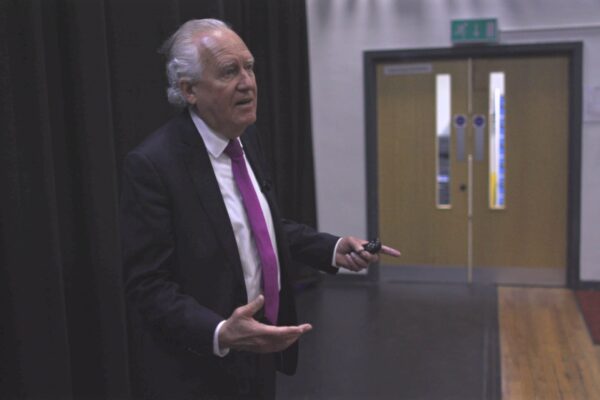
This filmed resource features Lord Peter Hain, anti-apartheid activist, politician and lifelong campaigner for justice, speaking to Year 12 and 13 students at Esher Sixth Form College.
The session includes a full-length talk and a curated student Q&A, in which A-Level students engage directly with Peter’s lived experience through historically grounded questions aligned to Edexcel’s History A-Level Route F specification ‘Searching for rights and freedoms in the twentieth century” – Option 2F.2: South Africa, 1948–94: from apartheid state to ‘rainbow nation’ pathway.
His testimony offers students a unique opportunity to connect historical knowledge with lived experience, deepening their understanding of how and why apartheid was resisted and its legislation ultimately dismantled in South Africa.
Part 1 – Film
Part 2 – Clips and discussion points around key study-topic themes
Part 3 – Student and teacher reflections, contemporary resonances and further guidance

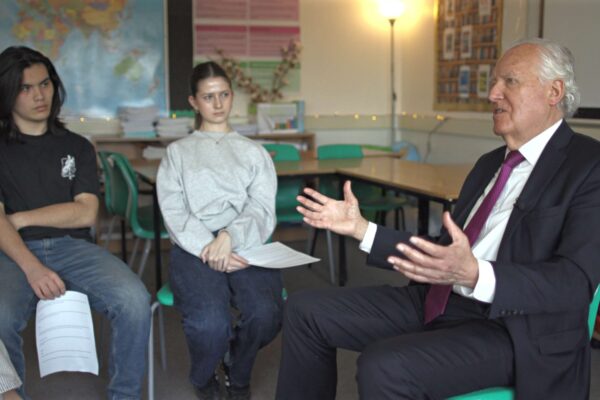
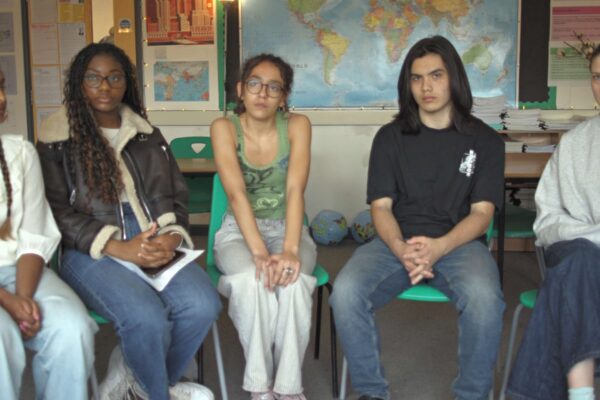
Part 1 – Watch the Film
Lord Peter Hain: My Fight Against Apartheid
Recorded at Esher Sixth Form College, Surrey, 2025
Runtime: c.31 minutes
Recommended use:
- A-Level lesson introduction or consolidation of learning
- Revision support for Edexcel Route F, Rights and Freedoms, particularly Topic 4
- Source evaluation and interpretation
Curriculum Focus:
This resource directly supports the study of:
Route F – Option 2:F2 – Topic 4: The end of apartheid and the creation of the ‘rainbow nation’, 1984–94
With additional context drawn from Topics 1–3, students explore:
- The transition from peaceful protest to armed struggle
- The impact of international pressure, including economic sanctions and sporting and cultural boycotts
- The significance of Nelson Mandela’s release (1990)
- The challenges of negotiation, compromise and political violence (1990–94)
- The transition to democracy and the creation of a non-racial constitution
Students are also encouraged to make connections across the course, including:
- The evolution of resistance strategies over time
- The role of global solidarity in ending apartheid
- The complexity of political opposition within South Africa
Filming and video production by Immanent Productions. This project was supported by The National Lottery Heritage Fund and Tony Tabatznik.
Part 2 – Clip Library – Exploring Key Themes
These clips are drawn from a small group student Q&A session that took place after Lord Hain’s main talk. They are designed to support deeper understanding of key areas of the Edexcel A-Level specification, Option 2:F2 “South Africa 1948-1994”, particularly Topic 4.
Each clip is built around student questions and Lord Peter Hain’s responses, offering insight into how historical developments were experienced and understood at the time.
Theme 1 – Moblisation and Armed Resistance
From peaceful protest to armed resistance: why the shift?
Student question:
Why did the ANC and PAC move from non-violent protest to armed struggle?
In this clip:
Peter explains that peaceful resistance had been systematically suppressed — most notably after the Sharpeville Massacre (1960), where unarmed protesters were killed. With political organisations banned and protest criminalised, activists felt they had no alternative but to adopt armed resistance, comparable to underground resistance movements in wartime Europe.
Theme 2 – Black Consciousness and Internal Resistance
Why did Steve Biko and Black Consciousness resonate in 1970s South Africa?
Student question:
What impact did Steve Biko and Black Consciousness have?
In this clip:
Peter highlights how Black Consciousness restored confidence, pride and political agency among Black South Africans at a time when resistance had been crushed. Biko’s message — that “it is beautiful to be black” — helped mobilise a new generation, especially young people, and fed into the Soweto Uprising (1976), reigniting internal resistance.
Reflection on calls to exclude white people from the struggle
Student question:
Should white people have been excluded from anti-apartheid resistance?
In this clip:
Peter argues that the success of the movement lay in its non-racial character. While some groups advocated exclusion, the broader movement included people of different racial backgrounds, which helped build wider support and legitimacy both inside and outside South Africa.
Theme 3 – International Pressure and Global Opinion
Sporting and Cultural Boycotts
Student question:
How did boycotts affect white South African attitudes?
In this clip:
Peter explains that sport was central to white South African identity. Being excluded from international sport delivered a major psychological blow, challenging the normalisation of apartheid and helping to shift opinion. Boycotts also acted as a gateway to wider economic pressure, strengthening the global anti-apartheid movement.
Global opinion in regard to Mandela and apartheid resistance
Student question:
When and why did global attitudes towards Mandela change?
In this clip:
Peter reflects on how Mandela was widely labelled a “terrorist” into the late 1980s, before becoming a global symbol of justice. Key turning points included the Free Nelson Mandela campaign, the 1988 Wembley concert, and crucially the end of the Cold War, which allowed the struggle to be seen outside a “Communist vs West” lens.
Theme 4 – The End of Apartheid (1984-1994)
1990 and Mandela’s release from prison
Student question:
Was Mandela’s release a moment of hope or uncertainty?
In this clip:
Peter describes a deeply emotional but uncertain moment. While Mandela’s release symbolised change, it followed years where apartheid had seemed “unstoppable”. The moment reflected both triumph and unpredictability, as South Africa entered a volatile transition period.
1993 Nobel Peace Prize
Student question:
Did de Klerk deserve to share the Nobel Peace Prize?
In this clip:
Peter offers a nuanced view: at the time, de Klerk’s role in initiating negotiations made the award justifiable. However, he also raises serious questions in retrospect, particularly around continued violence and the actions of state security forces during the transition.
Truth and Reconciliation Commission
Student question:
Was the TRC the right approach to justice after apartheid, did it deliver?
In this clip:
Peter explains that the TRC provided some truth and accountability, particularly for families seeking answers. However, many victims of apartheid and wider society felt it did not deliver full justice. He frames it as a necessary compromise to enable a peaceful transition, avoiding wider violence.
The Rainbow Nation
Student question:
To what extent has South Africa achieved Mandela’s vision of a Rainbow Nation?
In this clip:
Peter reflects that while South Africa has achieved major political transformation — including a strong constitution — deep social and economic inequalities remain. He highlights the enduring legacies of apartheid and the long-term nature of structural change.
Part 3 – Student Reflections, Contemporary Relevance and Lived Experience
This final section moves beyond the specification to explore how students responded to the session, and how the history of apartheid connects to the present.
A key feature of this resource is the opportunity to hear directly from someone who lived through and participated in the anti-apartheid struggle. As Helen Sweeney, Head of History at Esher Sixth Form College, noted, this brings a unique depth to students’ understanding — offering perspectives that go beyond textbooks and exam content.
Apartheid injustice and today’s society
Peter reflects on the idea that the struggle for justice, equality and human rights is ongoing. While apartheid as a legal system has ended, its legacy continues in South Africa and beyond. He emphasises that progress does not mean the struggle is over — rather, each generation must continue to challenge injustice in new forms.
How can South Africa’s struggle inspire young people today?
In this clip:
Peter encourages students to see activism as something within their reach. Drawing on his own experience, he highlights the importance of collective action, courage and persistence, while also acknowledging that the protest landscape, particularly its policing in Britain, has changed. He points to contemporary issues — including climate change — as areas where young people can make a difference.
Responses to Lord Hain’s talk
In this clip:
Students and their teacher reflect on the impact of hearing Peter’s story first-hand:
- “You can only gain so much from reading — hearing someone who lived it makes it real.”
- “The personal experiences really put things into perspective.”
- “It’s inspiring… if he can do it, then other people can too.”
Students also draw connections between apartheid and contemporary issues, recognising that:
- injustice is not confined to the past
- collective action can create change
- and individual choices — even small ones — can contribute to wider movements
As one student noted, the talk helped them see apartheid not as a distant, isolated history, but as part of broader patterns of inequality and resistance that continue today.
Why this matters…
This resource offers:
- A chance to engage with lived experience alongside historical knowledge
- Insight into how individuals understood and shaped events at the time
- Space for students to reflect on the relevance of history to their own lives
By combining curriculum content with personal testimony, it supports engagement with exam board selected topics, but also provokes a deeper understanding of justice, activism and social change.
Learning Objectives
By using this resource, we h0pe students will:
-
- Understand more about the changing nature of resistance to apartheid
- Analyse some of the factors contributing to the end of apartheid
- Evaluate the role of certain individuals, movements and international pressure
- Develop critical perspectives on historical interpretation
- Reflect on the relevance of apartheid history today
Whole Class or Group Discussion Questions
- Why do people sometimes accept unfair systems?
- What gives people the courage to stand up against injustice?
- How can young people today make a difference?
- Why is it important to learn from difficult parts of history?
- What values are important in a fair and equal society?
Independent Study Suggestions
- Essay planning and revision for Topic 4
- Source evaluation and contextualisation
- Structured debate and discussion points
- Independent study and peer-led learning
Safeguarding Note
This resource covers themes of racism and injustice, which may connect to pupils’ own lived experiences. We recommend:
- Creating a safe and respectful learning space
- Offering opt-out options for sensitive discussion
- Encouraging empathy and active listening
- Using inclusive language at all times
Credits
Filmed on location at Esher Sixth Form College (2025)
Featuring The Rt Hon Lord Peter Hain and Year 12–13 students from Esher Sixth Form College and Head of History, Ms Helen Sweeney.
Resource produced by The Anti-Apartheid Legacy Centre
🎬 Filming and video production by Immanent Productions
Supported by The National Lottery Heritage Fund and Tony Tabatznik.
Get Involved
If your school would like to host a similar lived experience talk or a related workshop, please get in touch: info@antiapartheidlegacy.org.uk