

A blog by Olivia Reed
Being given the opportunity to work alongside the Anti-Apartheid Legacy Centre (AALC) for my University of York MA placement introduced me to the exhibition ‘All Shall Be Afforded Dignity!’ (ABSAD!) and the brilliant works of Norman Kaplan. As a Museum Studies student with a particular interest in curation, this opportunity created a perfect environment for both learning new skills and building upon existing ones. The York iteration of ASBAD! includes the artworks of Norman Kaplan depicting both his lino prints and a range of his cartoons as well as archival ephemera from the Anti-Apartheid Movement Archives and The Borthwick Institute for Archives. As a travelling exhibition, Kaplan’s artwork and the accompanying captions were already, written, printed and framed but I was given the task of curating the works in a new venue space and creating promotional materials for its York iteration. I was left with the question: How do I bring this exhibition to life in York?
My first order of business, in early February 2026, was to visit Thin Ice Press, the pressroom and gallery space where the exhibition was to be displayed. I was immediately struck by the challenge presented by the small scale of the display area, wondering how on earth I was going to be able to give each of Kaplan’s amazing prints their deserved space for recognition. I took some time to think about this and then turned my attention to liaising with the university’s Borthwick Institute for Archives, I worked closely with the Borthwick Institute and University Archivist Dr Charles Fonge to co-curate a selection of items for display from their extensive Southern African and University Archive collections. This was an important part of grounding Norman Kaplan’s international activism within a local context. While Kaplan’s powerful linocuts and prints speak to a global struggle and life under apartheid, the archival materials bring that story closer to home – highlighting York’s own history of advocacy and resistance.
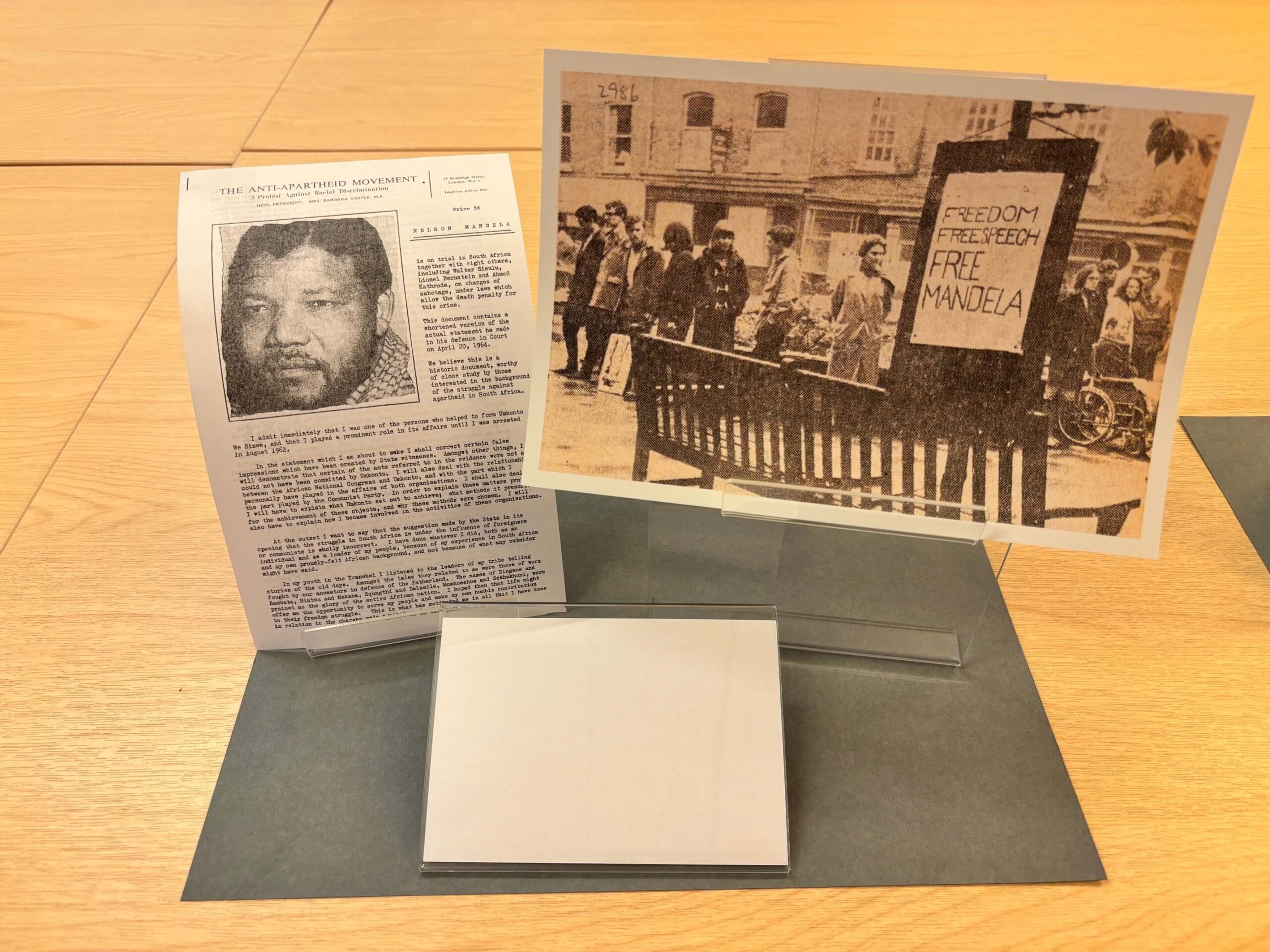
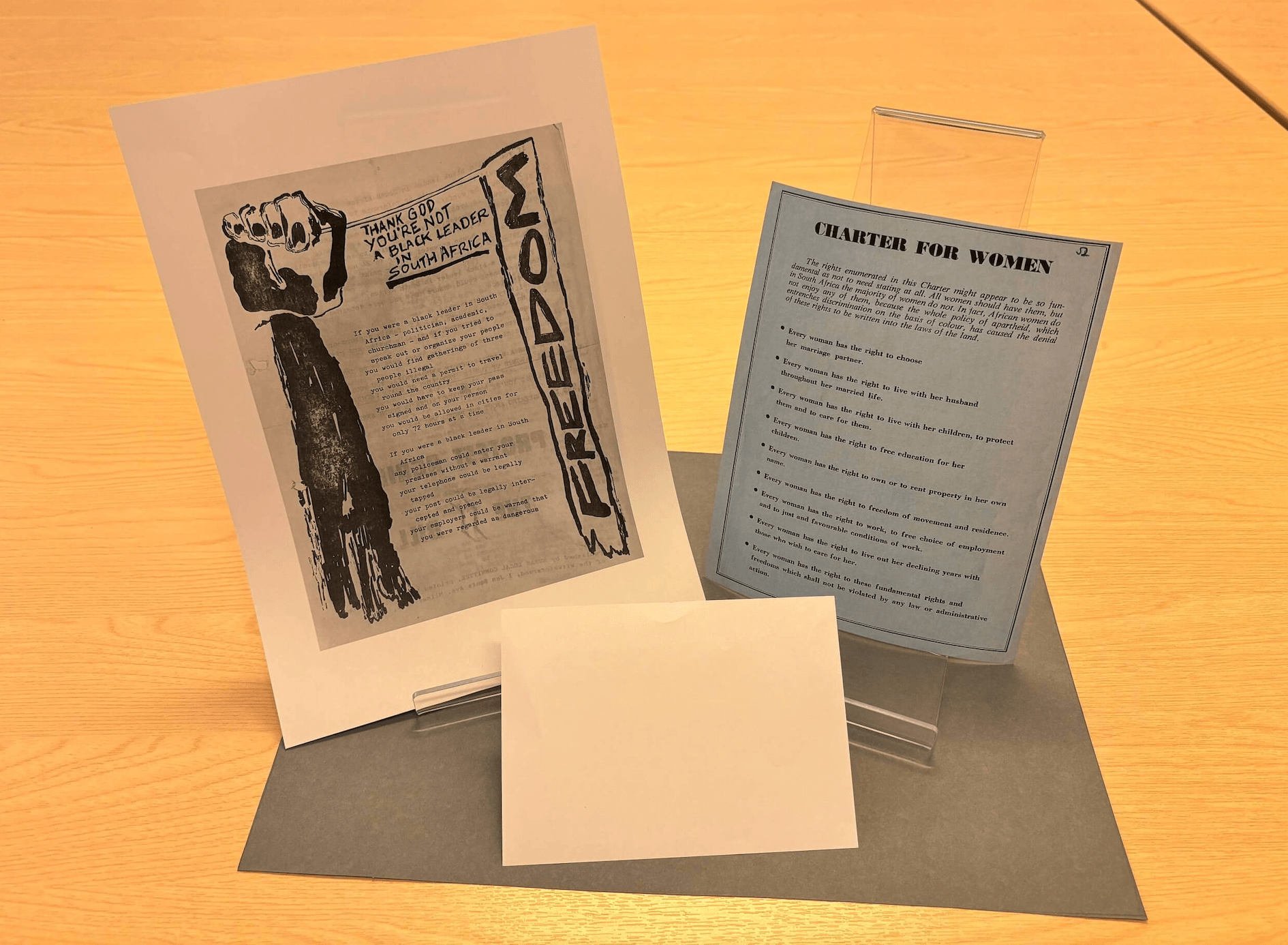
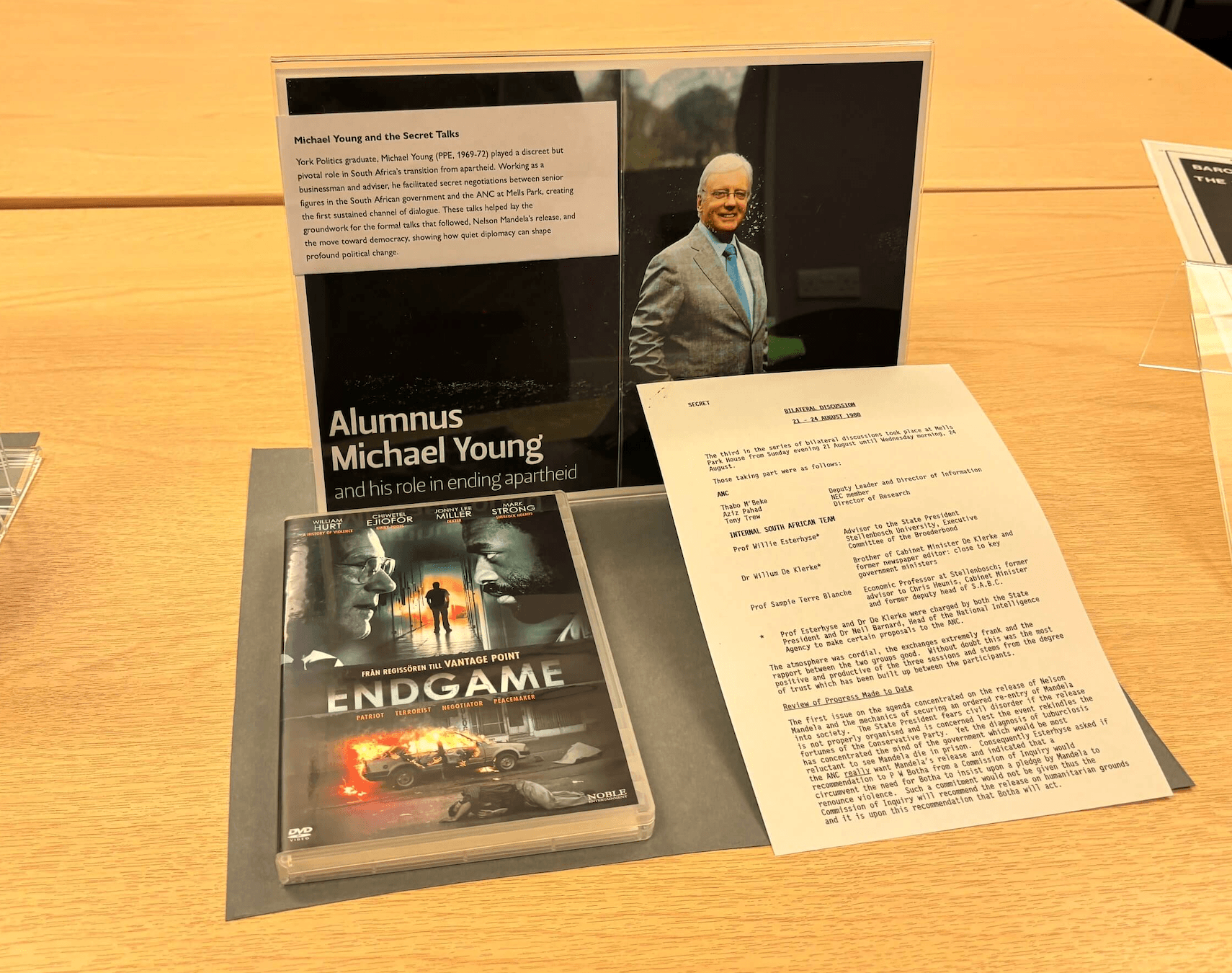
(Mock-ups for displays from the Borthwick Archives.L-R York student protests against the Rivonia Trial 1964, Black Sash related materials from the Borthwick’s Mary Corrigall Papers, York politics graduate Michael Young who supported negotiations between the ANC and the SA government in late 80s/early 90s.)
With Marina Gentry-Espinosa, another Museum Studies placement student who joined our team soon after, the wider exhibition curation process became a collaborative. Working together allowed us to step back, share perspectives, and develop a considered layout that made the most of the space while creating a coherent flow through the exhibition.
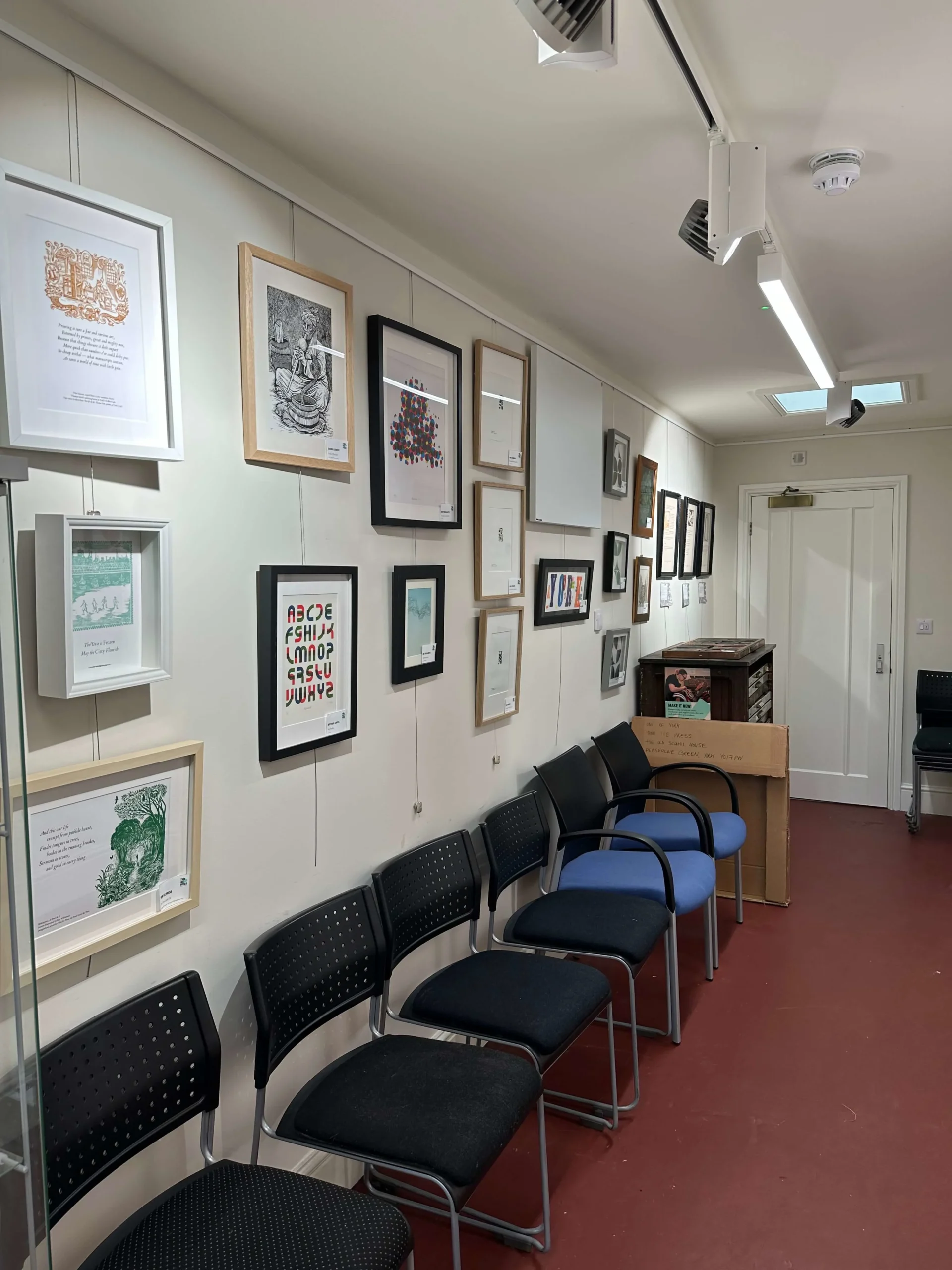
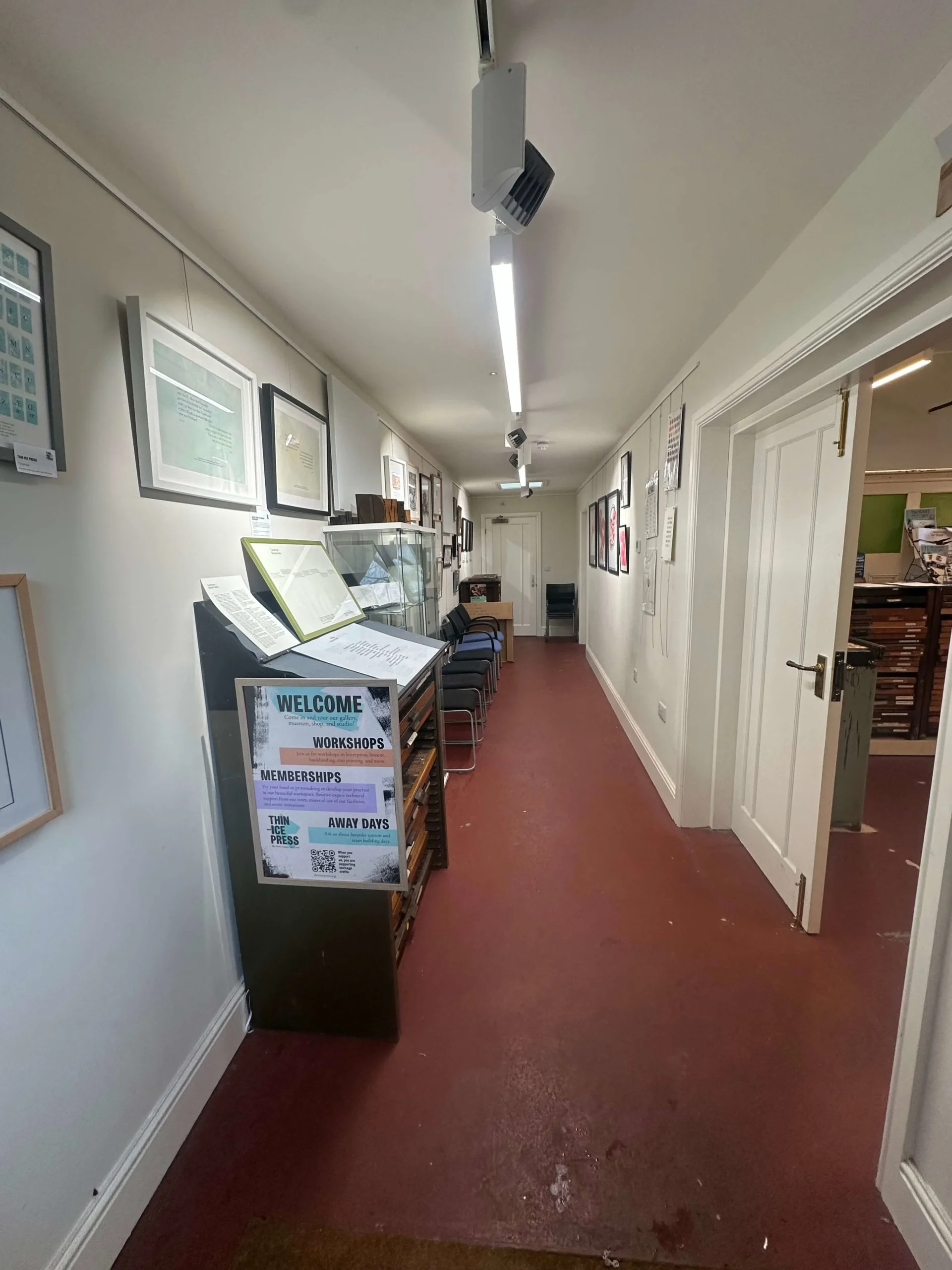
(Original space layout at Thin Ice Press: Images taken 09/02/2026)
After several visits to Thin Ice press and many hours (and a lot of tip-ex) spent arranging and rearranging the potential plan for the placement of the exhibition, Marina and I finally had a layout we were happy with. One thing we knew for sure was that the items on loan from the Borthwick Institute for Archives would be situated in the glass cabinets towards the entrance of the gallery space. Working with the archives was a particularly informative experience about archives, curation of materials, and the role of University of York students in the fight against Apartheid.
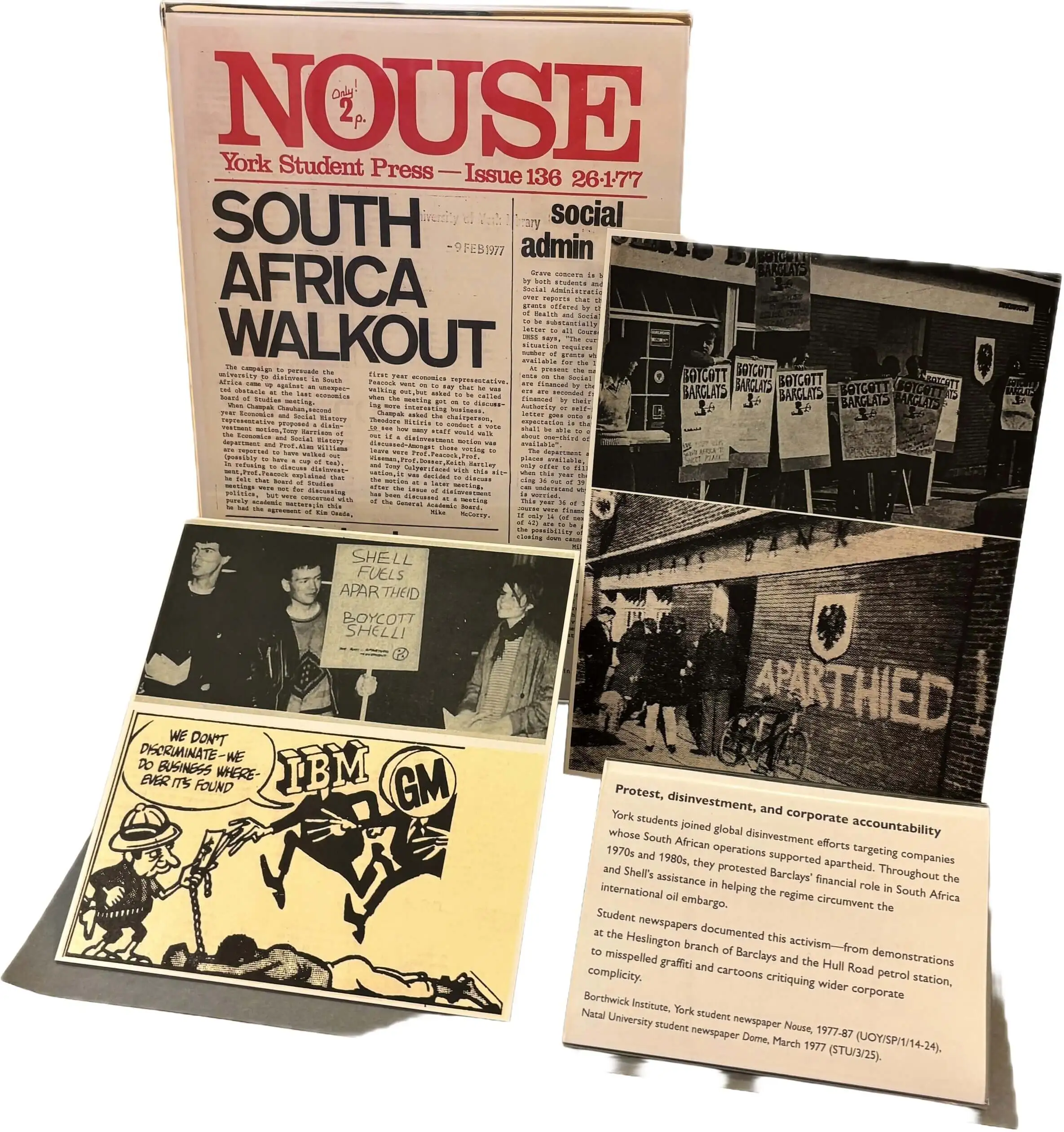
One of my favourite displays from the Borthwick materials focuses on student-led disinvestment campaigns. York students were part of a global movement targeting companies like Barclays and Shell for their links to apartheid. I was struck by how this activism was captured in student newspapers – protests at the Heslington branch of Barclays and the Hull Road petrol station, alongside graffiti, cartoons and commentary critiquing corporate complicity. There’s even a piece of graffiti misspelling “apartheid” as “aparthied” – a small, human detail that brings the moment to life!
Around this point we had less than a month before the exhibition’s opening, meaning promotional materials were at the forefront of our minds, especially working to such a tight schedule. My personal favourite of Kaplan’s prints is The Waiting Room and that undoubtedly influenced my decision to feature the print on the promo materials.
We then distributed the finalised poster throughout campus and the city of York, as well as copy writing for both the Anti-Apartheid Legacy Centre and Thin Ice Press newsletters to ensure that we had the best possible turn-out for the launch event itself and to spread news about the exhibition.
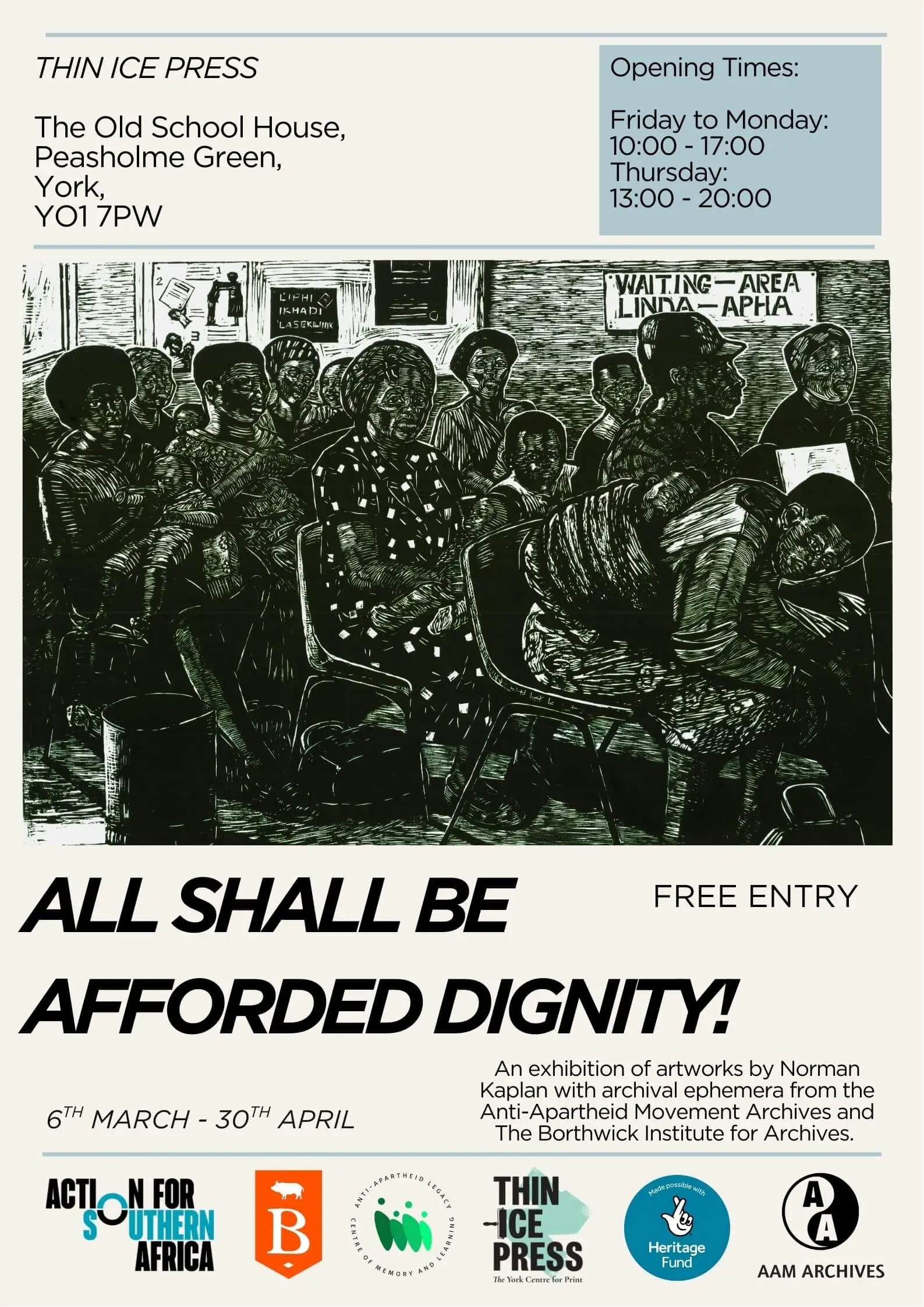
(My final poster design for the exhibition.)
The 5th and 6th of March 2026 brought both the installation and launch of ASBAD! proving to be one of the most rewarding but simultaneously challenging days of the placement. It was as we were unpacking and hanging Kaplan’s prints and cartoons alongside the Borthwick cases and AAM Archive ephemera that I felt the most connected to the artworks. Seeing the prints and cartoons in person, rather than on a screen, made their impact far more immediate. It brought home how Kaplan’s work doesn’t just represent resistance – it is part of it. Engaging with both the art and the act of protest in this way felt essential to understanding the realities of apartheid, and the courage of those who lived through and challenged it.
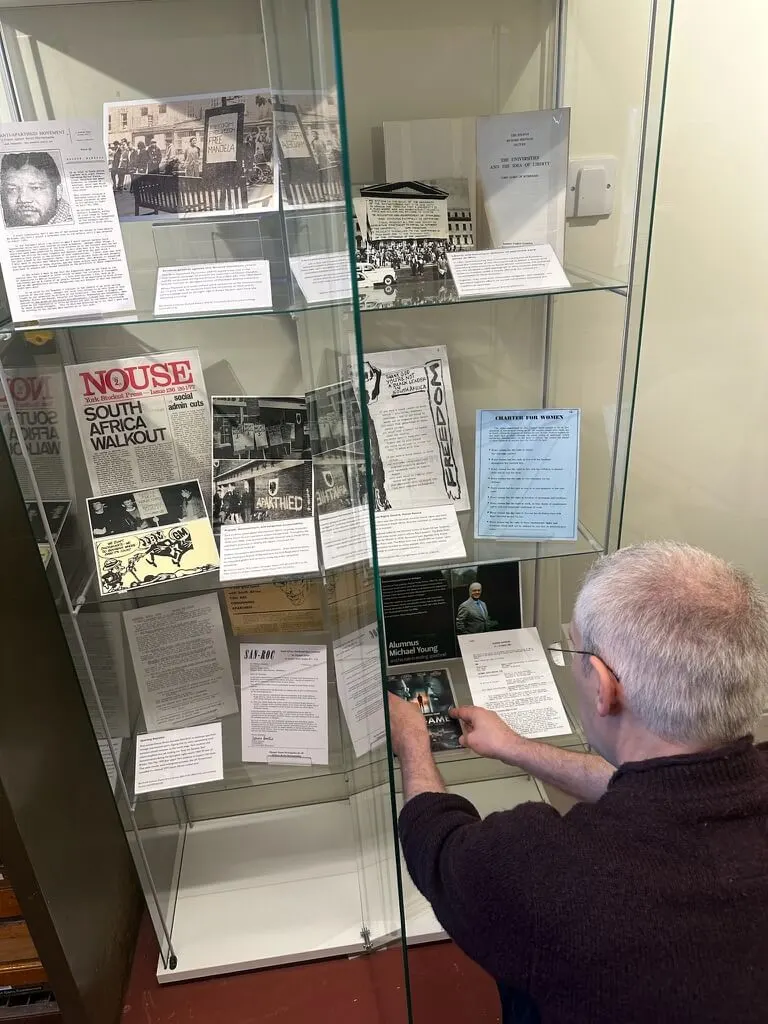
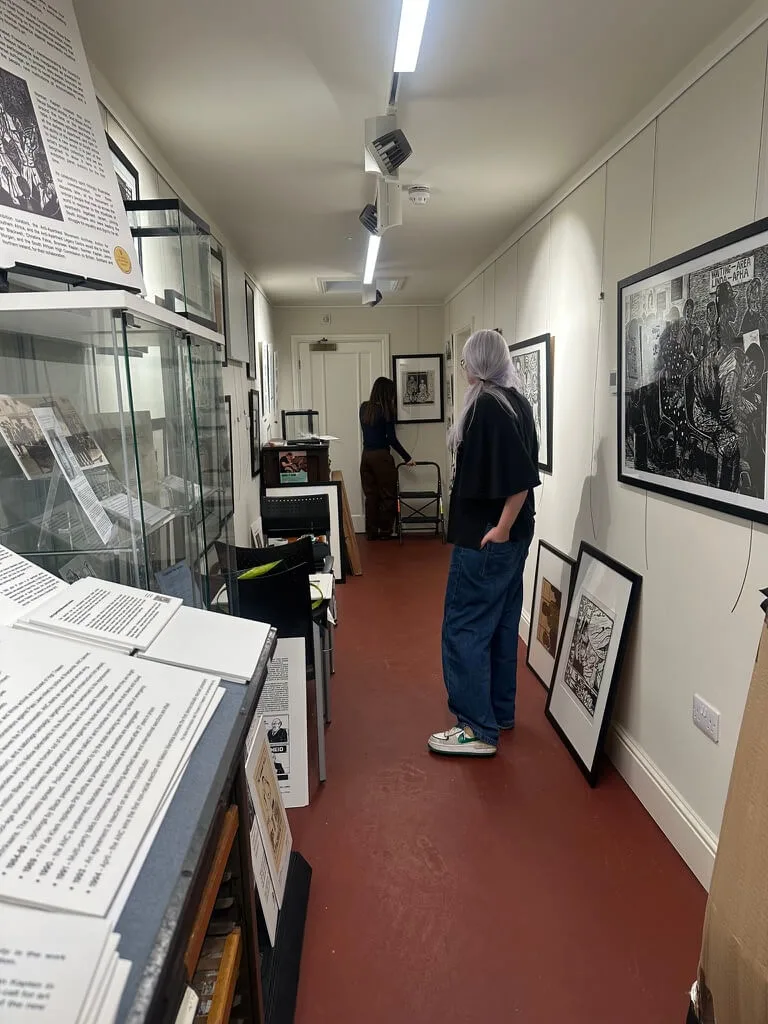
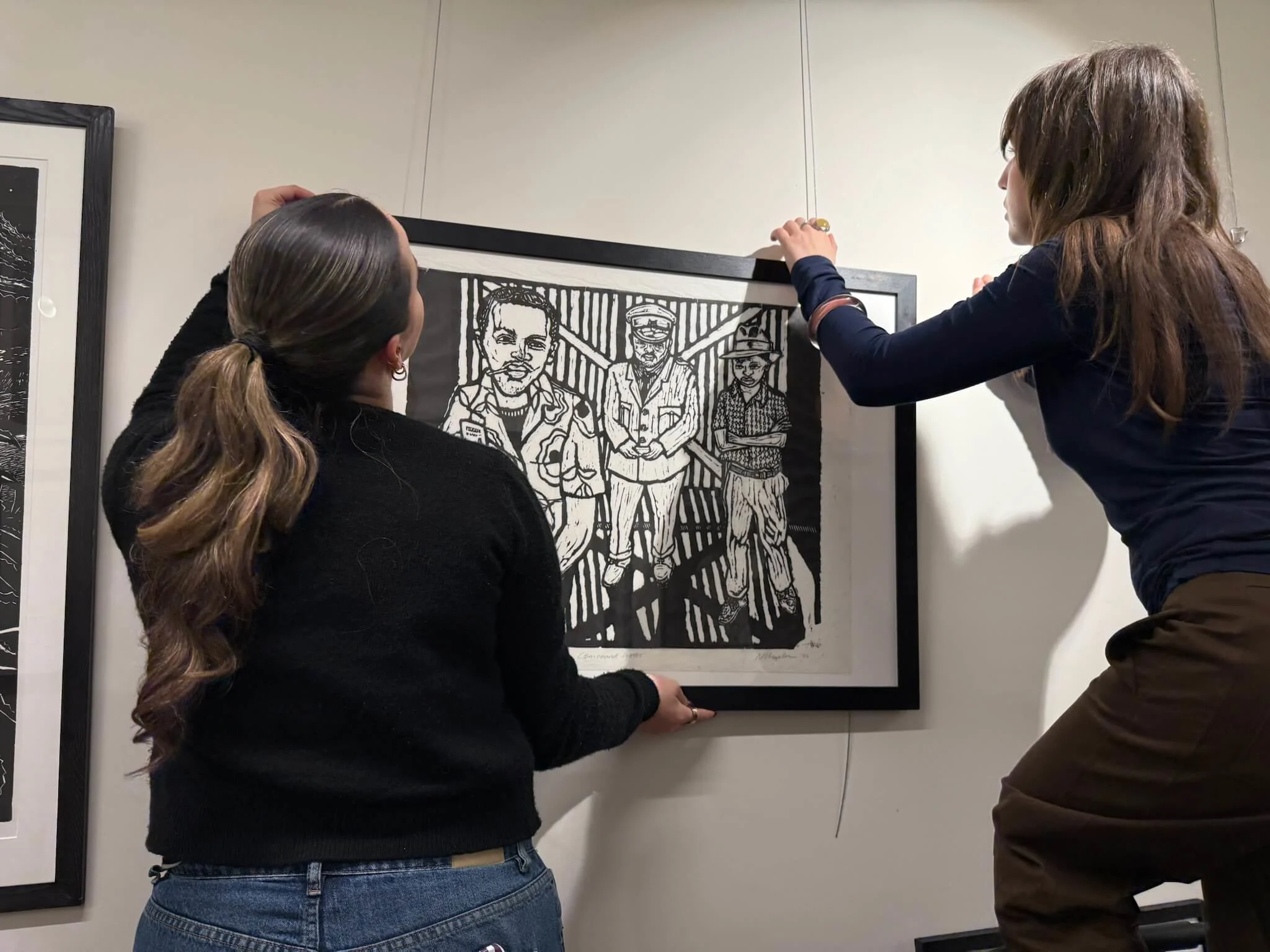
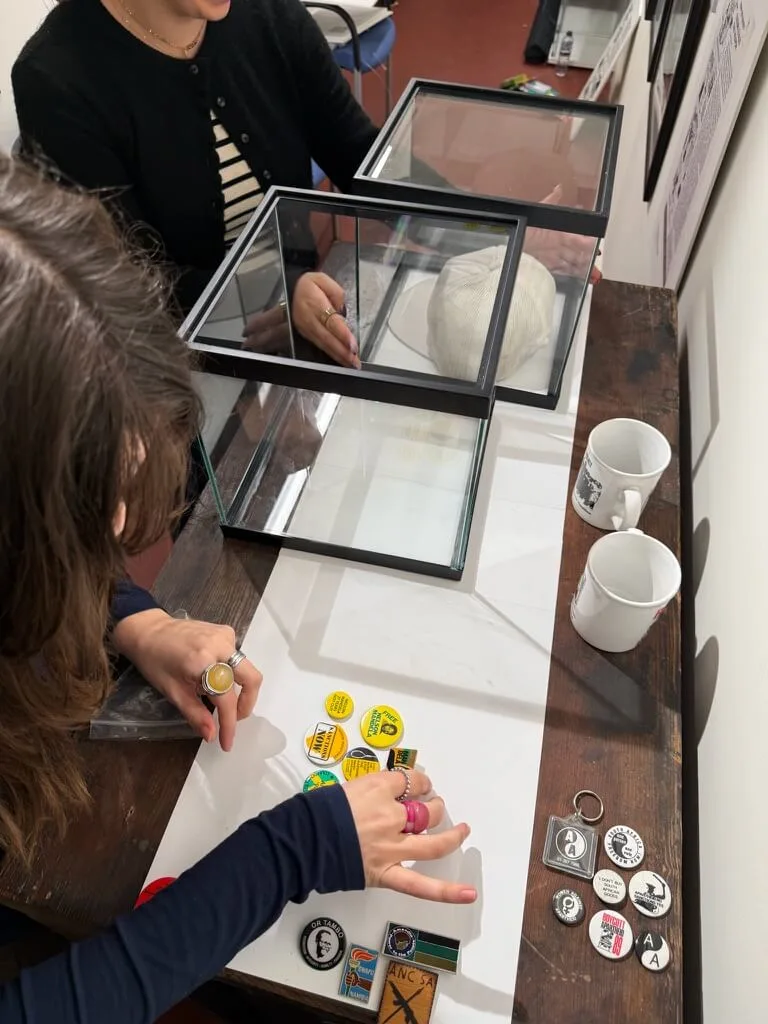
(Images from the installation process: 5/6th March 2026)
As well as being such an amazing learning experience installing the exhibition also brought some challenges. From altering print placements last minute, running out of adhesive for the foamex interpretation boards and a mis-measured display case I have definitely learnt how to find quick solutions to temporary setbacks!
Below are some images of how we found the exhibition on the day of the launch, with the hanging mechanism not balanced enough to hold the cartoon panels we had to rethink and use more adhesive tape to keep them in place. In addition the display case I had ordered online for the AAM Archive ephemera arrived considerably smaller than anticipated! Leading to a lovely, but brisk, walk to the local Pets at Home store with Caroline from the AALC to urgently purchase some fish tanks to use as makeshift cases!
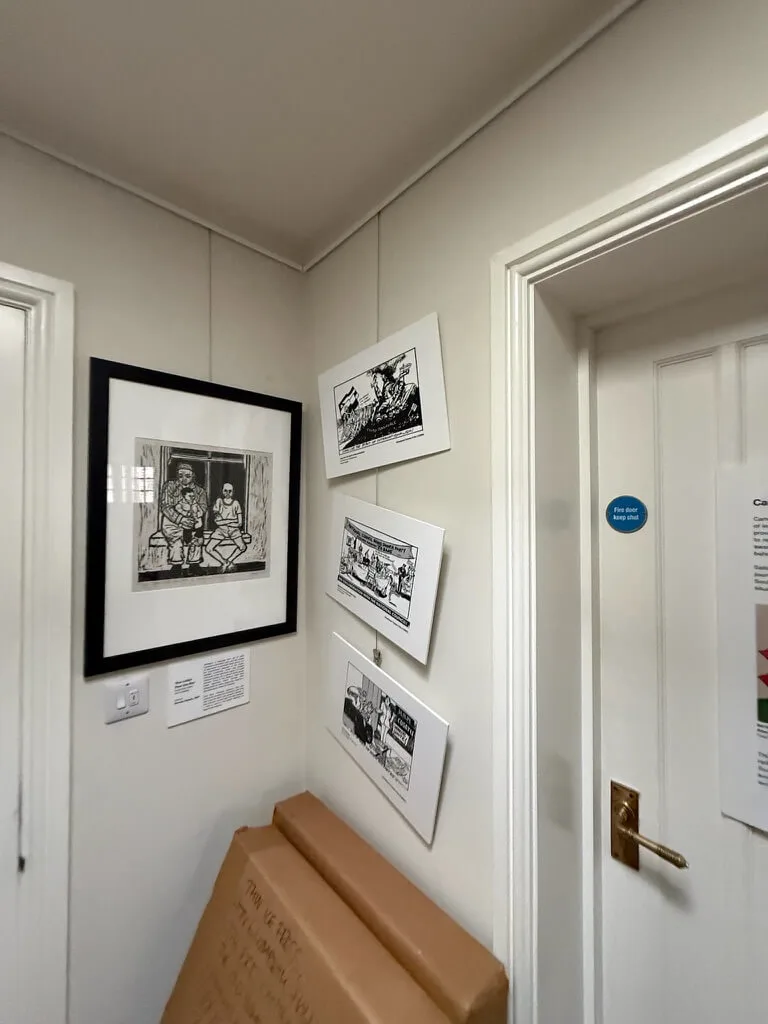
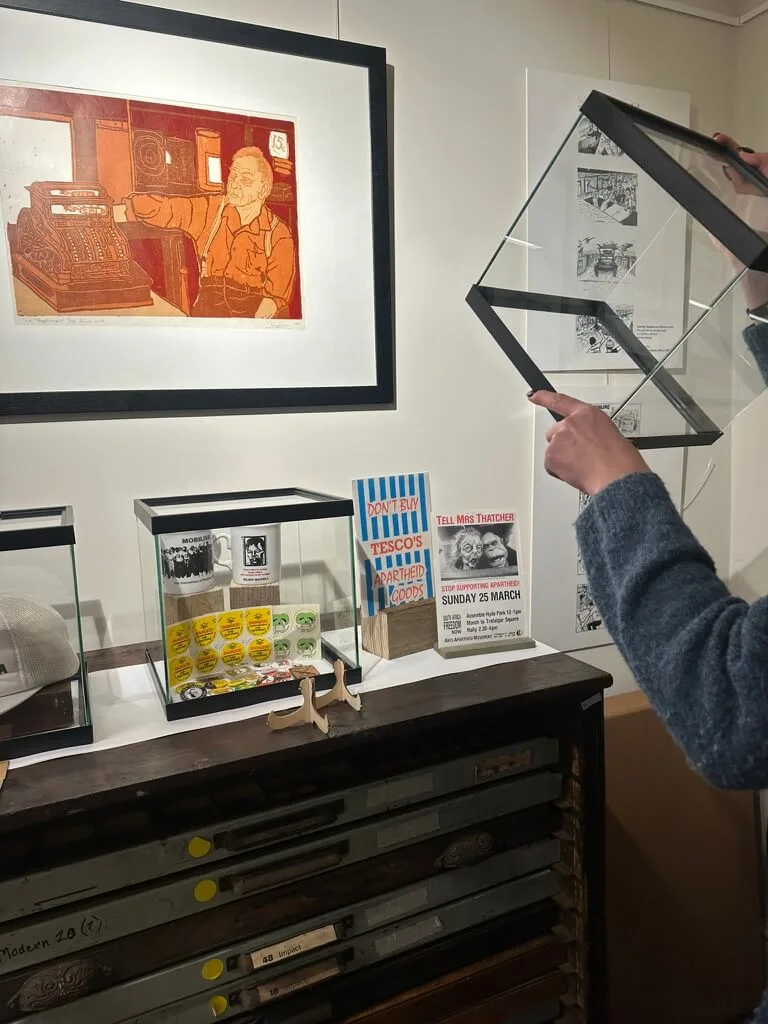
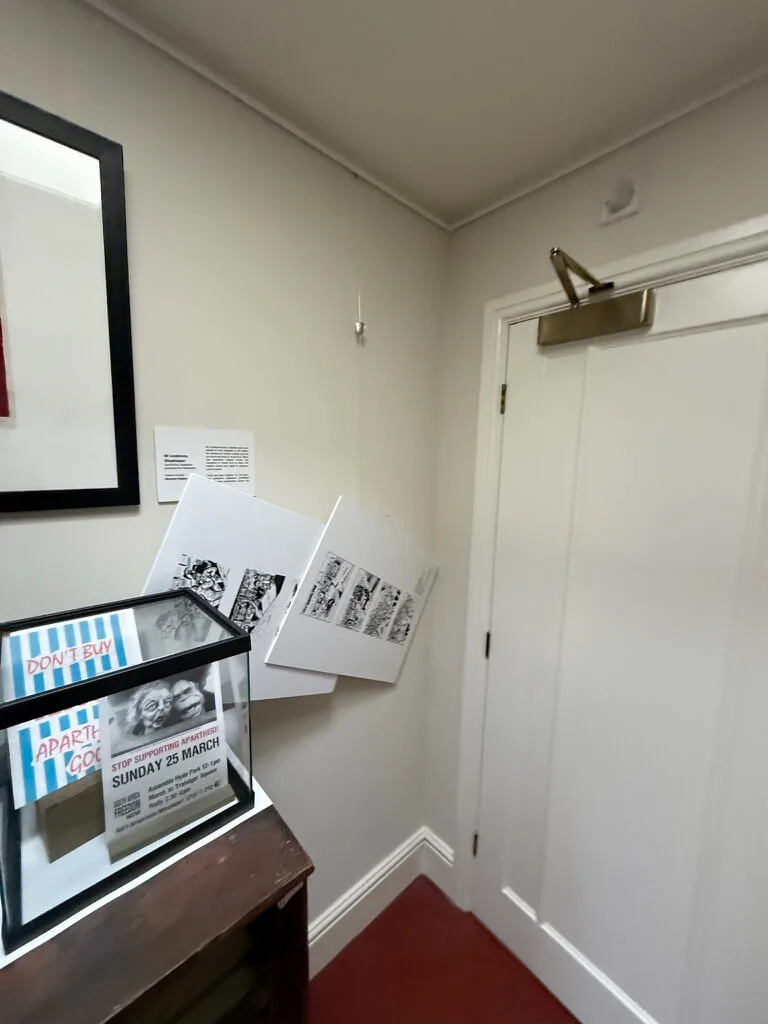
(Images from the installation process: 6th March – we had to re hang some items which had shifted overnight!)
The evening of the launch arrived with much anticipation: Will we have a good turn out? Will the visitors enjoy the space? What will people think? Ultimately, there was nothing to worry about and the evening was a great success. A full gallery and lots of conversation, we were even able to hear from Norman himself, via a message read by his sister-in-law Jenny, as well as remarks from both Caroline Kamana (Director of Anti-Apartheid Legacy Centre) and Helen Smith (Director of Thin Ice Press).
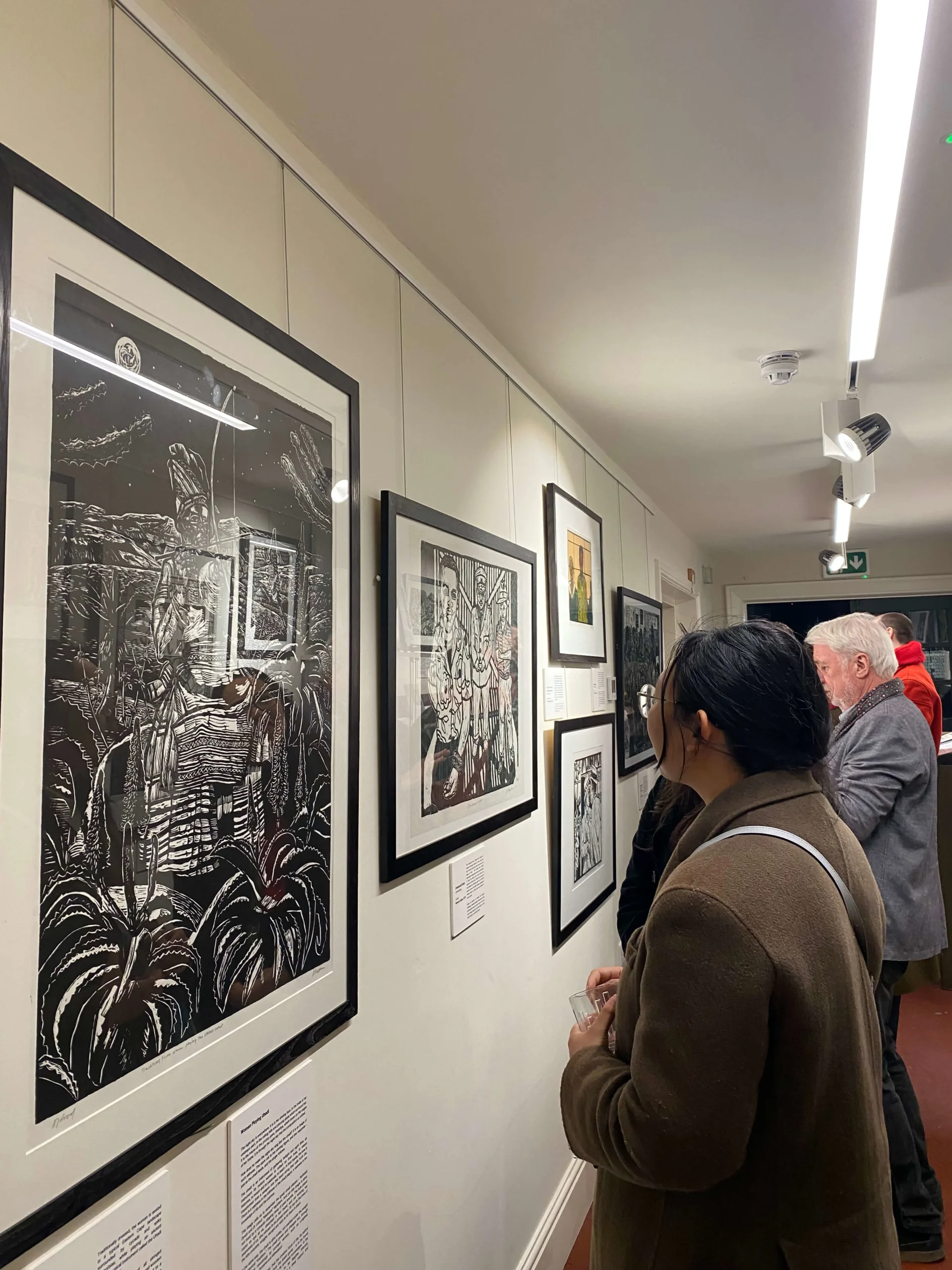
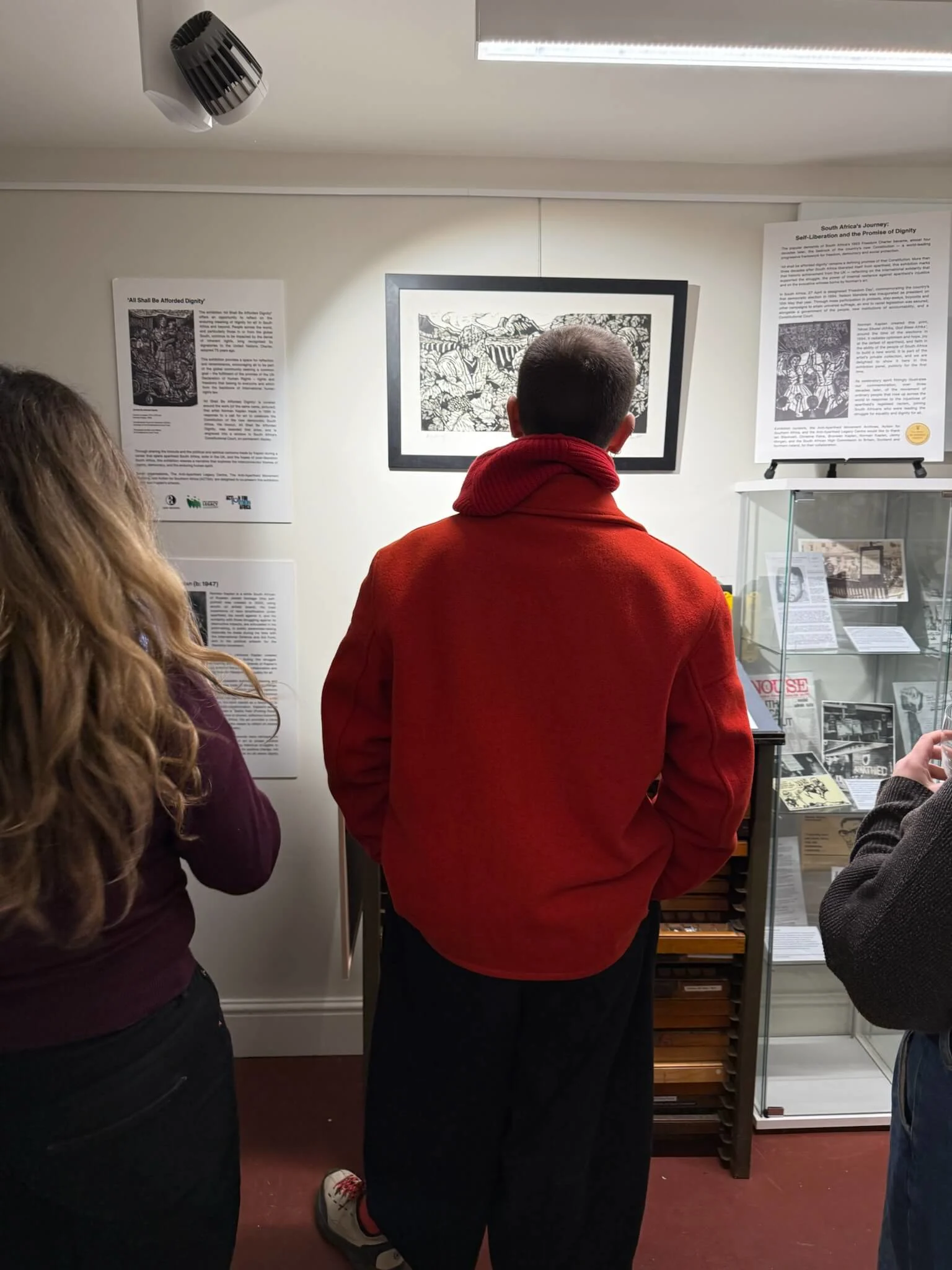
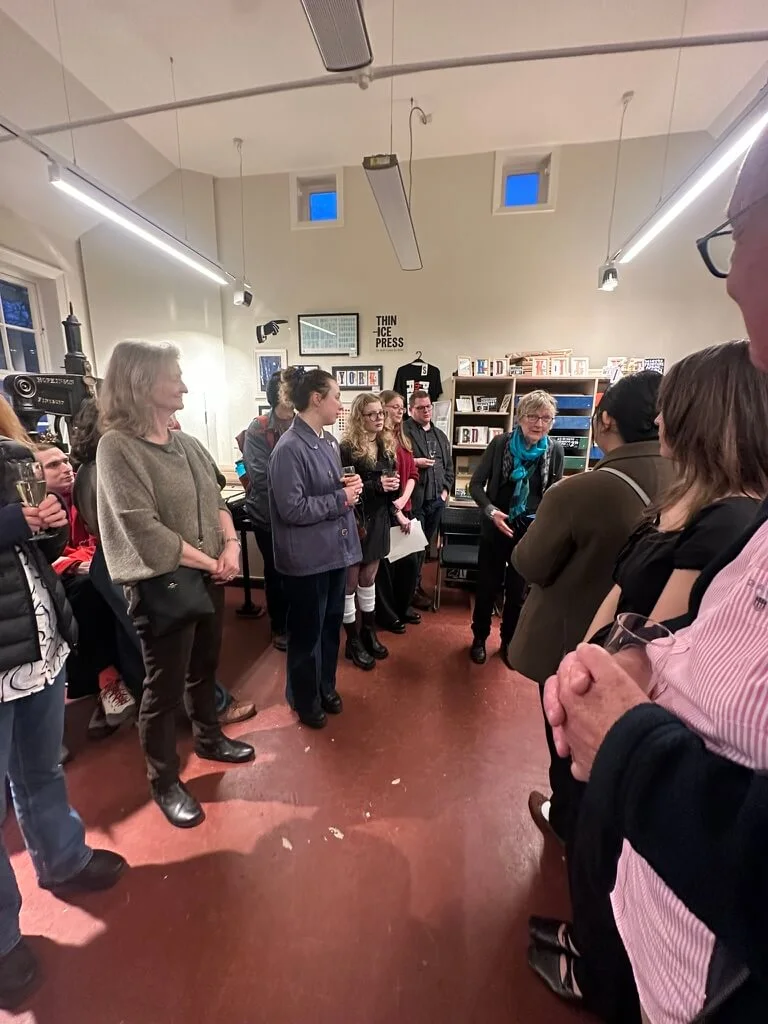
(Images from the launch of ASBAD!: 6th March 2026)
Ultimately, throughout the process of curating the York iteration of ASBAD! I have learnt invaluable lessons about the need to represent political histories of protest and resistance, working with archives, and the processes of curating. Reaffirming the fact I wish to pursue a curatorial career in the museum sector, whilst also shedding light on why art and museum work remains so important in the modern day. In the words of Norman Kaplan “More Gutenberg, Less Zuckerberg.”
All Shall Be Afforded Dignity! is free to visit at Thin Ice Press in York until the 30th of April.
Blog written by Olivia Reed, MA Museum Studies at University of York, April 2026