A blog by Marina Gentry Espinosa
When I began my Master’s in Museum Studies at the University of York, I had my sights set on a career in curating. I envisioned myself conducting object research or planning the layout of collection items. And while my placement with the Anti-Apartheid Legacy Centre certainly gave me a lot of that exciting and valuable experience (with all the challenges that come with it, including, apparently, making accurate measurements!), the most rewarding part of the process has been the work surrounding the exhibition’s promotion and outreach.
When I joined the placement, and we began conversations on what my role would be and what I wanted to achieve, I had already started flirting with the idea of a career in museum education and community outreach. Despite my experience in customer service roles and my self-proclaimed ability to get along with anyone, I had no experience in social media promotion or delivering workshops, and I hated sending emails. This placement was going to be a real trial by fire.
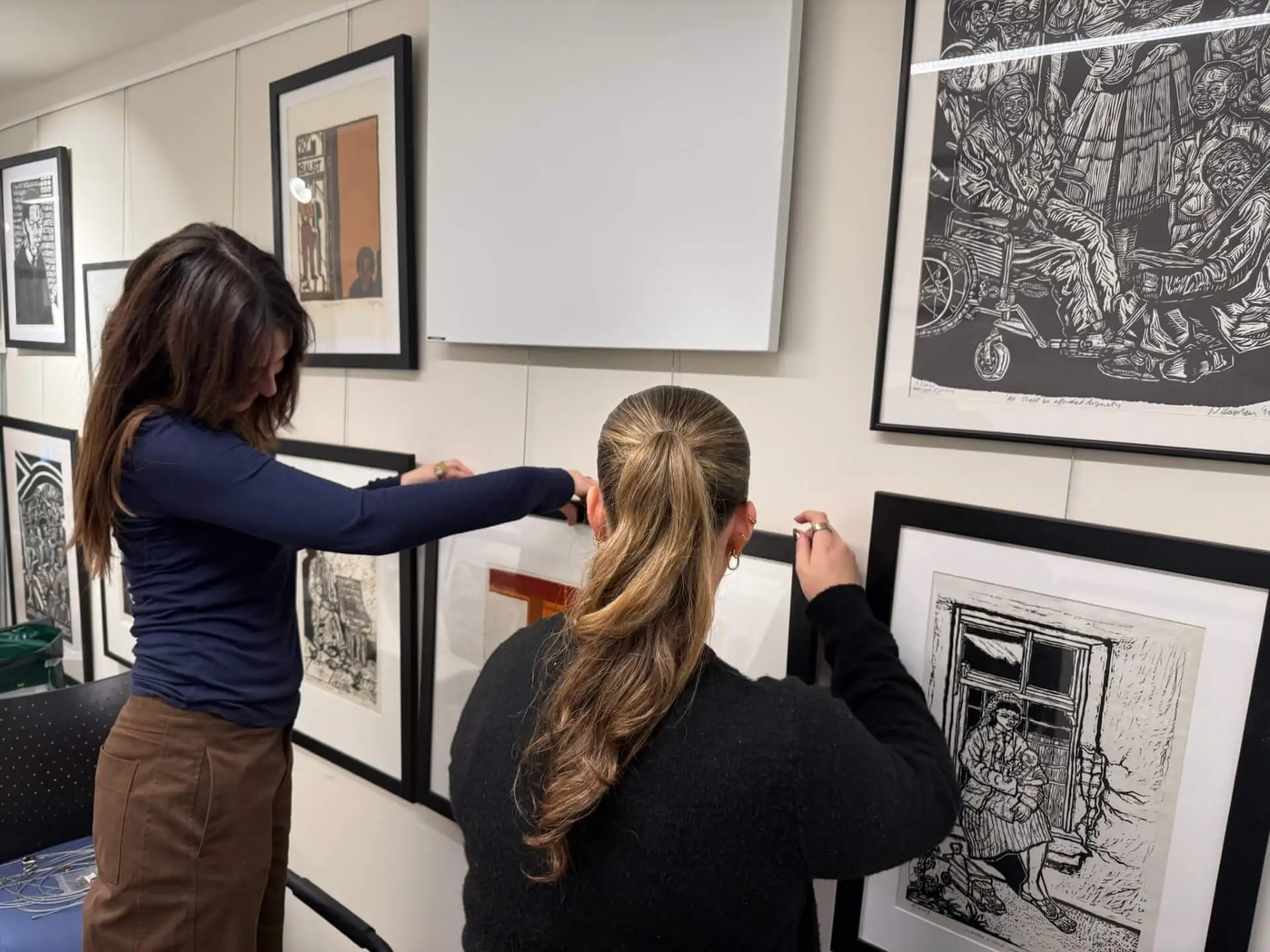
Myself and Olivia Reed, fellow MA Museum Studies student, hanging artworks during the exhibition installation.
I think because I knew how great the centre’s work is, and how moving Kaplan’s art is, I expected people to bite my hand off to join us for a workshop, but I’d be lying if I said it was that easy, and I’ve certainly had to sharpen my proposal skills through the process. What we have achieved with the tight timeline, though, and the people we’ve had the pleasure of meeting and working with, has been incredible.
When studying museums, you quickly get a picture of the measures of a successful exhibition. Visitor footfall, glowing media reviews, and general reception are all so important. The most important, to us at least, has always been the engagement from visitors. Reflecting on conversations from the launch event and looking at the subsequent visitor feedback has been such a great pleasure, and I do not doubt that ‘All Shall Be Afforded Dignity!’ has achieved what we set out for, which is to encourage discussion and learning.
Indeed, all visitors reported either learning something new or enhancing knowledge that they already had about apartheid and the fight against it- sometimes on a local level or more generally – highlighting the exhibition’s ability to both inform and deepen understanding. It certainly shows the impact of engaging directly with these histories and materials.
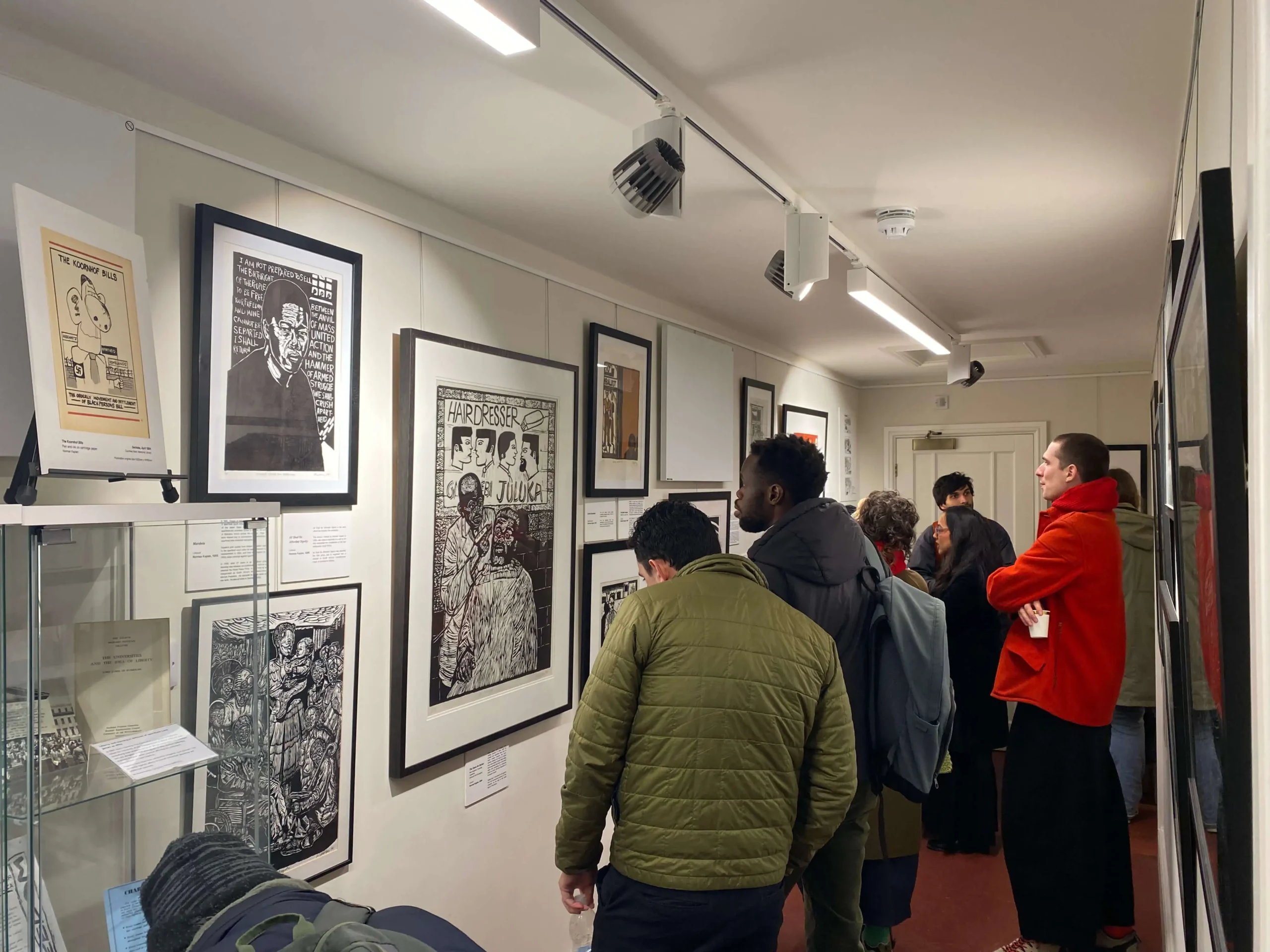
Visitors to the exhibition on 6th March, launch night at Thin Ice Press.
While there have been so many great insights from our visitor survey, I will share just a few here that demonstrate this best.
To the question ‘what message are you taking away from the exhibition’, one visitor said:
“Hope that change is possible, but not without pain. The importance of political action.”
Another said: “Art is protest, Protest is art, humans need to support one another and hold solidarity and justice at the core of our souls.”
When asked about the archival material displayed alongside Kaplan’s art, one visitor commented, “It deepened my understanding of the art. It gave me things to look up later.”
Responses reflect overwhelmingly on the emotional impact of the exhibition, on its fitting location at Thin Ice Press, on the powerful relationship between art and protest and on how recent apartheid really was.
These same takeaways are reflected in the workshops we hosted.
Our director, Caroline, was really keen to work with some local schools that had been studying apartheid as part of their syllabus, and so I led on organising and coordinating school visits. As a result, at the start of April, we had the great pleasure of running some sessions with sixth-form students from All Saints’ school.
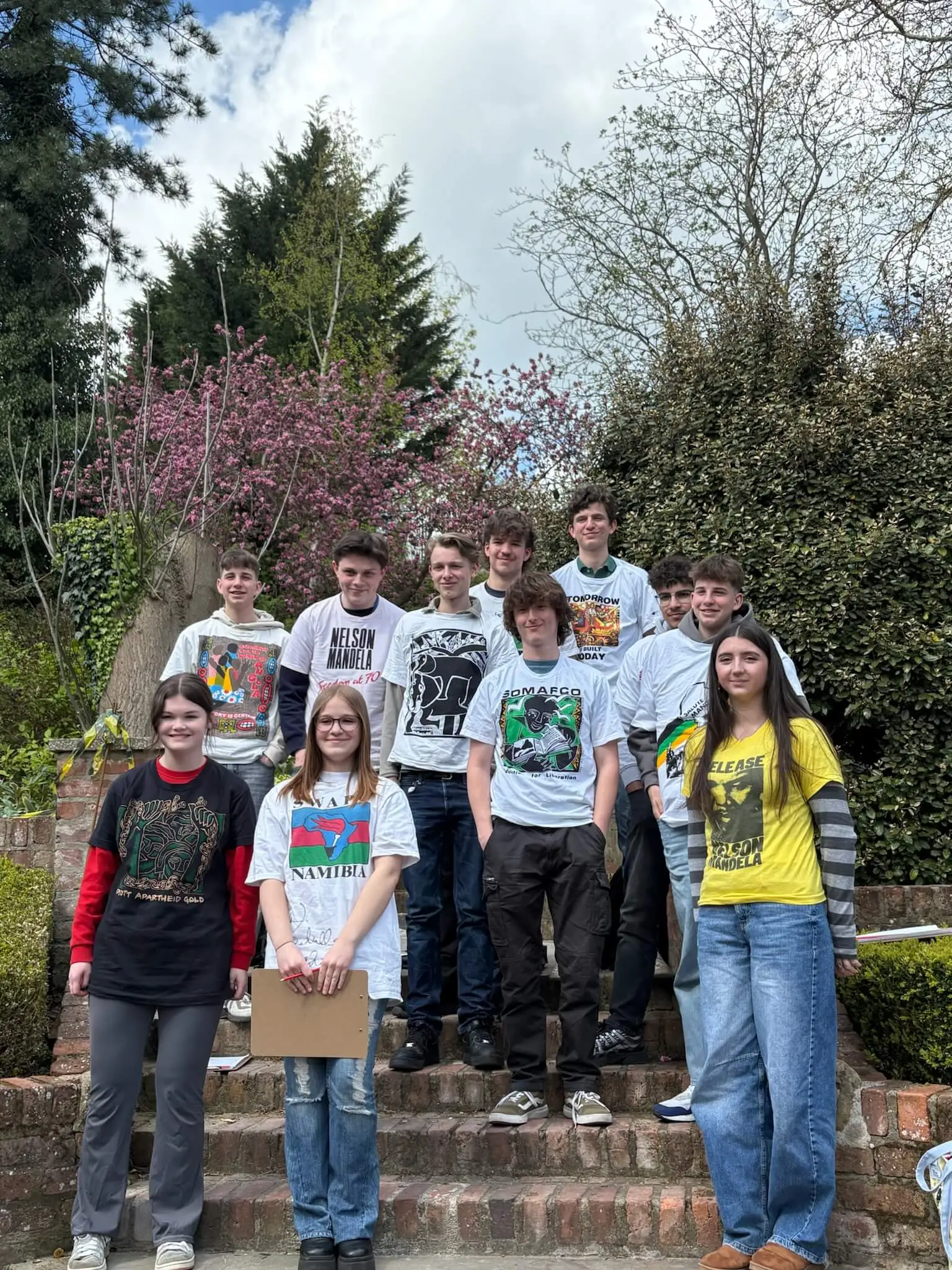
Through the exhibition, a talk linking their knowledge to Anti-Apartheid activism in York, and interaction with archive material from both the Borthwick Institute for Archives and the Anti-Apartheid Legacy Centre (including some great T-shirts which we all had fun modelling), students were able to round out their knowledge outside of the classroom.
The overwhelming sentiment from their feedback is how they knew very little about the solidarity and activism that took place in York, and how inspiring they found it. It has been great to hear that these conversations and sentiments have continued in the classroom. I think that knowing that there has always been a history of political engagement in global issues in your area can be really motivating for young people, and a real source of pride.
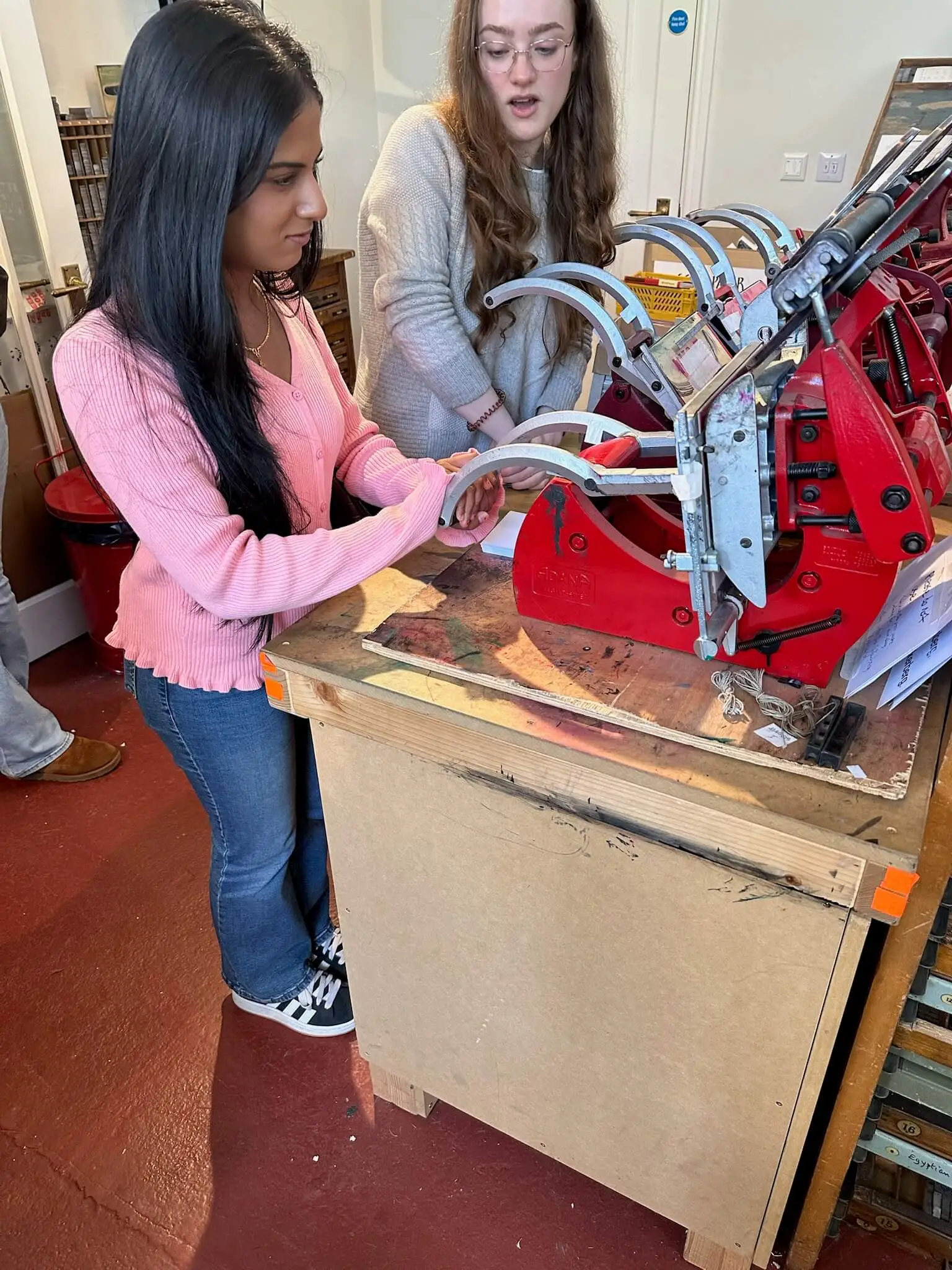
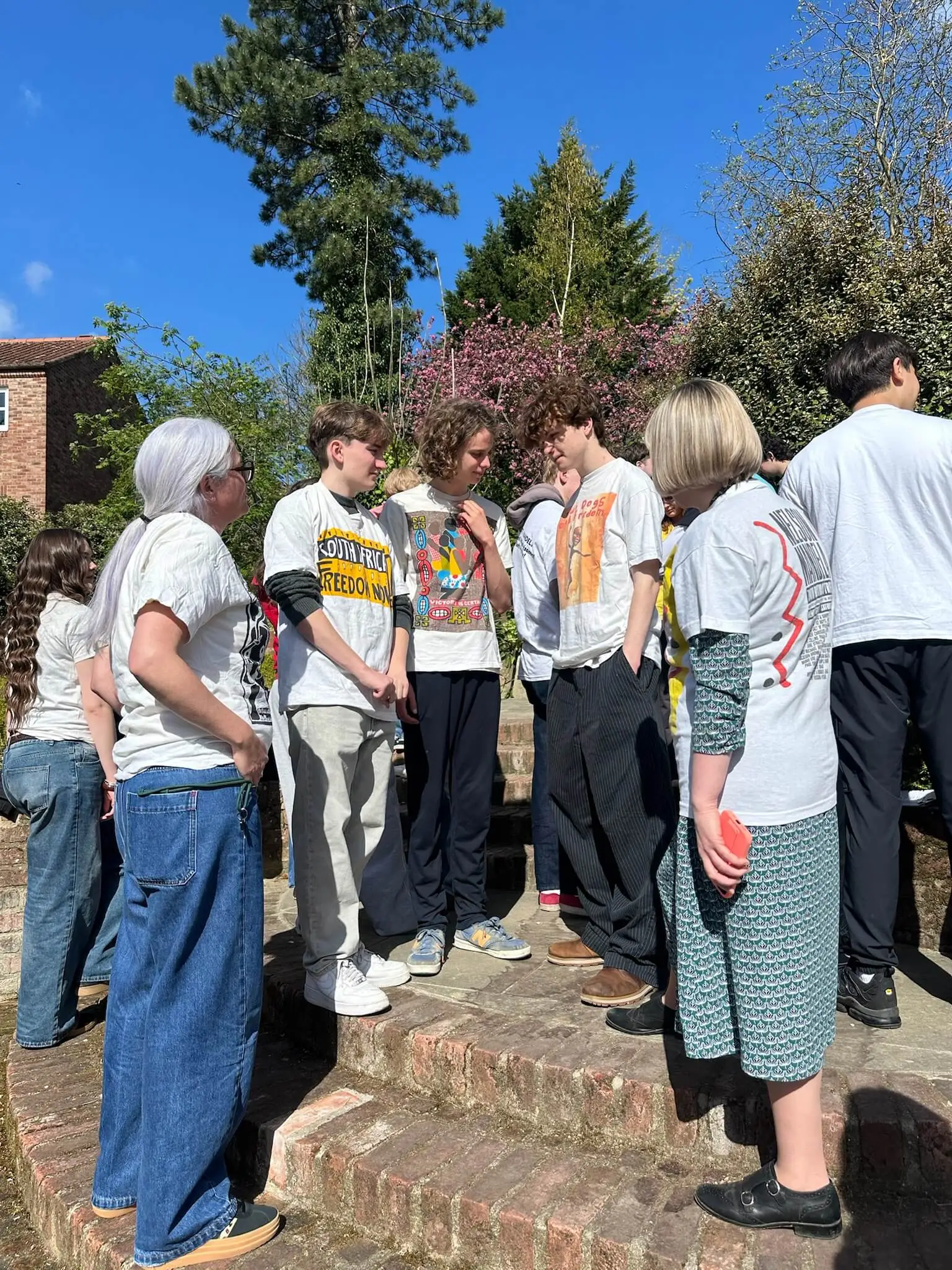
Sixth form students getting hands on using the printing presses at Thin Ice Press and during an activity to learn more about the messaging and campaigns of the Anti-Apartheid Movement.
These very ideas were further explored and discussed during our ‘In Conversation with Norman Kaplan’ talk, which we hosted with Thin Ice Press.
The talk, which was held online and attended by an international audience that spanned the UK, South Africa, Ireland, Italy and the Netherlands, covered everything from AI “art” to the message Norman wants visitors to take away from the exhibition (“the respect for the people of South Africa who fought against apartheid and resisted […]”).
Quoting Picasso when asked about the relationship between politics and art, Norman said, “art is a weapon,” calling for it to be both wielded like one, but also to be used as a way to create hope and beauty. ‘All Shall Be Afforded Dignity!’ has evidently been a great vehicle for these discussions on justice, resistance, and human dignity, and I feel incredibly proud to have been a part of that unfolding.
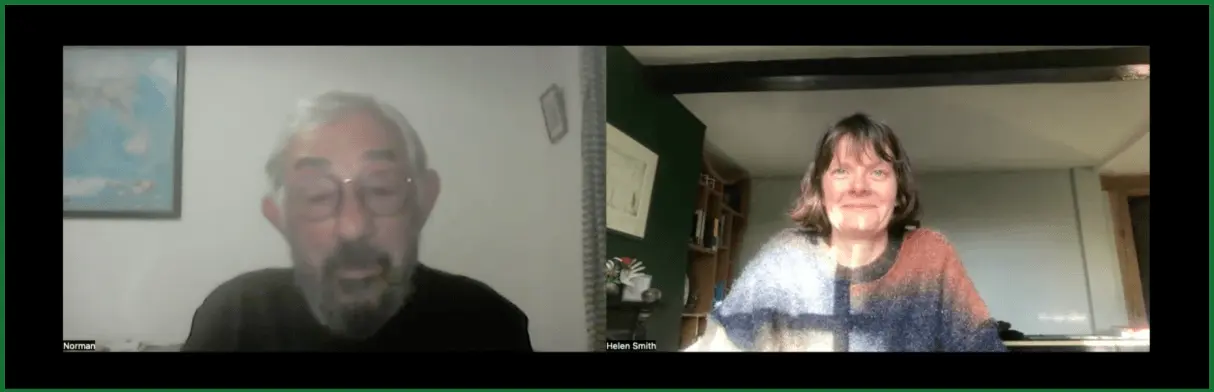
Norman Kaplan and Thin Ice Press Director, Helen Smith, during the online conversation on 22/04/2026
.
So, what has this placement given me?
I went into it anxious to make a good impression and to be of use, and I feel I’m leaving it with a greater sense of direction and faith in my skillset. My foray into the world of social media promotion has been a lot of fun, and getting to learn more about apartheid, art, and activism, in tandem with learning about the operational side of an exhibition, has been a real privilege.
If you ever get the opportunity to visit ‘All Shall Be Afforded Dignity!’ I urge you to do so (and to leave a visitor review because now that I’m a Museum Studies student, I know how important it is)!
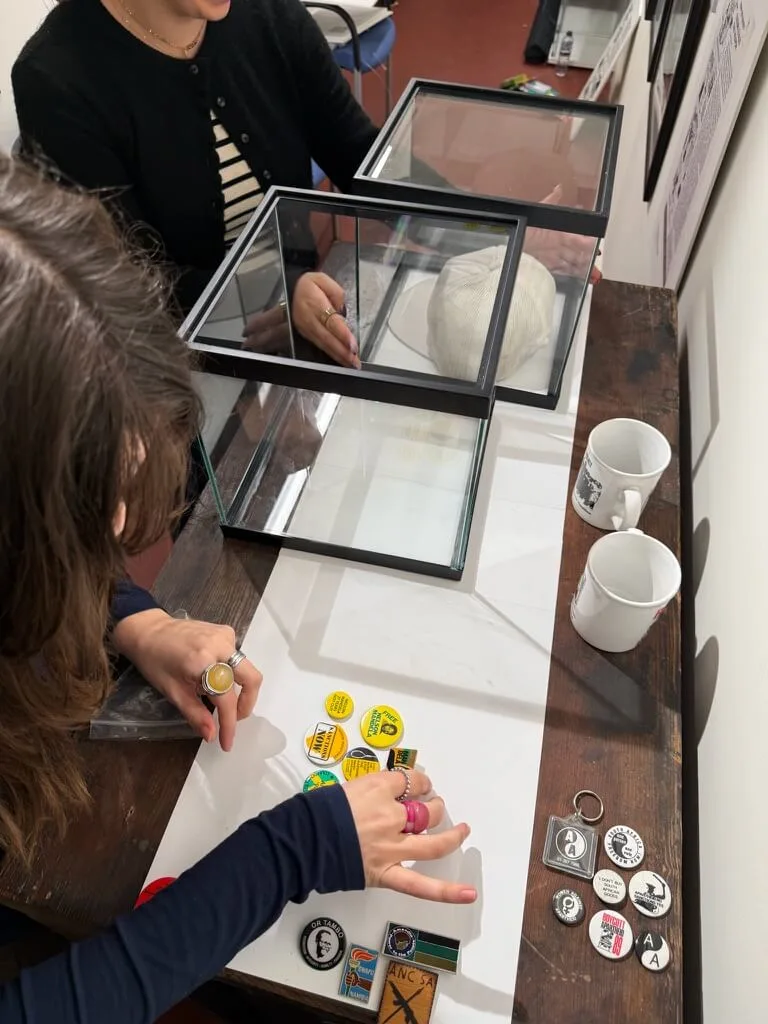
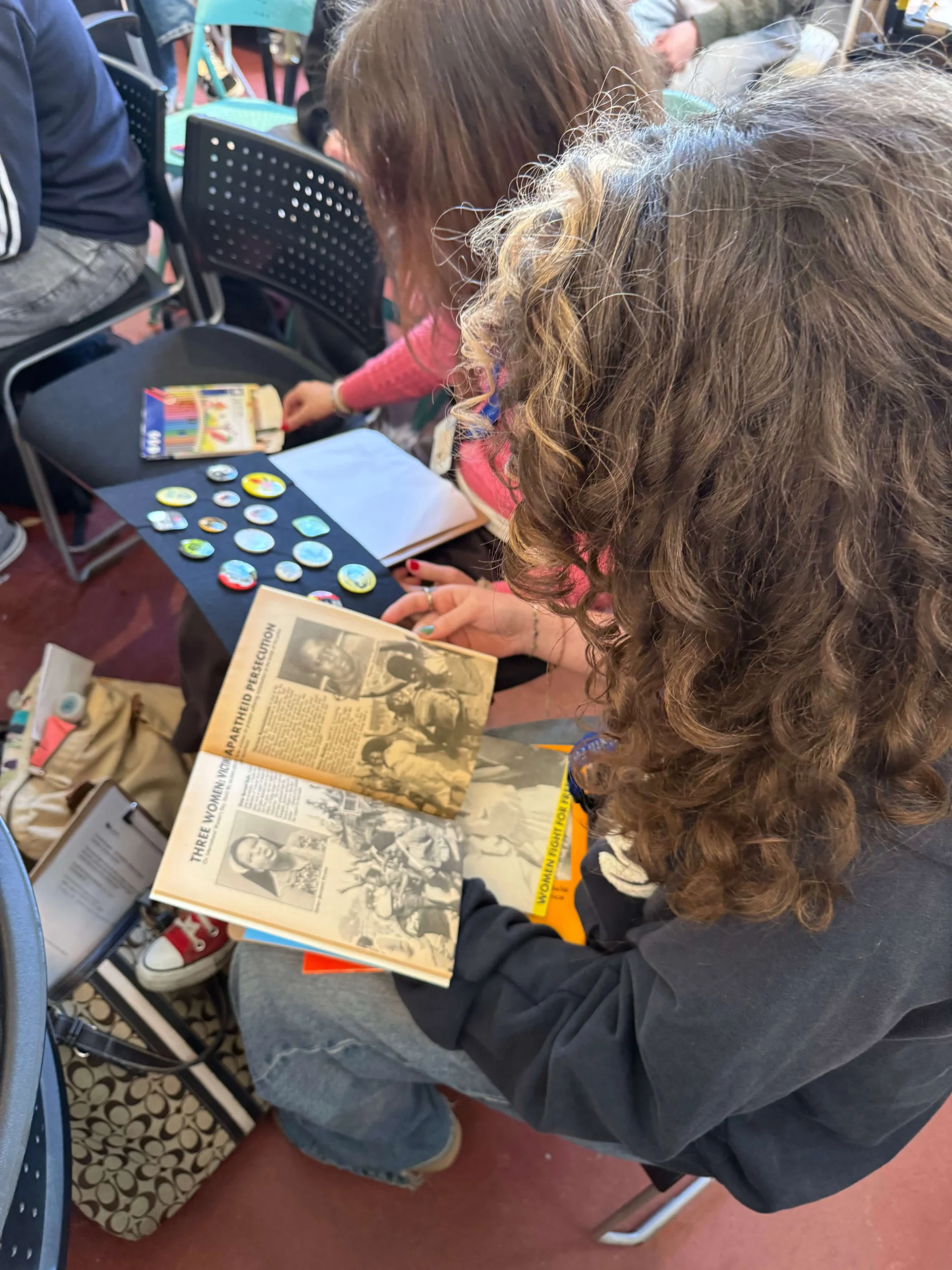
Curating archival materials during the exhibition installation and sixth form students engaging with materials from the archive during a workshop.
Blog written by Marina Gentry Espinosa, MA Museum Studies at University of York, April 2026