

Free Nelson Mandela! Following the Footsteps of Britain’s Anti-Apartheid Movement – 20th June 2026
A guided walk held as part of the British Academy’s Ideas Festival 2026
Saturday 20 June 2026 | 11.30am–1.00pm
Starting point: The British Academy, 10–11 Carlton House Terrace, London SW1Y 5AH
Free | On-the-day sign up at the British Academy Ideas Festival for ticket holders
Tickets (free) for British Academy Ideas Festival can be booked here
Join the Anti-Apartheid Legacy Centre for a guided walking tour through central London, uncovering the hidden geography of Britain’s Anti-Apartheid Movement.
From Trafalgar Square to Parliament Square, this walk explores the streets, buildings and public spaces that became focal points for protest, organising and international solidarity with the struggle against apartheid in South Africa. Along the route, participants will encounter stories of demonstrations, boycotts, exiled activists, political campaigning and the global movement that helped secure Nelson Mandela’s release and contributed to the end of apartheid.
By learning history where it happened, the tour invites participants to see familiar London landmarks in a new light and to reflect on the enduring relevance of collective action, solidarity and civic participation today.
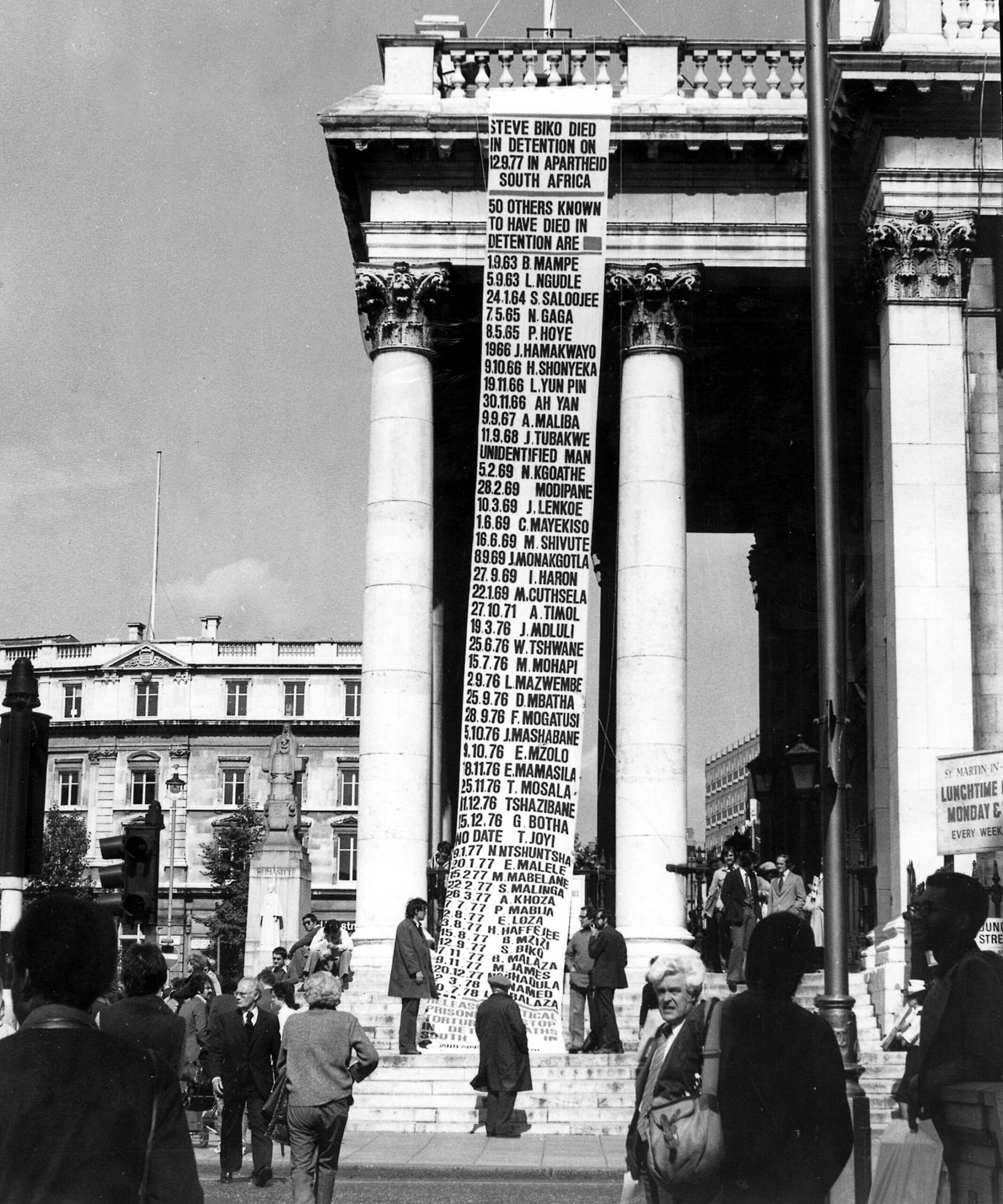
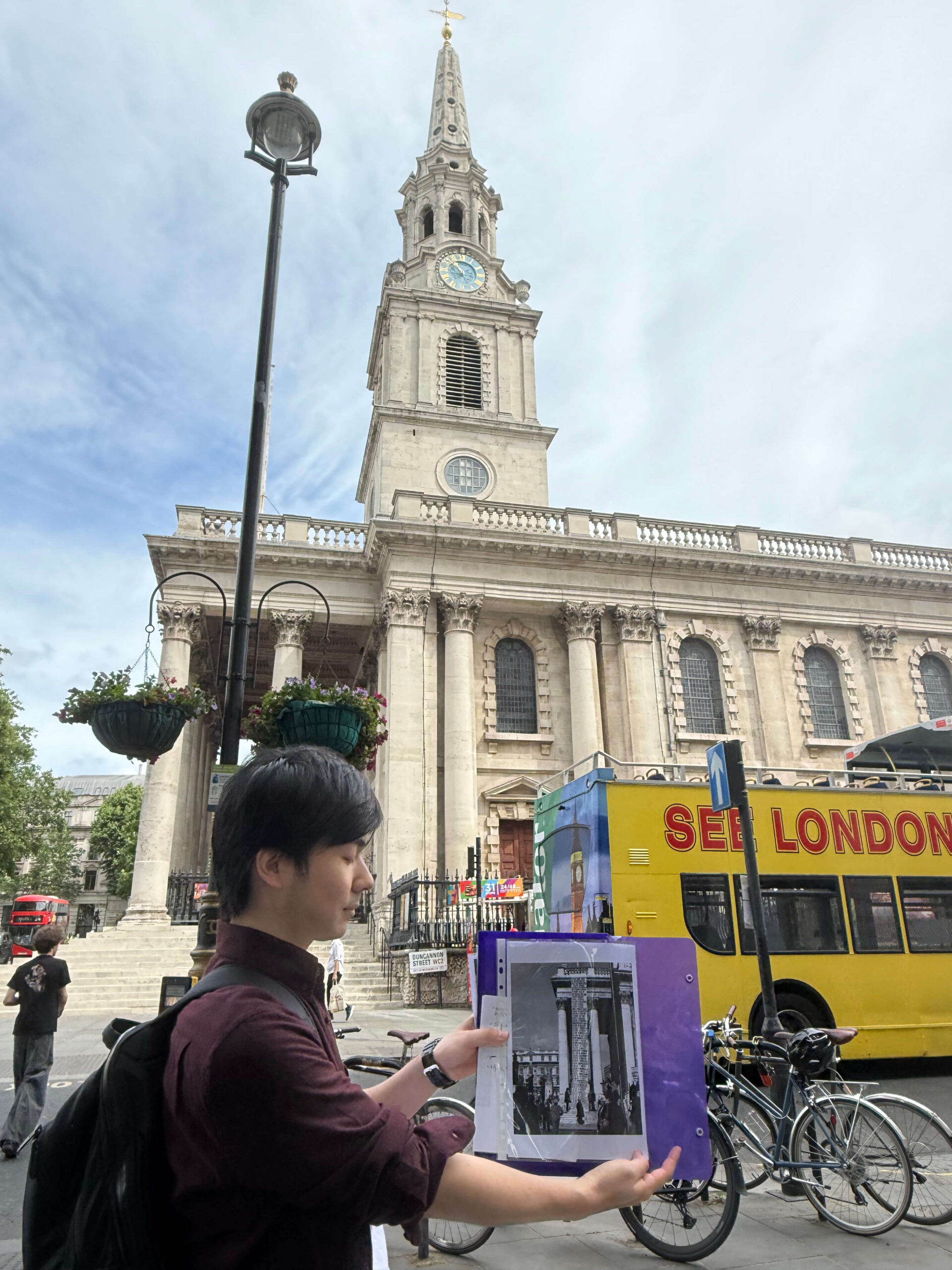
For decades, St Martin-in-the-Fields stood at the heart of London’s anti-apartheid activism. Its steps hosted vigils, fasts and demonstrations calling for the release of South African political prisoners, including Nelson Mandela, while the church publicly commemorated victims of apartheid brutality, such as Steve Biko. Today, St Martin’s continues this legacy through its commitment to social justice, connections with South African communities, and programmes exploring human rights, democracy and freedom. Image: Anti-Apartheid Legacy Centre
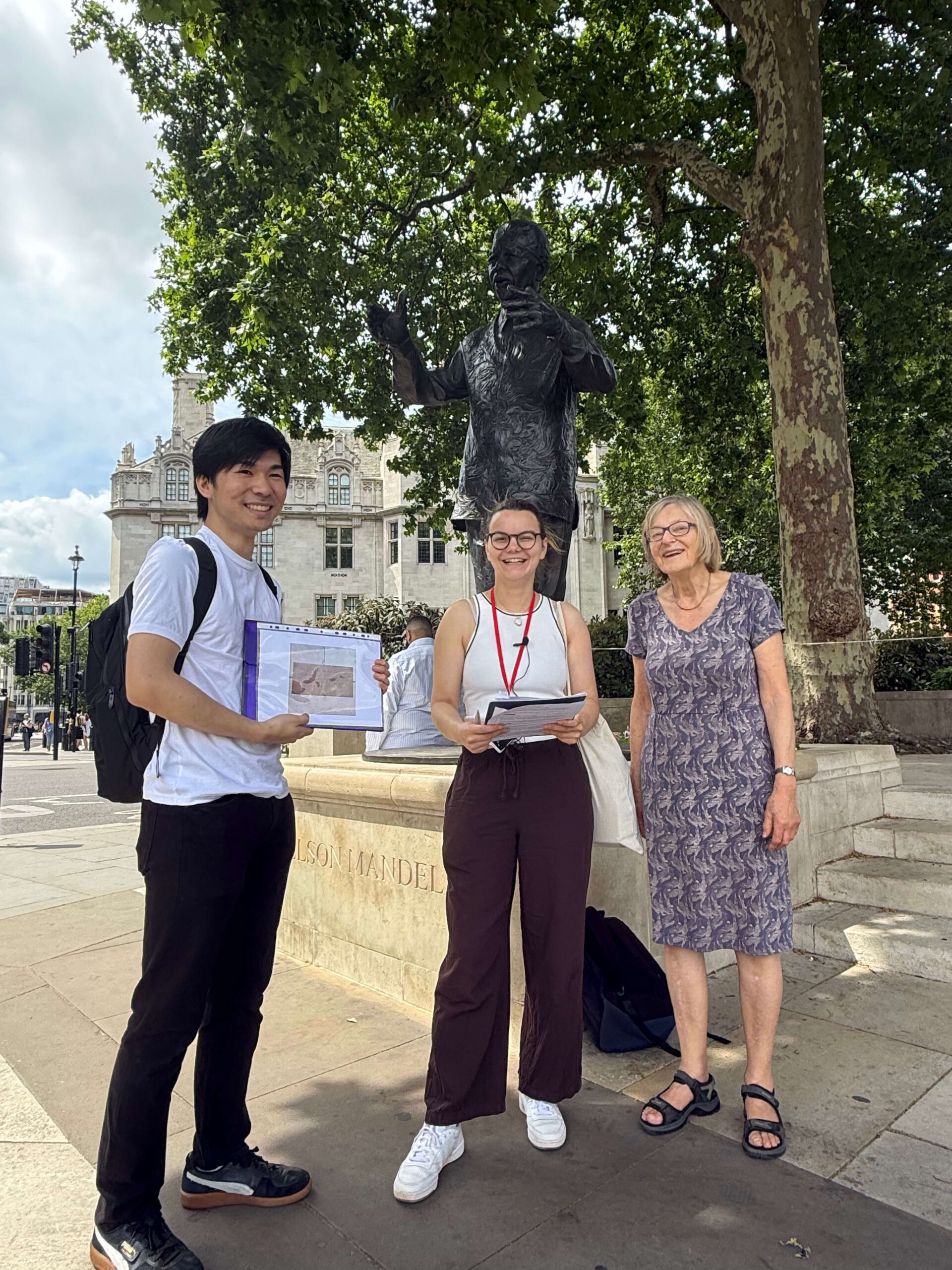
(L-R) Akira Nakajima, Dr Julie Partsch, Christabel Gurney OBE in front of the Nelson Mandela statue on Parliament Square, 2026.
The statue was unveiled by Prime Minister Gordon Brown at a ceremony attended by Nelson Mandela and his wife Graça Machel on 29 August 2007. “We thank the British people once again for their relentless efforts in supporting us during the dark years. When Oliver Tambo and I visited Westminster Abbey and Parliament Square in 1962, we half-joked that we hoped that one day a statue of a black person would be erected here,” Mandela said.
About the Walk
Join the Anti-Apartheid Legacy Centre for a 90-minute guided walking tour through central London, uncovering the hidden geography of Britain’s Anti-Apartheid Movement.
From Trafalgar Square to Parliament Square, this walk explores the streets, buildings and public spaces that became focal points for protest, organising and international solidarity with the struggle against apartheid in South Africa. Along the route, participants will encounter stories of demonstrations, boycotts, exiled activists, political campaigning and the global movement that helped secure Nelson Mandela’s release and contributed to the end of apartheid.
The tour will be led by historian of anti-apartheid heritage Dr Julie Partsch and draws on research undertaken through the Anti-Apartheid London Digital Map project. Dr Partsch worked alongside Anti-Apartheid Legacy Centre trustee and Secretary of the Anti-Apartheid Movement Archives Committee Christabel Gurney OBE to develop this iteration of the tour from the wider map project.
This event forms part of the British Academy Ideas Festival and celebrations marking 40 years of British Academy Postdoctoral Fellowships, showcasing how humanities research can connect scholarship with public engagement.
Booking
Places are limited and sign up for the tour will be on the day at the British Academy Ideas Festival. Tickets are required for participation in the British Academy Ideas Festival – they are free but must be booked in advance. Book here.
Please note that this is an outdoor walking tour through central London. Participants should wear suitable footwear and clothing appropriate to the weather conditions on the day. We recommend bringing a refillable water bottle (this can be refilled at the British Academy before starting off) too!
Talk: Free Nelson Mandela! Learning History Where It Happened
British Academy – Library I | 13:45–13:55 Saturday 20th June
What can London’s streets tell us about the global struggle against apartheid?
In this short talk, British Academy Postdoctoral Fellow Dr Natasha Robinson explores how sites connected to Britain’s Anti-Apartheid Movement reveal hidden histories of protest, solidarity and social change. Drawing on the Anti-Apartheid London Digital Map project, she considers how encountering these stories in the places where they happened can deepen our understanding of identity, belonging and civic participation today.
Free, part of British Academy Ideas Festival programme – tickets required as above.
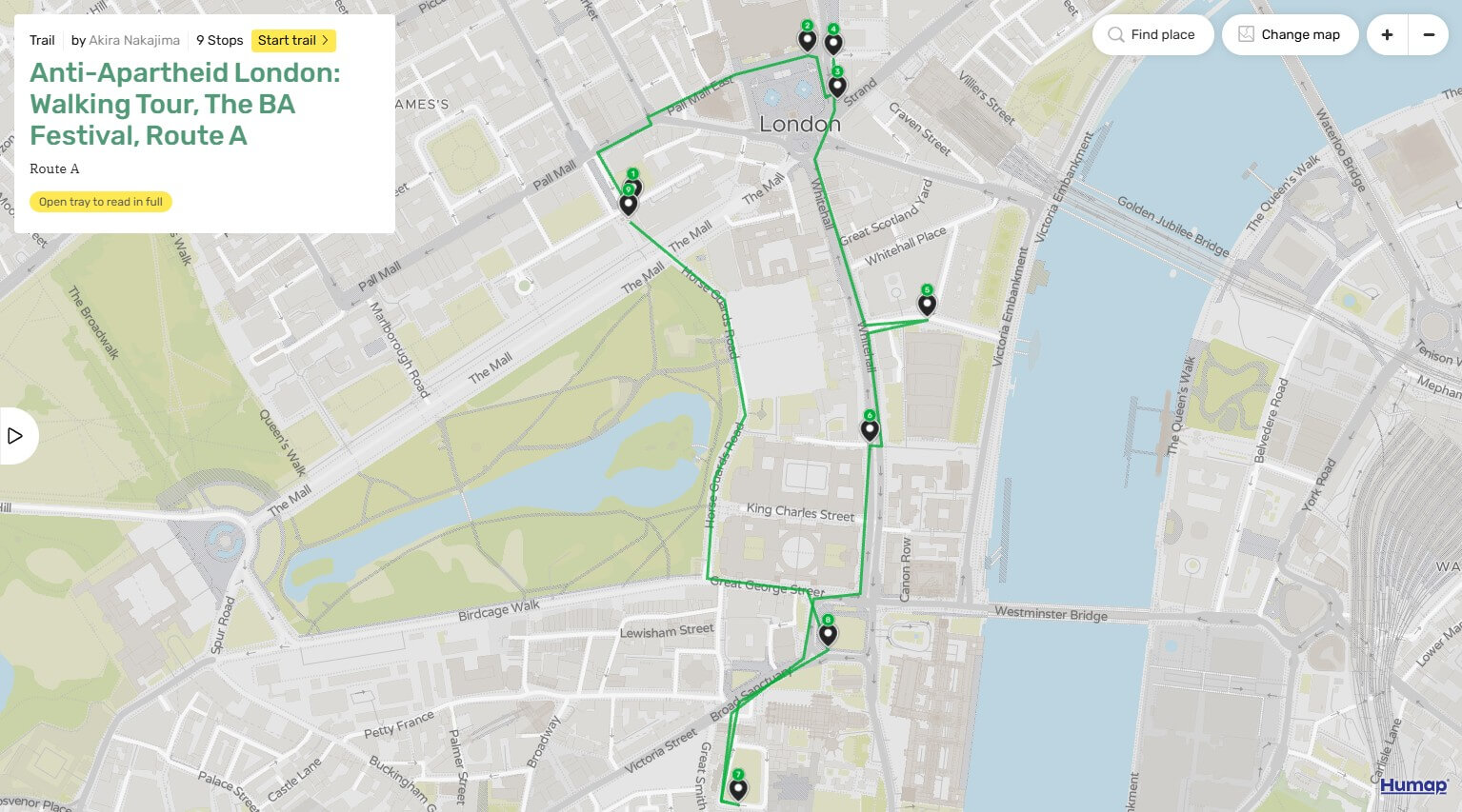
Expected route for walk on 20th June 2026.
The Anti-Apartheid London Digital Map Project
The walking tour has been developed as part of the Anti-Apartheid London Digital Map, a collaborative public history project led by Dr Natasha Robinson (Oxford University’s Department of Education) in partnership with the Anti-Apartheid Legacy Centre.
Supported by the University of Oxford’s Knowledge Exchange Seed Fund and the Department of Education, the project maps more than fifty sites across London connected to anti-apartheid activism, resistance and international solidarity. Combining archival research, public history and digital storytelling, the project preserves these interconnected histories while making them accessible to wider audiences.
Delivered through a close partnership between the University of Oxford and the Anti-Apartheid Legacy Centre, the project brings together academic research, community knowledge and lived experience. Content for the map has been developed through a working group convened by the Centre, with project production led by Akira Nakajima.
The Anti-Apartheid Legacy Centre’s contribution to the project has also been supported through its National Lottery Heritage Fund programme, including research undertaken with six University of Oxford student interns in the Bodleian’s archives over the past year. The completed map will support school teaching, public learning and community engagement by grounding global solidarity and liberation histories in familiar local spaces.
We look forward to sharing the wider digital map later this year.
The Anti-Apartheid London Digital Map is a partnership between the Anti-Apartheid Legacy Centre and the University of Oxford. The Anti-Apartheid Legacy Centre’s contribution to the project is supported by the National Lottery Heritage Fund. Thanks to National Lottery players, we are able to uncover, preserve and share these histories of resistance and solidarity with wider audiences.