Giving Voice to History: Creating a Comic and Poster about the Soweto Uprising
A blog by Salma Zoe Medina Cameno, June 2026
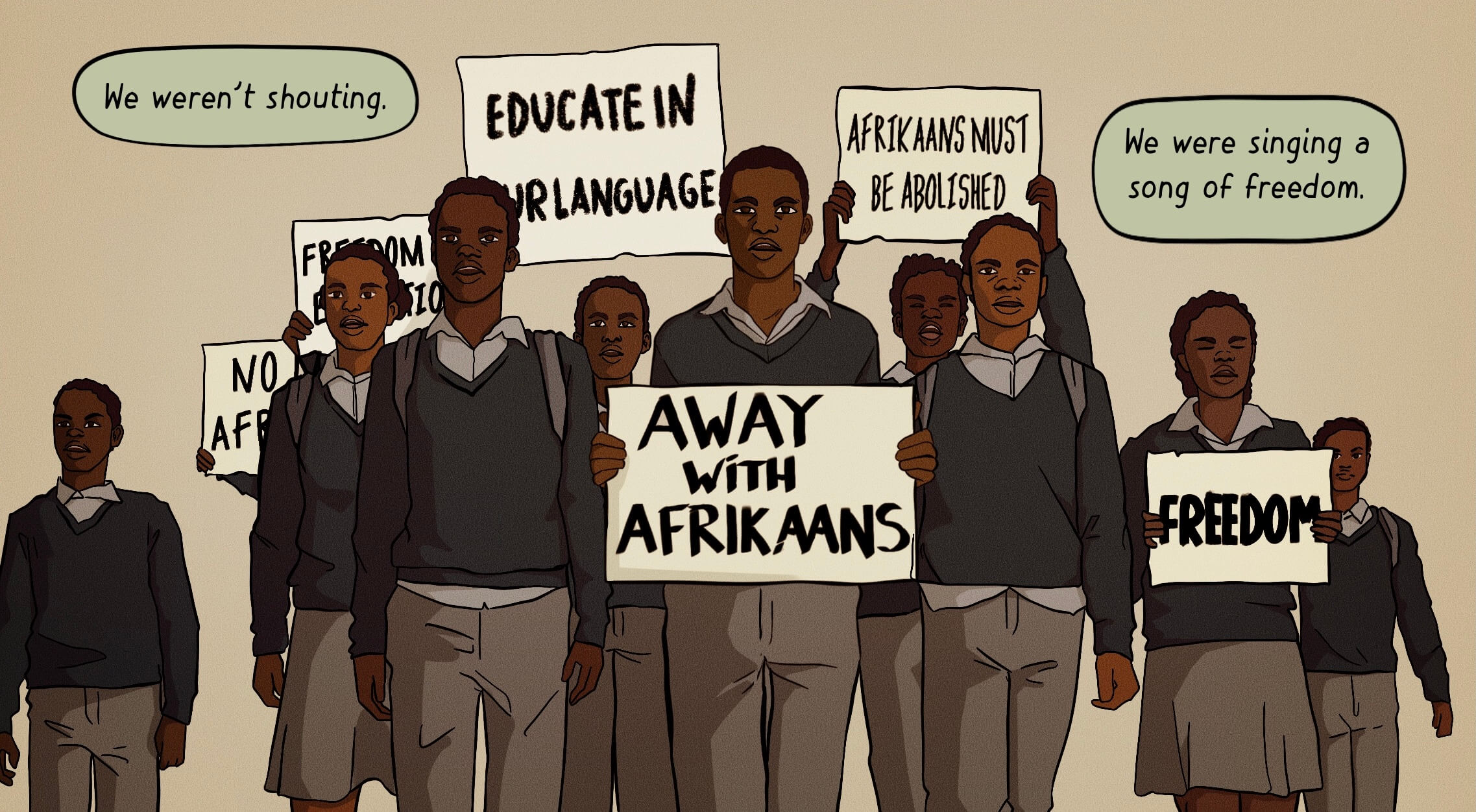
A panel from page 3 of the comic I produced, showing students from Soweto in 1976 carrying placards during their peaceful protest.
The Soweto Uprising of 1976, led by school students protesting the imposition of Afrikaans as a language of instruction, became a turning point in the struggle against apartheid. This history was introduced to my cohort of Illustration and Animation students by the Anti-Apartheid Legacy Trust, and in response we were asked to respond by creating materials, using and developing skills taught on our course, that could support young people today learning about – and from – this history.
I set about working on a comic and poster about the Soweto Uprising, as a way to connect this historical event from 1976 with a modern audience. Rather than simply retelling the facts, I focused on the people behind the history and the emotions that shaped their experiences.
The comic follows a young journalist in Soweto in 2026 who sets out to reconstruct the events on the day of the uprising. Through interviews with a former student, a teacher, and a police officer, she pieces together different perspectives on the events that changed South Africa forever.
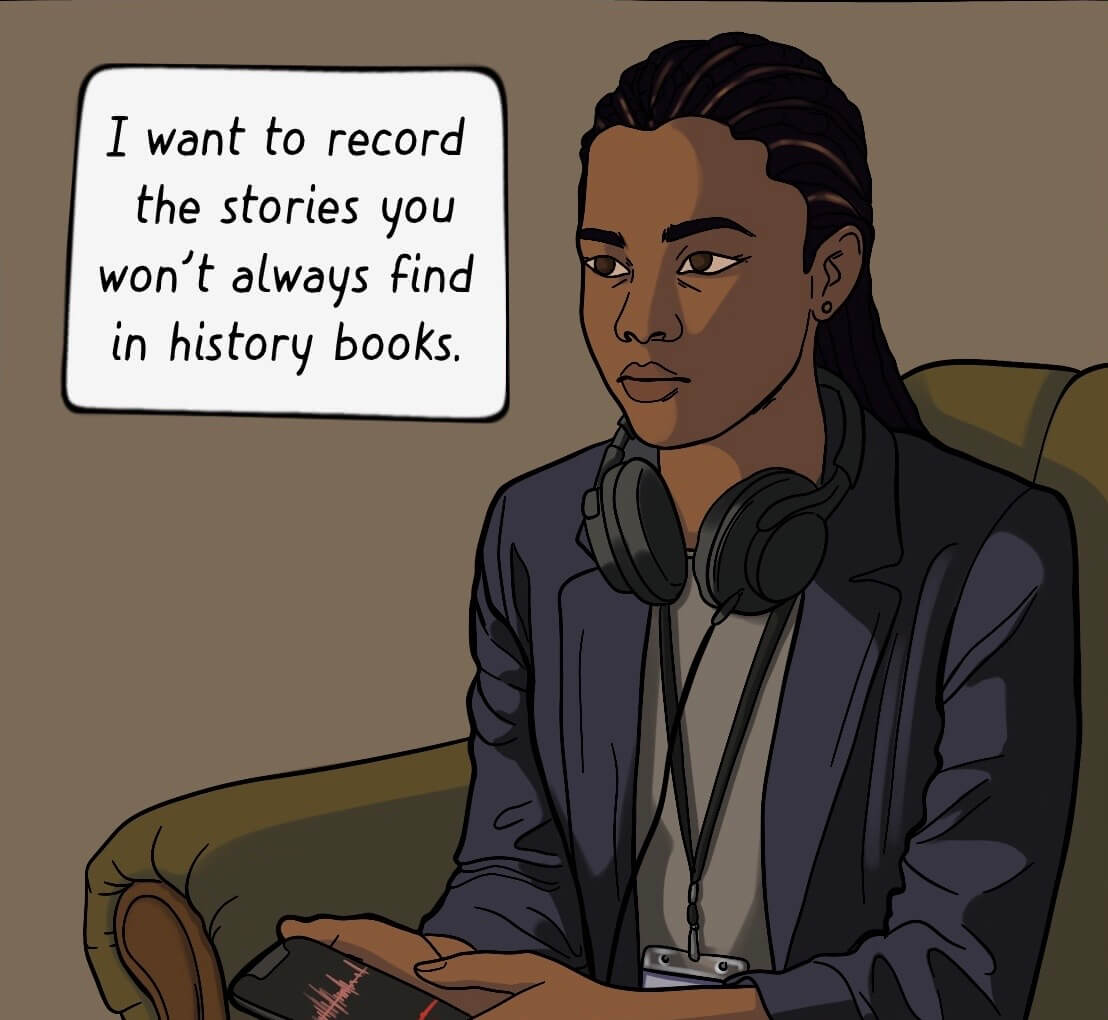
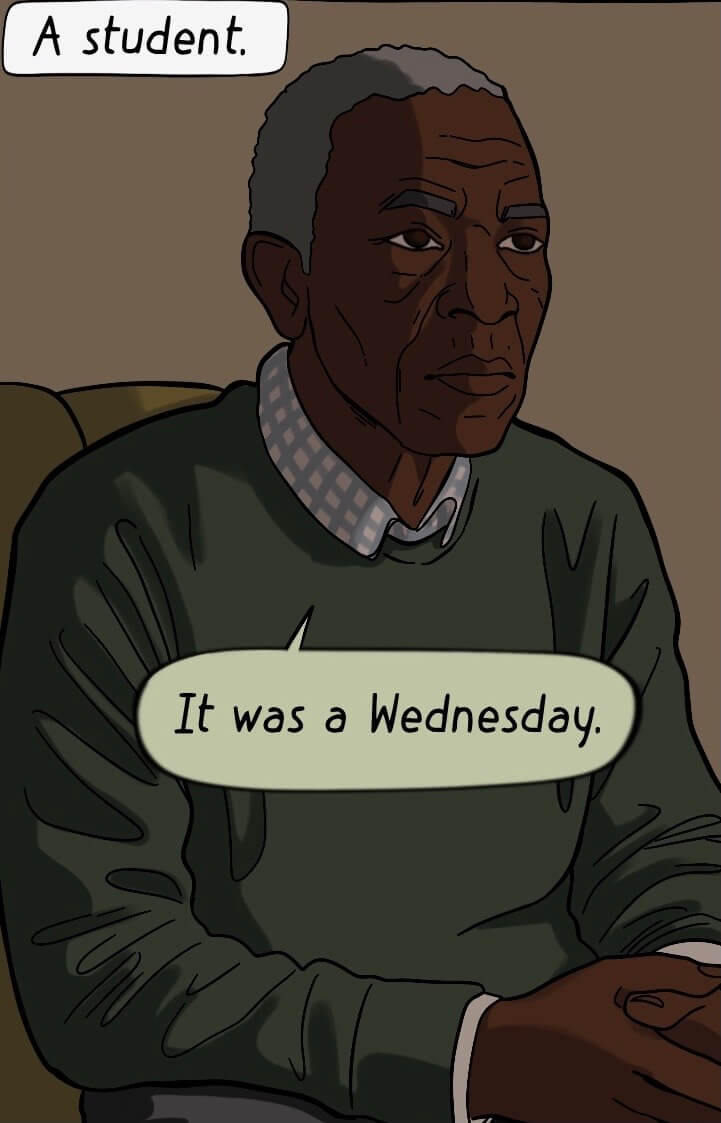
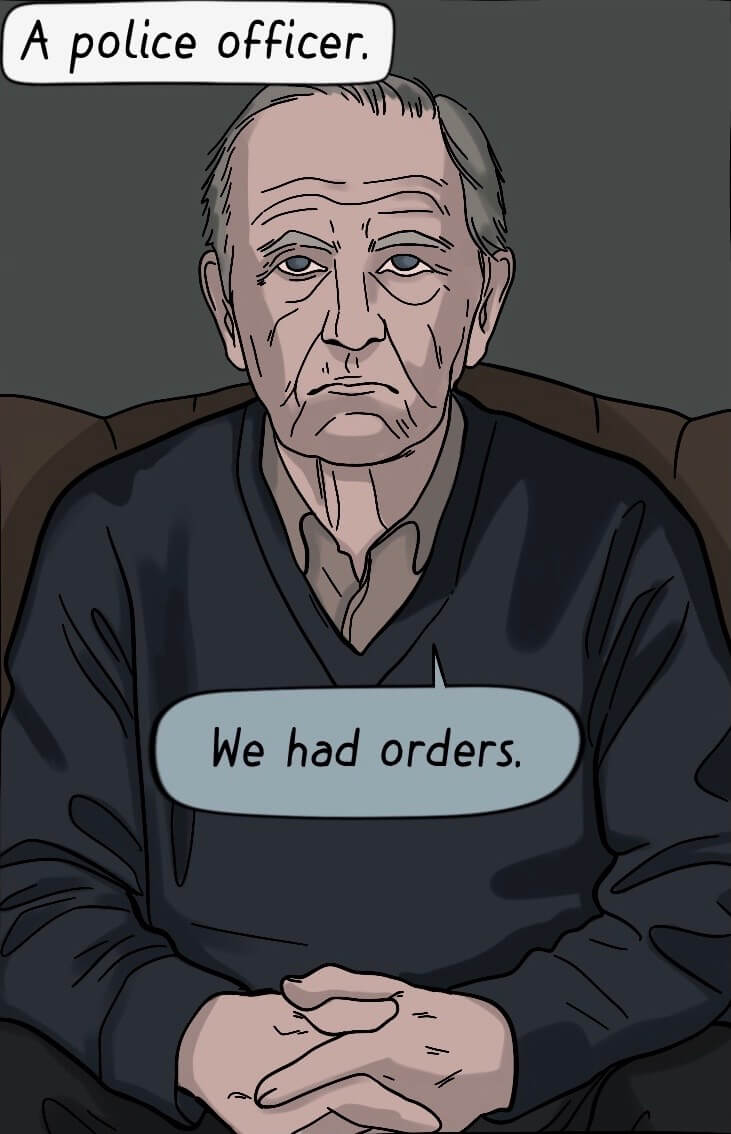
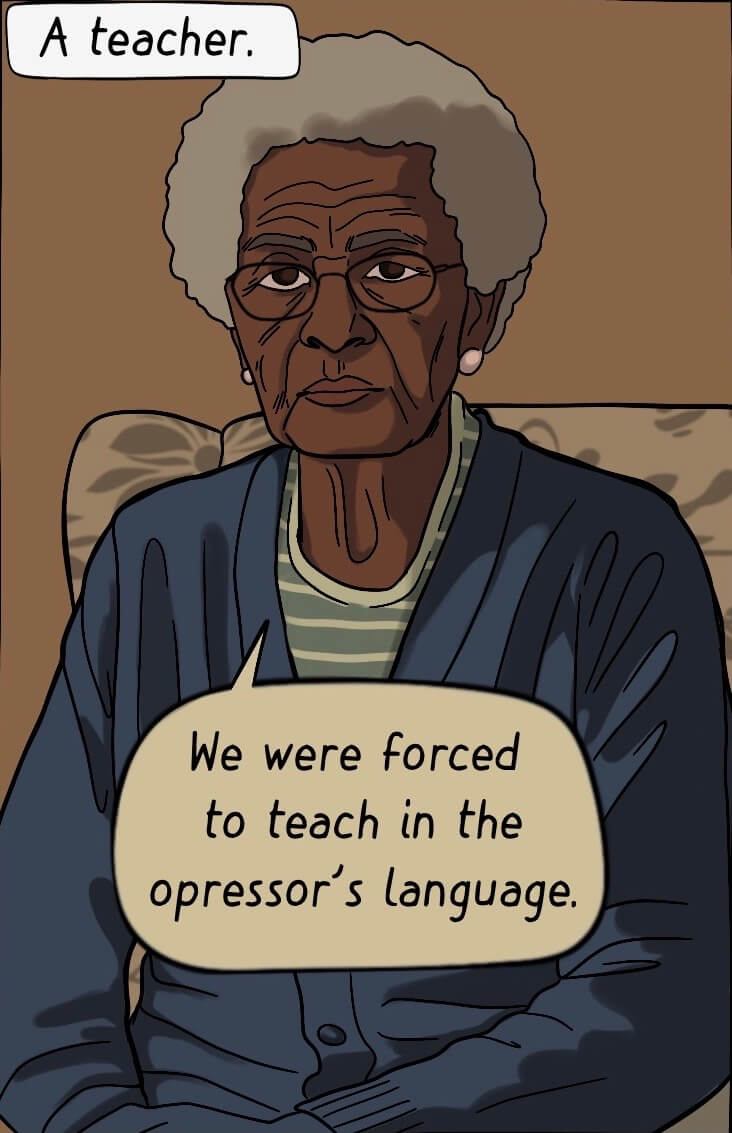
Characters created for the comic as ways to deliver the multi-layered storytelling
As the story unfolds, the reader is taken back to the tense atmosphere of apartheid-era classrooms, where students were forced to learn in the Afrikaans language, a policy widely experienced as a tool of control and oppression. The narrative builds towards the tragic moment when the first shot was fired, before returning to a more hopeful and vibrant present-day South Africa.
One of the reasons I believe this story works is because it approaches history through experiences that many young people can relate to. The journalist is young and, the students wear school uniforms and carry backpacks, and much of the story takes place in classrooms. The struggle to speak one’s own language and be heard is something that continues to resonate today, particularly in contexts where language shapes identity and access to opportunity. By focusing on these personal elements, the comic transforms a political and historical event into a story about identity, courage, and belonging.
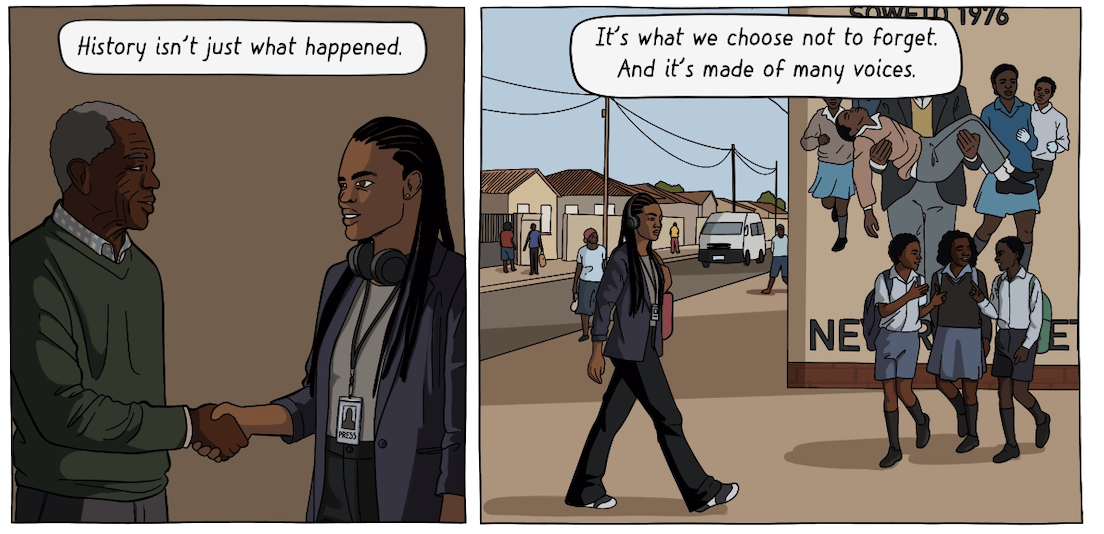
Section from final page of the comic, reflecting on Soweto and the (re)presentation of history. I have drawn on Sam Nzima’s iconic photograph of Hector Pietersen being carried after he was shot by police, incorporating it into the mural and placing children from Soweto 2026 in front of it to demonstrate that this history is not confined to the past, but continues to shape the lives, identities, and perspectives of young people today.
Another important creative decision was to tell the story through multiple voices rather than relying on a single narrator. The former student represents the bravery of a generation willing to leave their classrooms and protest for their rights. The teacher reflects the fear and responsibility of trying to protect young people during a period of uncertainty. The police officer offers a more uncomfortable perspective, revealing how authority, fear, and obedience can shape actions – without diminishing the structural violence of apartheid itself. Together, these voices present the uprising as a complex human story rather than a simple historical event.
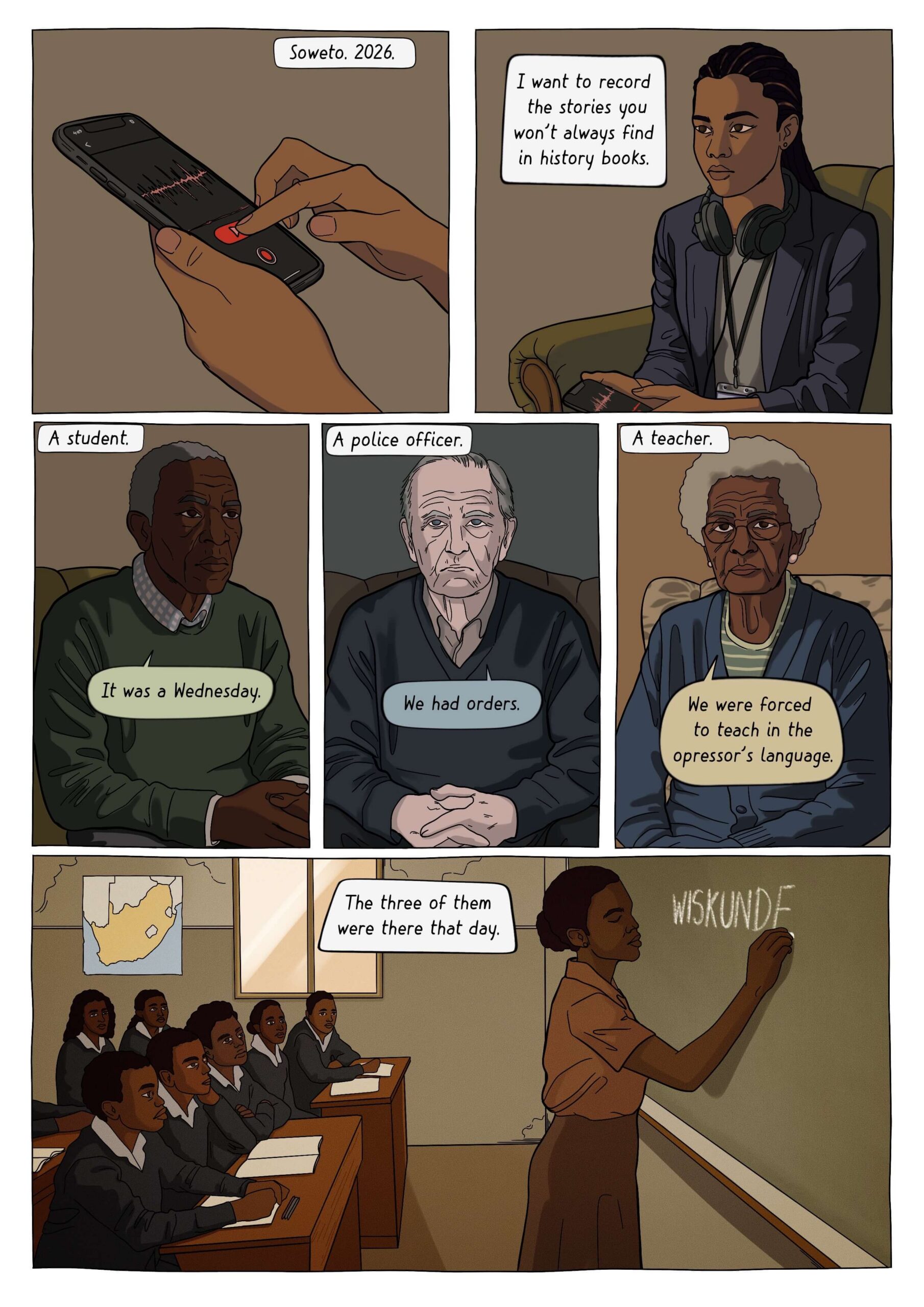
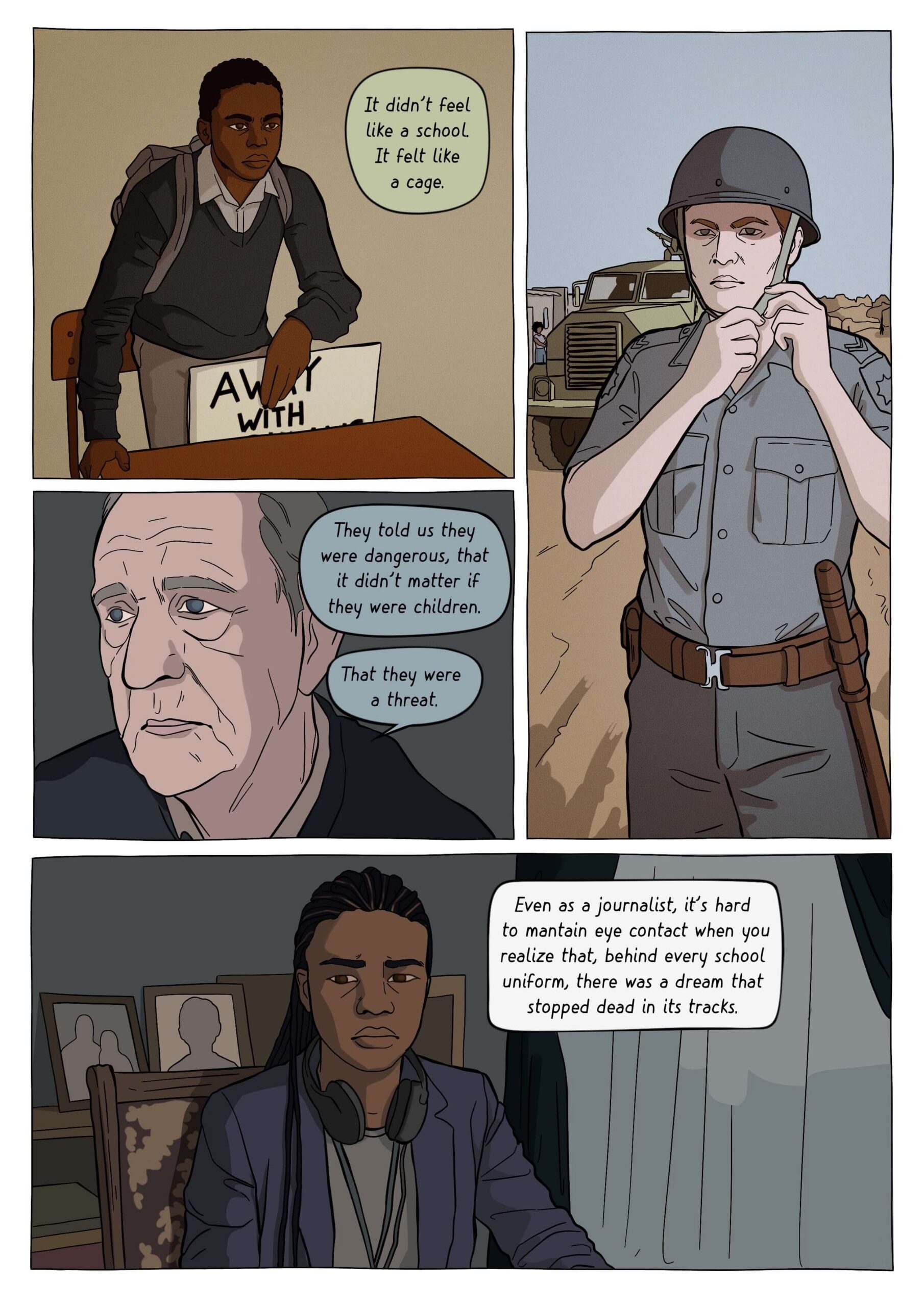
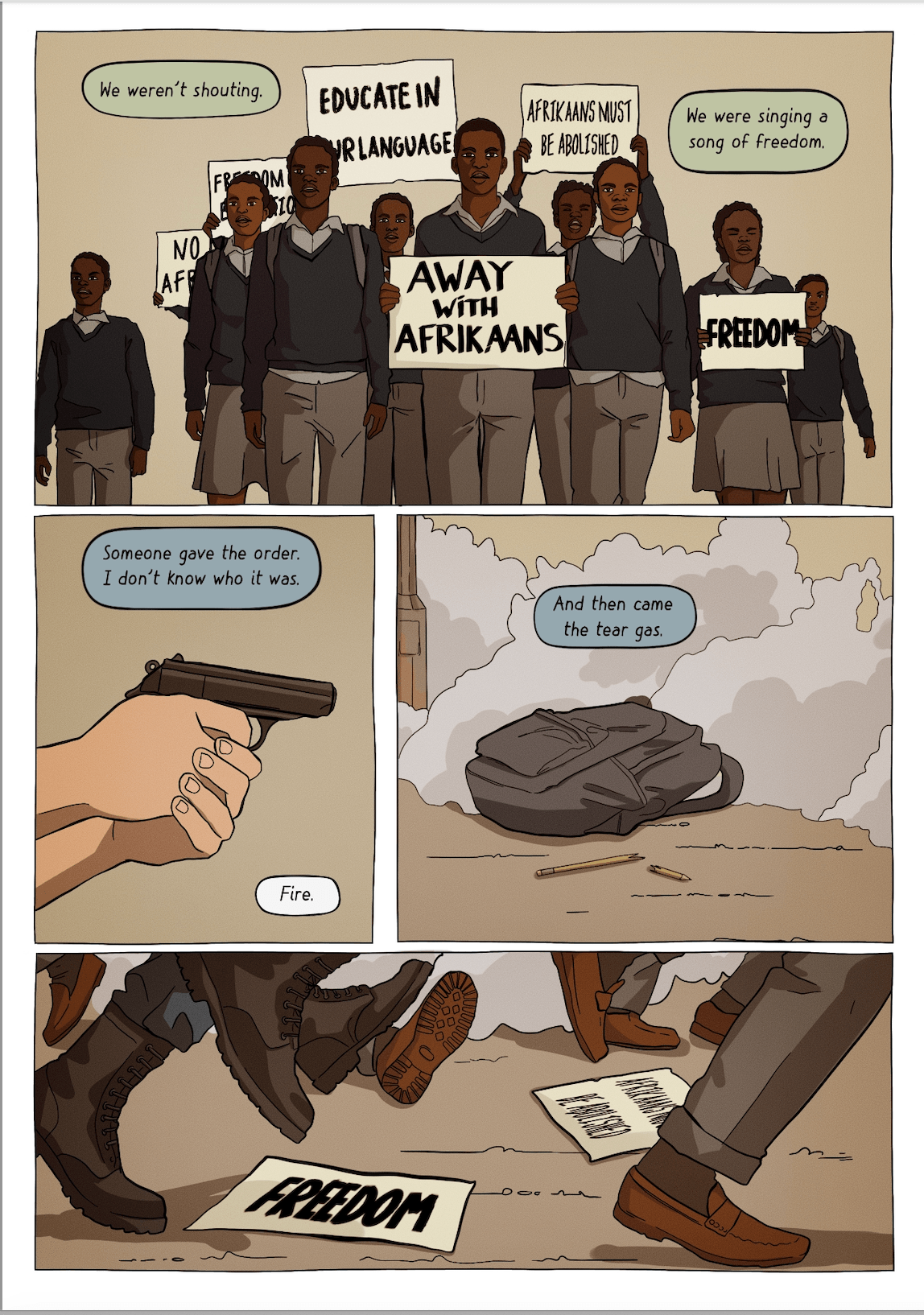
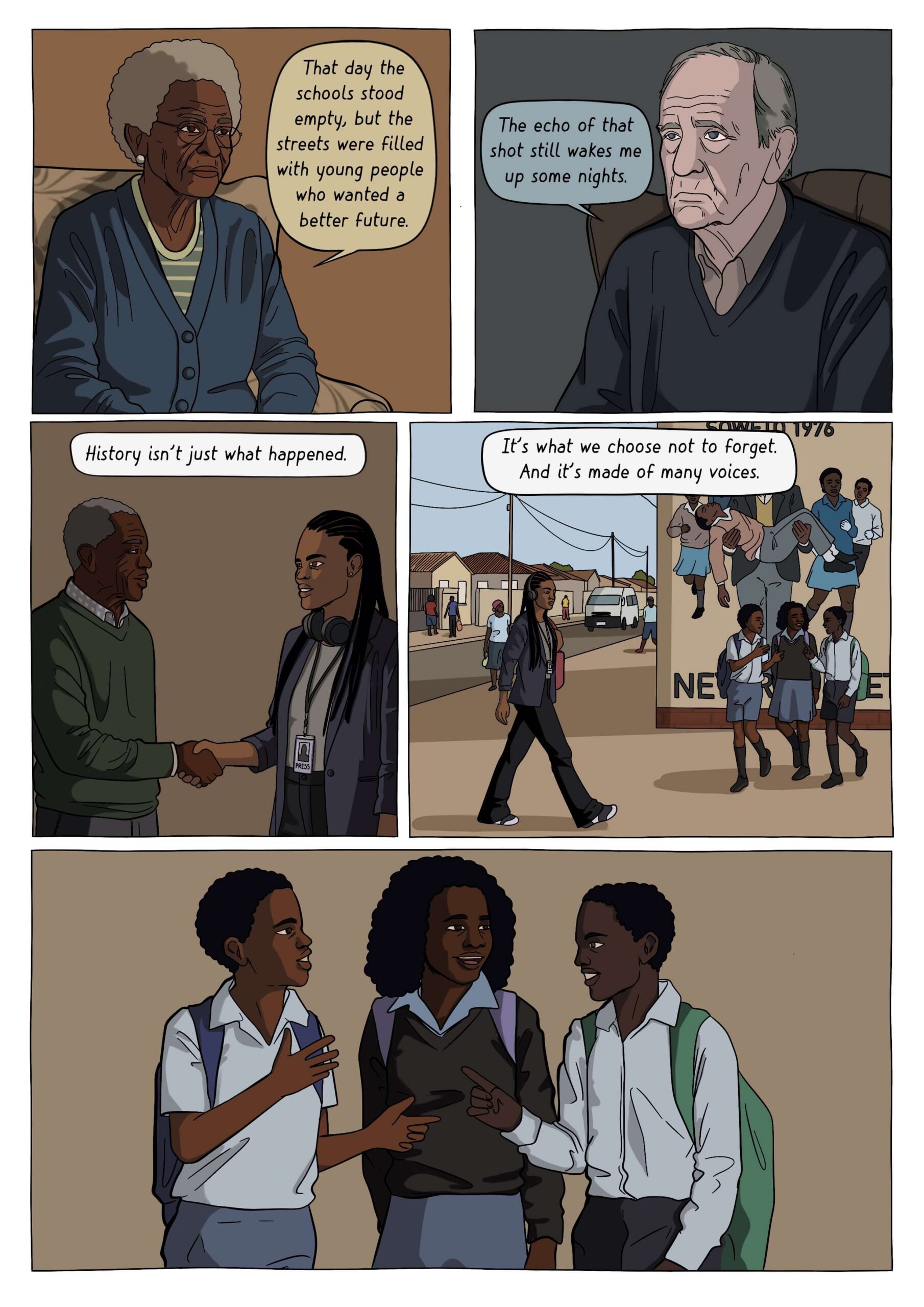
Visually, I developed the comic using Procreate, which allowed me to experiment with composition, colour, and panel design throughout the creative process. One of my key artistic choices was using a sepia filter for scenes set in the past. This helped distinguish different timelines while creating a sense of distance, as though the reader was looking through memories – reflecting how these events are remembered, interpreted, and passed down. In contrast, the present-day scenes use cleaner and more neutral colours to emphasise the connection between past and present. I moved from rough sketches to increasingly refined layouts, carefully considering how each panel could communicate emotion, tension, and movement.
Alongside the comic, I also created a poster that aimed to use a metaphorical element to express the urgency and collective resistance of the students who took to the streets – the cry for freedom that was the Soweto uprising. Both pieces aim to honour the young people who participated in the Soweto Uprising while encouraging modern audiences to reflect on the importance of identity, language, and social change.
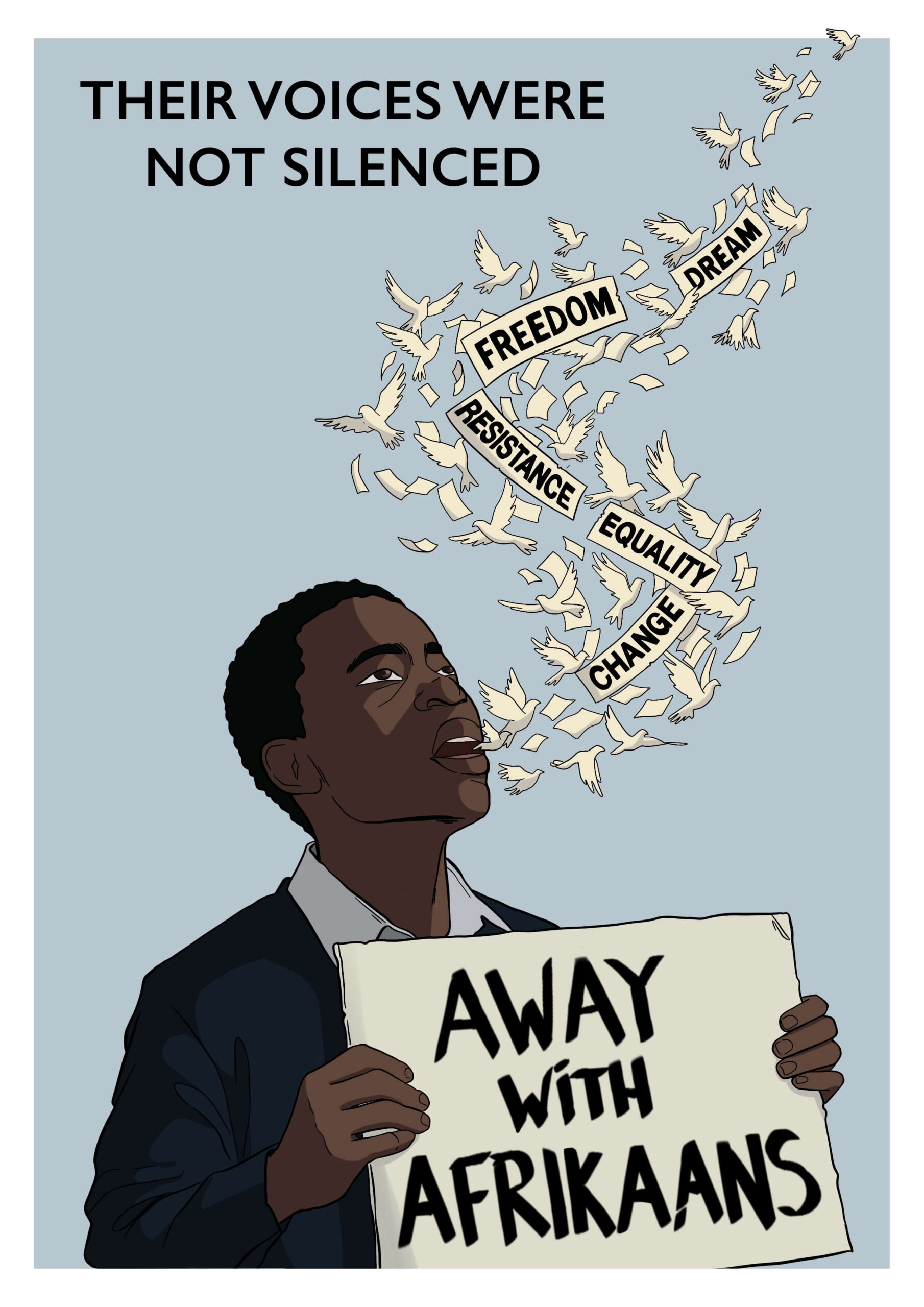
My final poster design, created to promote the comic
Working on this project reminded me that history is not only about dates and events. It reinforced that history is shaped by people – their choices, actions, and the ways their stories continue to live in, and influence the present. Through the comic and poster, I hoped to make that history feel personal, relevant, and meaningful for a new generation of readers.
The legacy of the Soweto Uprising continues to shape conversations about education, language, and youth activism today.
Blog written by Salma, Illustration & Animation Level 5, London Metropolitan University, June 2026
Instagram: @salem_ilus