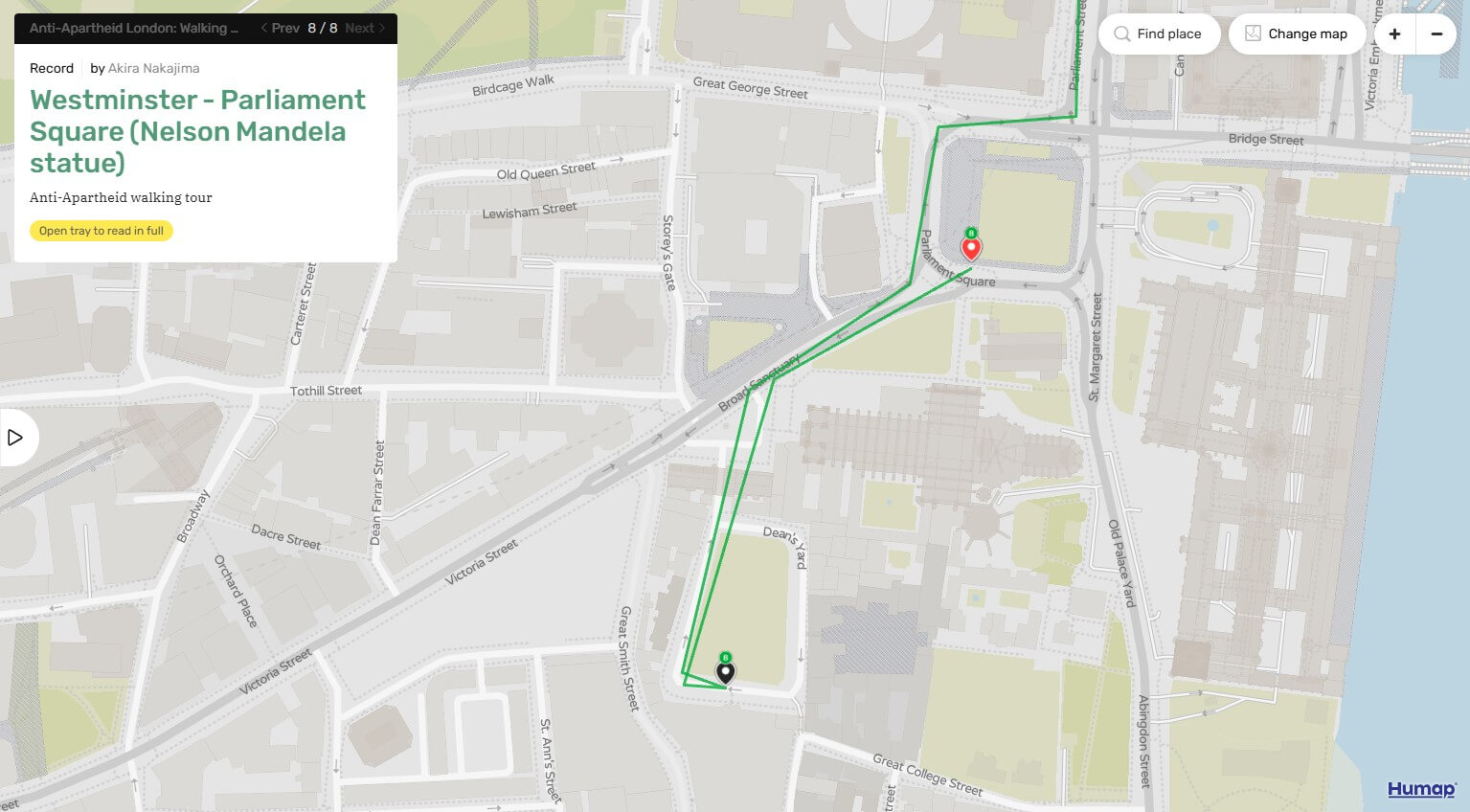
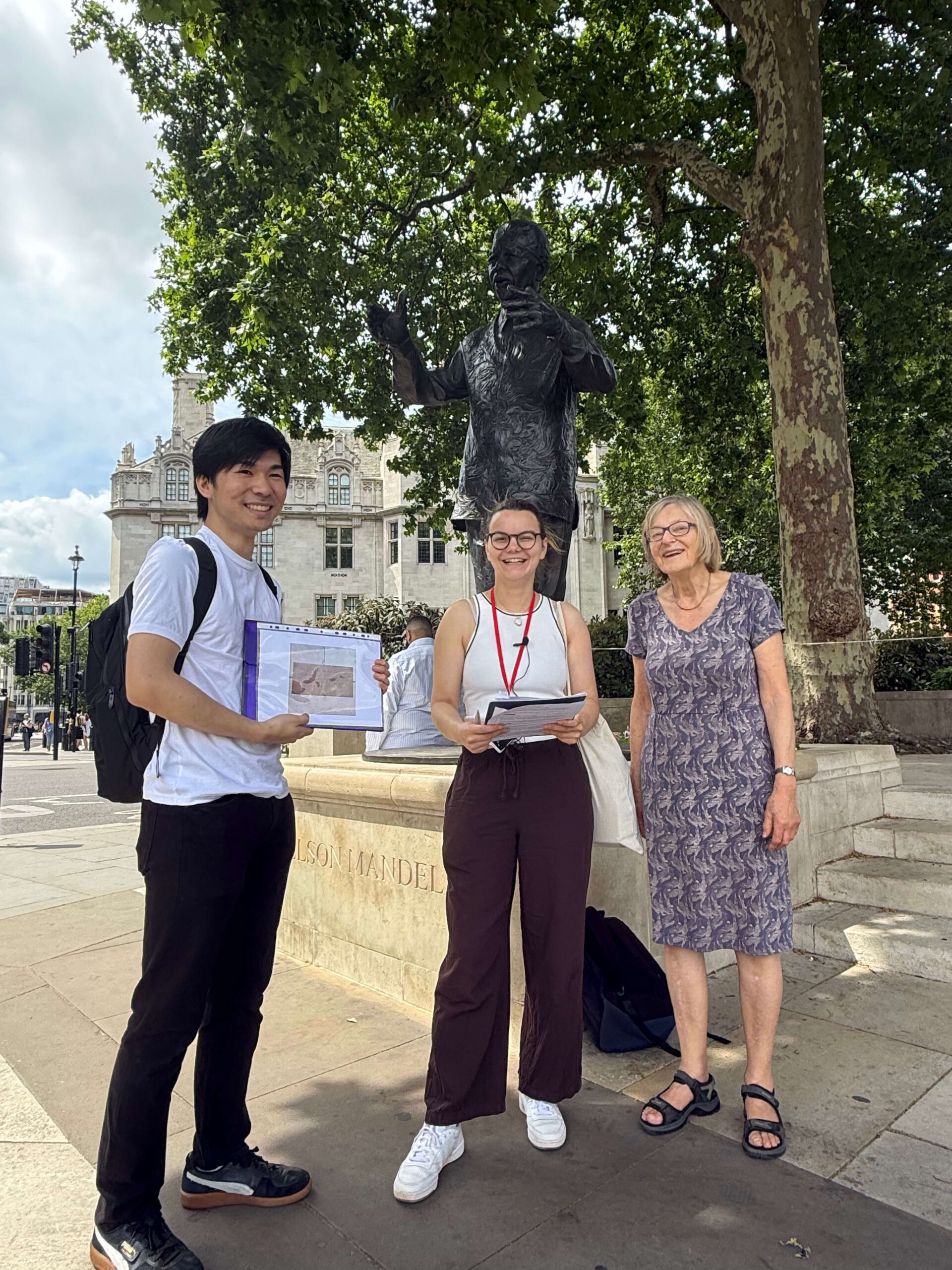
Stop 8: Parliament Square – Mandela Statue (SW1P 3JX)
Theme: Free Nelson Mandela — from campaign symbol to public memory
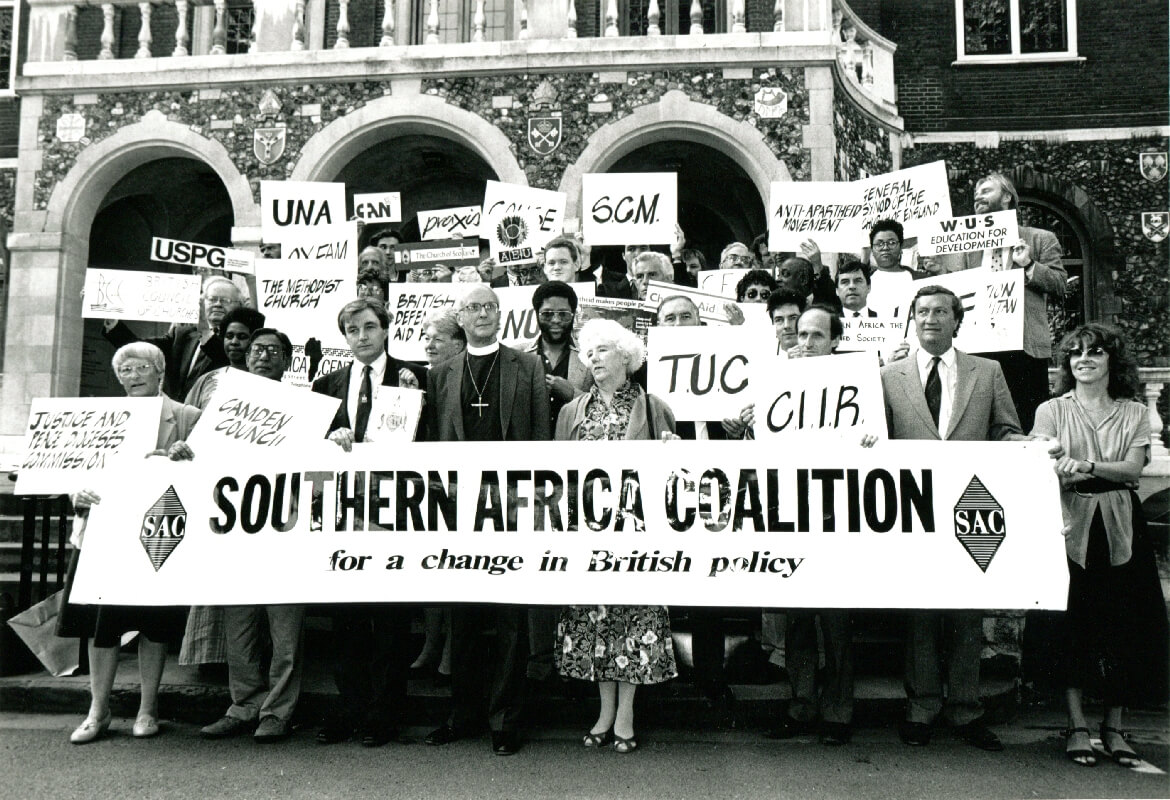
This final stop brings together one of the Anti-Apartheid Movement’s most powerful and enduring campaigns: the global struggle to free Nelson Mandela.
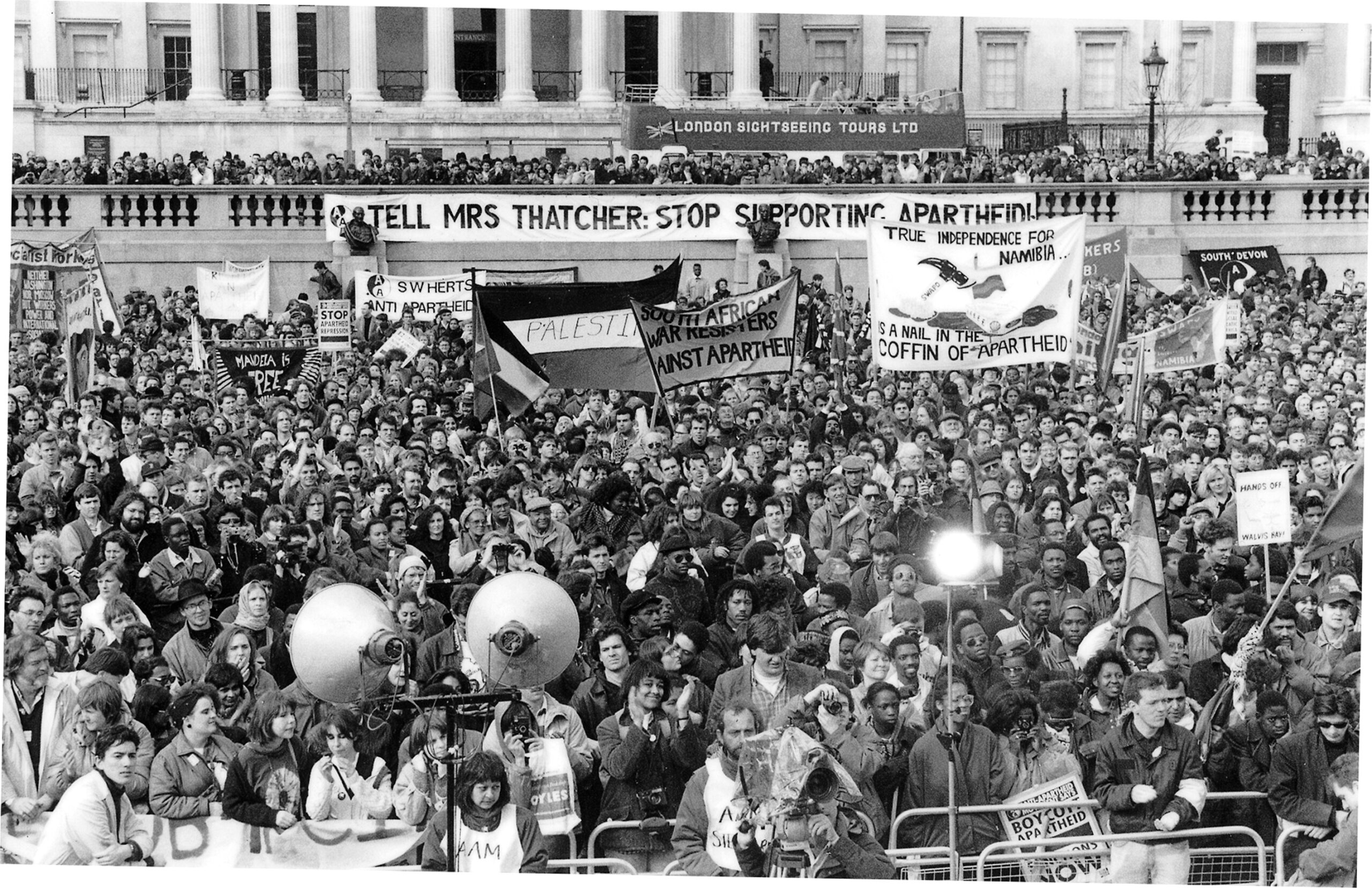
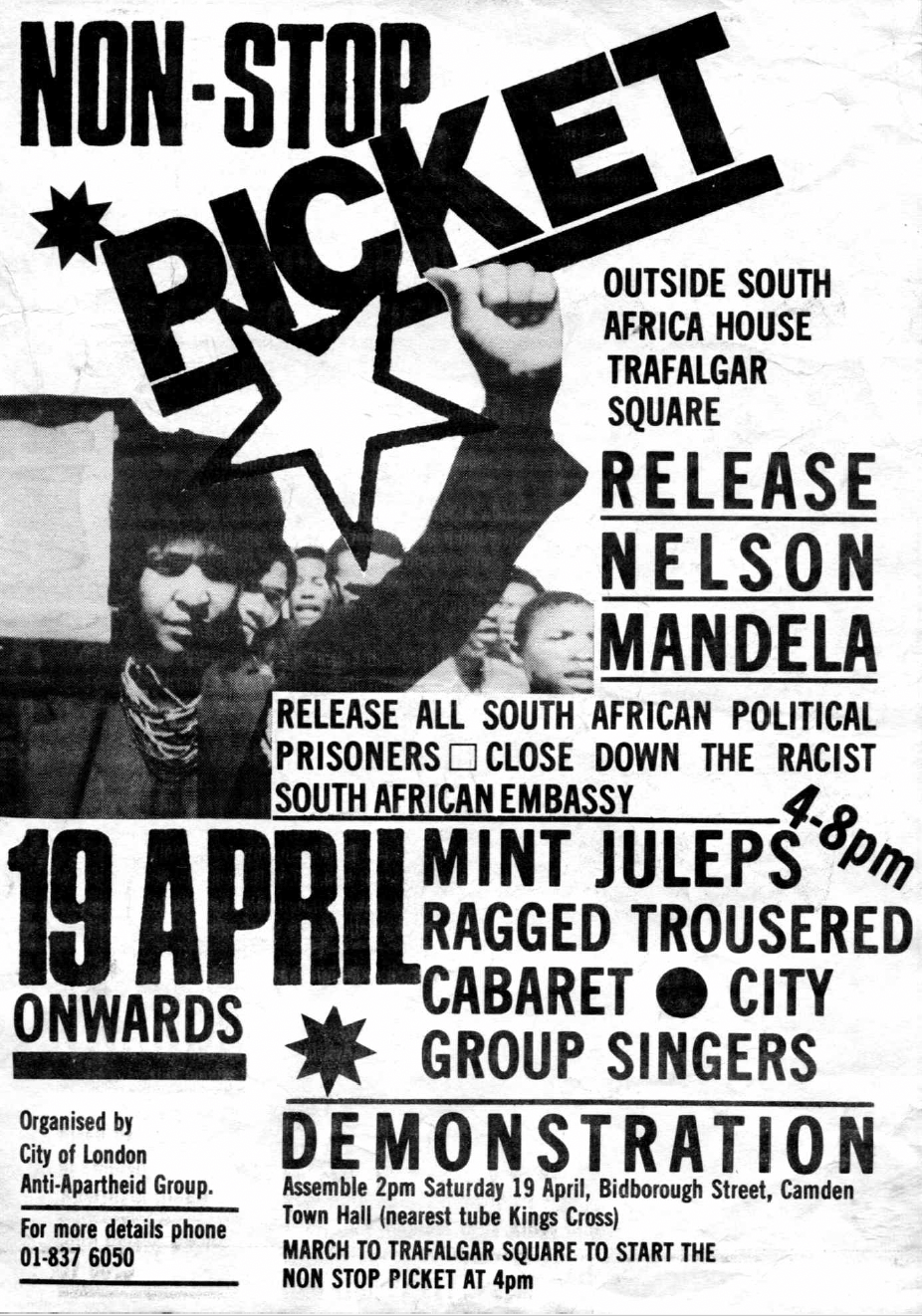
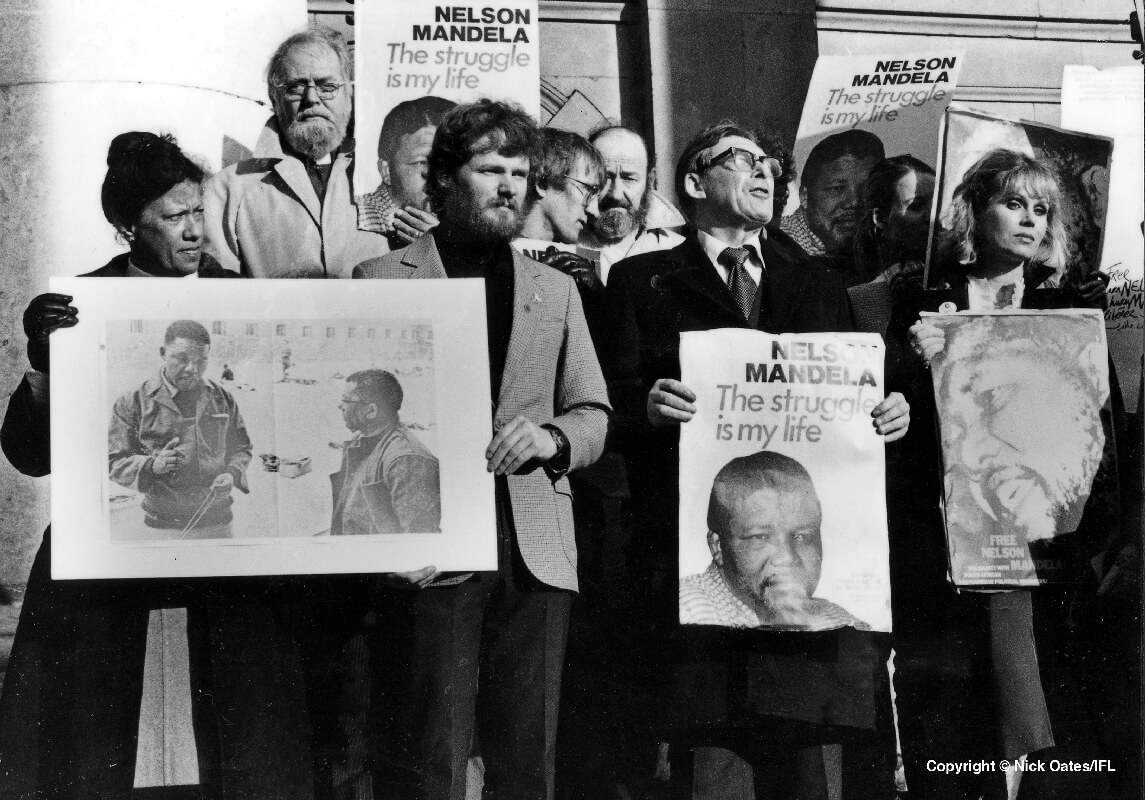
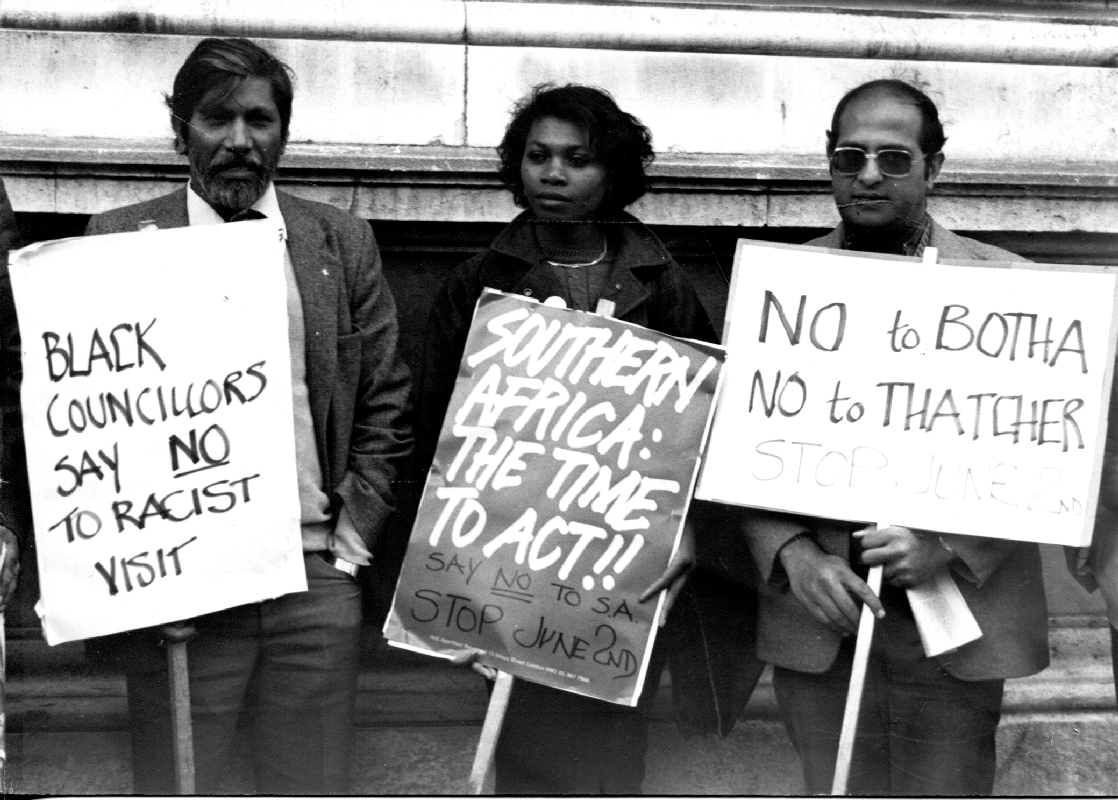
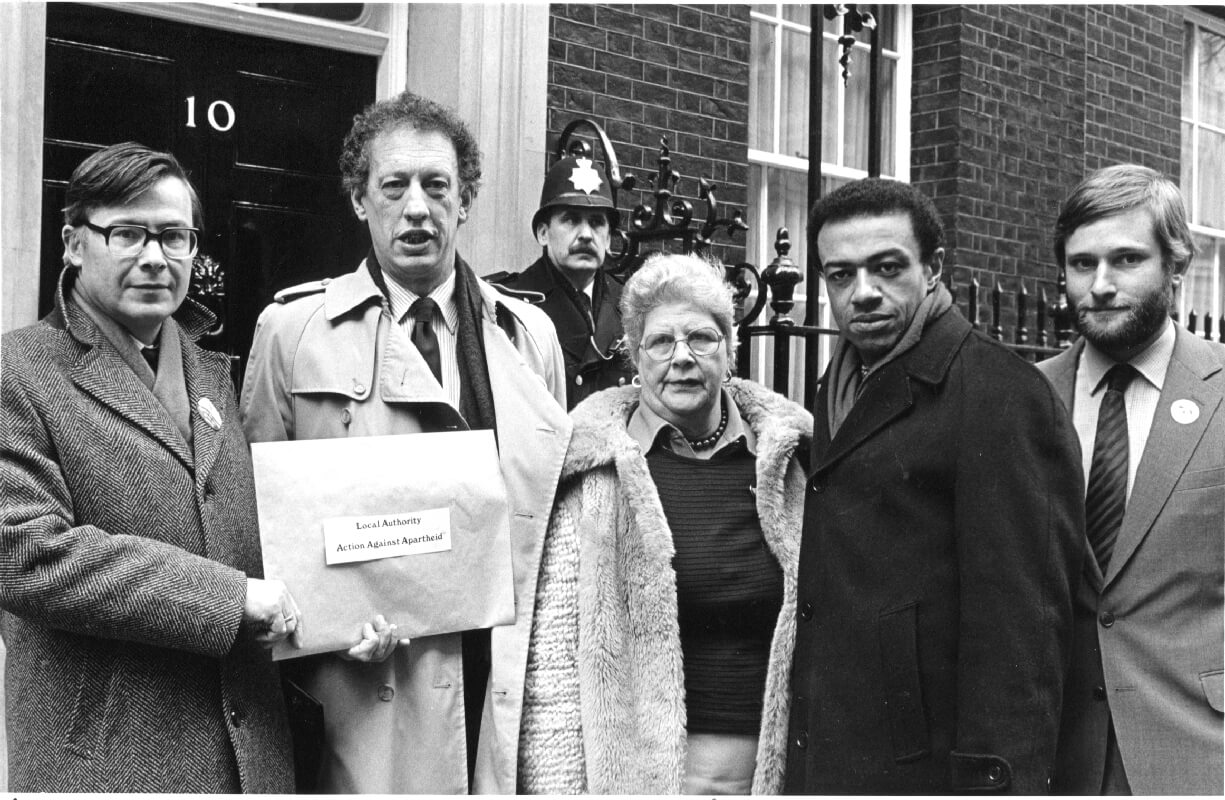
By 1980, a campaign for Mandela’s release had begun inside South Africa and quickly spread across the world. In Britain, Mandela became the human face of the anti-apartheid struggle. The demand to “Free Nelson Mandela” appeared on posters, banners, badges and petitions, transforming a political prisoner into an international symbol of resistance.
Support for Mandela in Britain grew dramatically during the 1980s. Streets, gardens and public spaces were renamed in his honour, with Glasgow becoming the first British city to grant him the Freedom of the City in 1981. More than 2,000 mayors worldwide signed declarations calling for his release.
The campaign reached its global high point in 1988 with the Nelson Mandela 70th Birthday Tribute Concert at Wembley Stadium. Broadcast to more than sixty countries, it transformed Mandela’s imprisonment into a truly international cause and brought anti-apartheid politics into millions of homes. Days later, thousands gathered in Hyde Park and St James’s Piccadilly for rallies and services, with cards and messages of solidarity delivered to South Africa House.
Mandela was released on 11 February 1990 after 27 years in prison. Just two months later, he returned to London, where he was welcomed at a second Wembley concert and thanked the British Anti-Apartheid Movement, describing its support as “a source of real inspiration.”
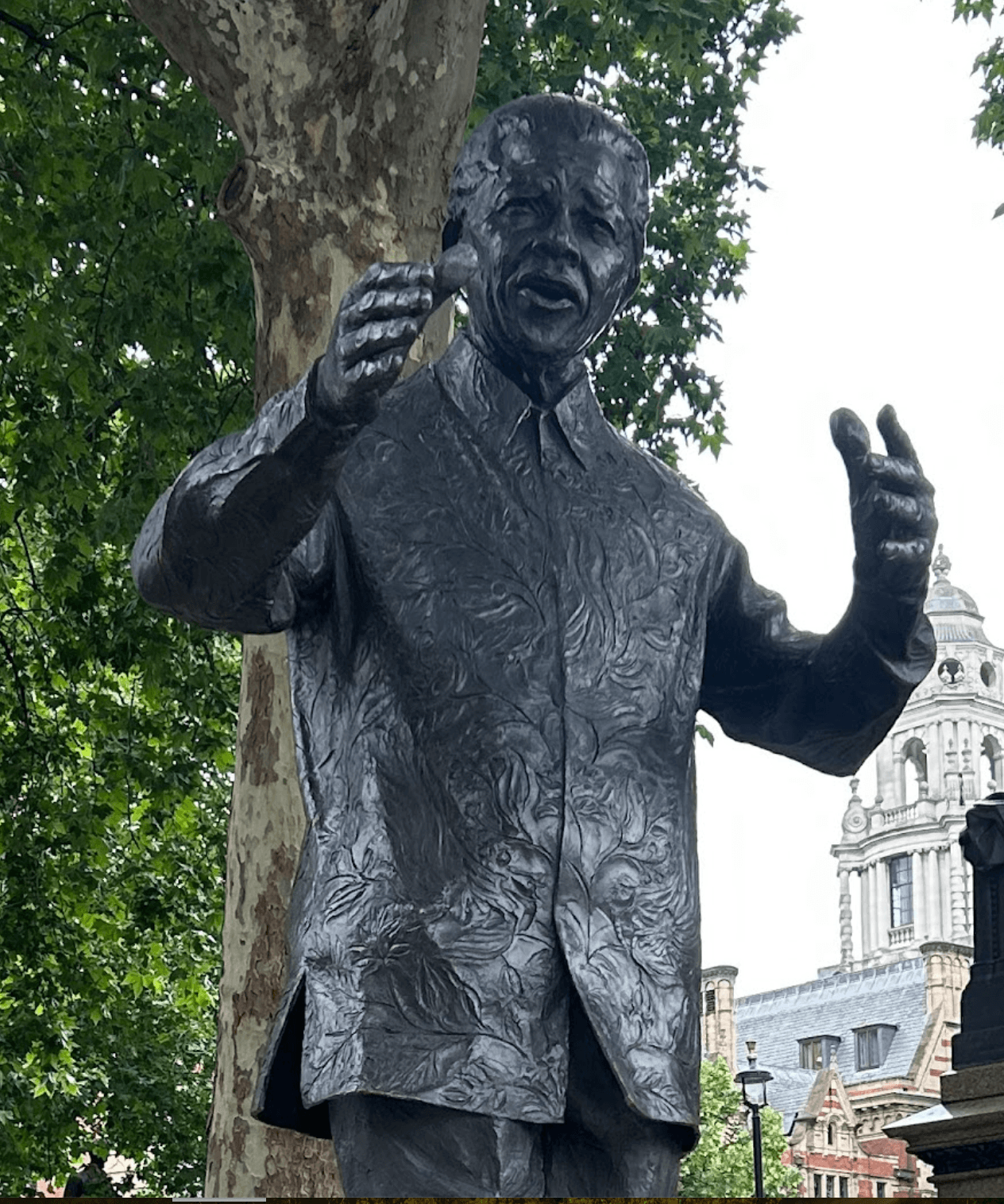
his statue stands here because campaigners argued that Parliament Square — the symbolic centre of British political life — was the most fitting place to commemorate Mandela. Its location was debated for years, with earlier proposals including Trafalgar Square and South Africa House, before Westminster Council finally approved this site in 2007.
The campaign to establish the statue was led over many years by Wendy Woods, widow of anti-apartheid journalist and activist Donald Woods, alongside supporters including Lord Richard Attenborough, who argued that Mandela’s place in world history deserved recognition at the heart of British political life. Their efforts turned the statue itself into part of the continuing story of anti-apartheid memory and public recognition.
That location matters. Parliament Square is filled with statues of political power: British prime ministers such as Winston Churchill, David Lloyd George and Benjamin Disraeli, alongside international figures including Abraham Lincoln, Mahatma Gandhi — and Jan Smuts, the South African statesman, imperial military leader and one of the architects of racial segregation whose policies helped lay foundations for apartheid.
To place Mandela here, in conversation with Smuts and these other political figures, is deeply significant. It marks a shift not only in South Africa’s history, but in Britain’s public memory: from celebrating imperial and colonial power to recognising those who fought against racial oppression.
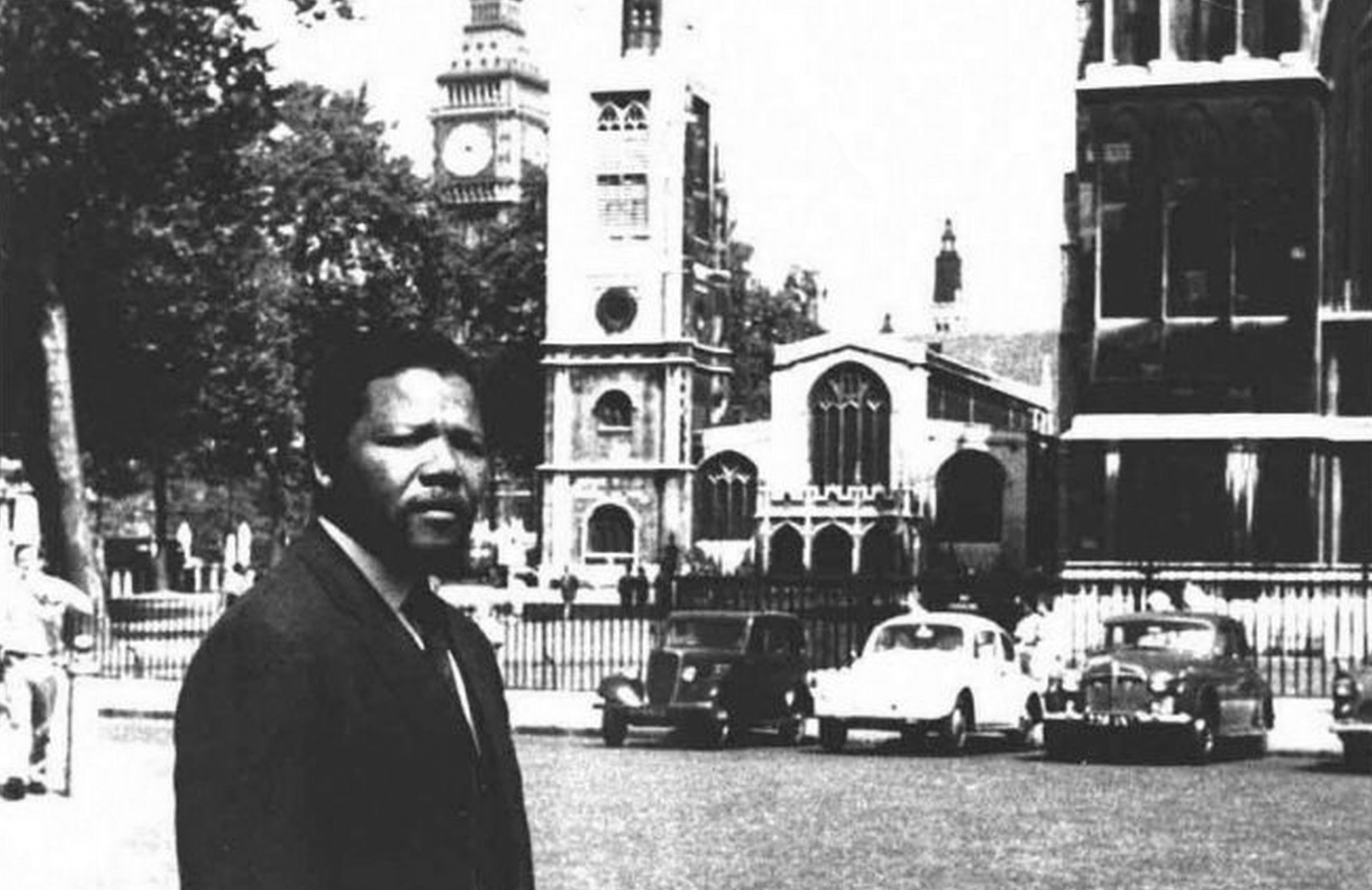
At the statue’s unveiling in 2007, Mandela recalled that during his secret visit to London in 1962, he and Oliver Tambo had joked about the idea of a Black man one day standing in Parliament Square. Nearly half a century later, that improbable conversation had become part of London’s landscape.
The statue makes visible just how much had changed — and how much had been fought for. Mandela, once imprisoned and condemned by the apartheid state, now stands here facing the Houses of Parliament: not as a symbol of empire, but as a reminder of the power of collective resistance to transform history.