A Mural That Belongs to Everyone:
The community co-design process behind the new AALC mural
What does it mean to remember the Anti-Apartheid movement today — and who gets to decide how that story is told?
These were some of the questions that sat at the heart of the Anti-Apartheid Legacy Centre’s Mural Co-Design Project. Rather than starting with a fixed design, the project brought together activists, community members and younger generations to share memories, reflect on the legacy of the anti-apartheid struggle, and begin translating these into visual ideas. Through three creative workshops in September and October last year, participants were invited to co-design the ideas, symbols, and narratives that would inform the mural at the new AALC centre.
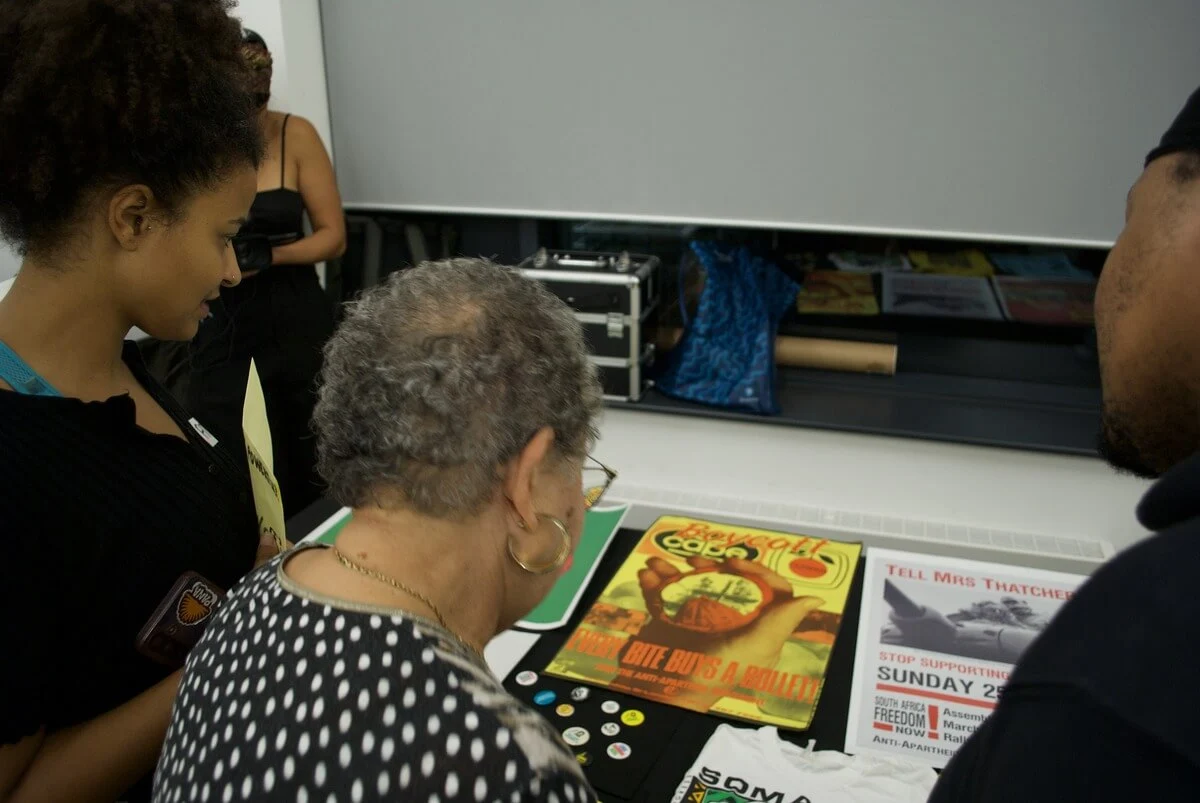
This blog explores how the Anti-Apartheid Legacy Centre’s mural has been shaped through a collaborative, community-led process. It looks at heritage as something lived and evolving – shaped by dialogue, emotion, and participation – and highlights the importance of diasporic perspectives and global solidarity. At its heart, the mural is not a single, authoritative story, but a collective expression of shared memory and experience. As a Research Assistant, my work in this project is driven by my interest in the visual icons and symbols of social justice. I am fascinated by the power of visuals to represent the aspirations of a community over decades. In this post, I want to focus on the process behind the mural: the concept of co-creation and shared authority that ensures this artwork belongs to the community it represents.
From heritage as objects to heritage as people
Heritage is often imagined as something that belongs behind glass: archives, documents, and preserved artefacts. While these are vital, they can overlook something just as important—lived experience. For movements like the global struggle against apartheid, much of the story lives in memories, emotions, and everyday acts of resistance that were never formally recorded.
As a community-centred organisation, the AALC sees heritage as something dynamic: made through participation, dialogue, and collective reflection rather than fixed once and for all. The mural co-design project grew out of this approach. Instead of commissioning a mural that spoke about the community, the project created space for the community to shape what the mural would say and stand for.
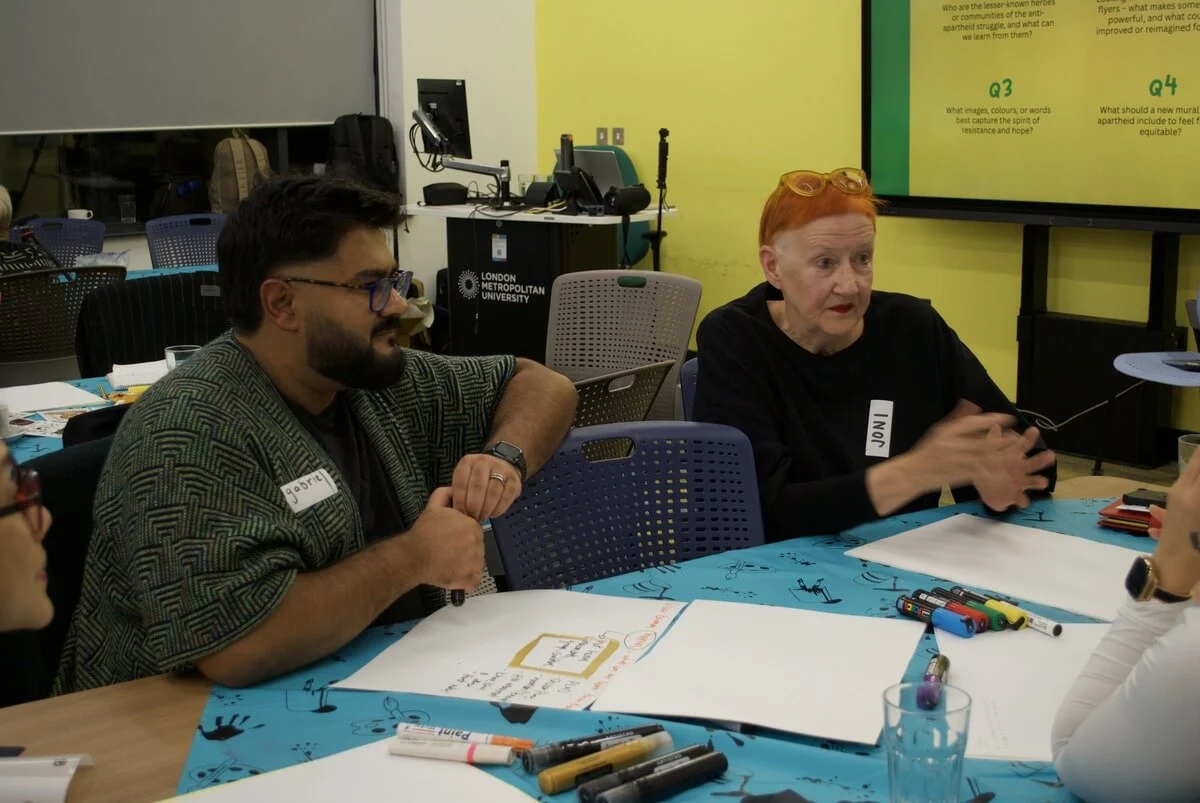
Across our creative workshops, participants from different generations and backgrounds came together. Some had direct experience of apartheid or long histories of activism; others were part of a younger generation engaging with the movement’s legacy from a distance in time or place. These workshops were a space for open discussions about what people remembered, valued, and questioned. Participants shared stories, challenged dominant images of the movement, and reflected on how the struggle connects to issues of racism, inequality, and social justice today.
Turning stories into visual ideas
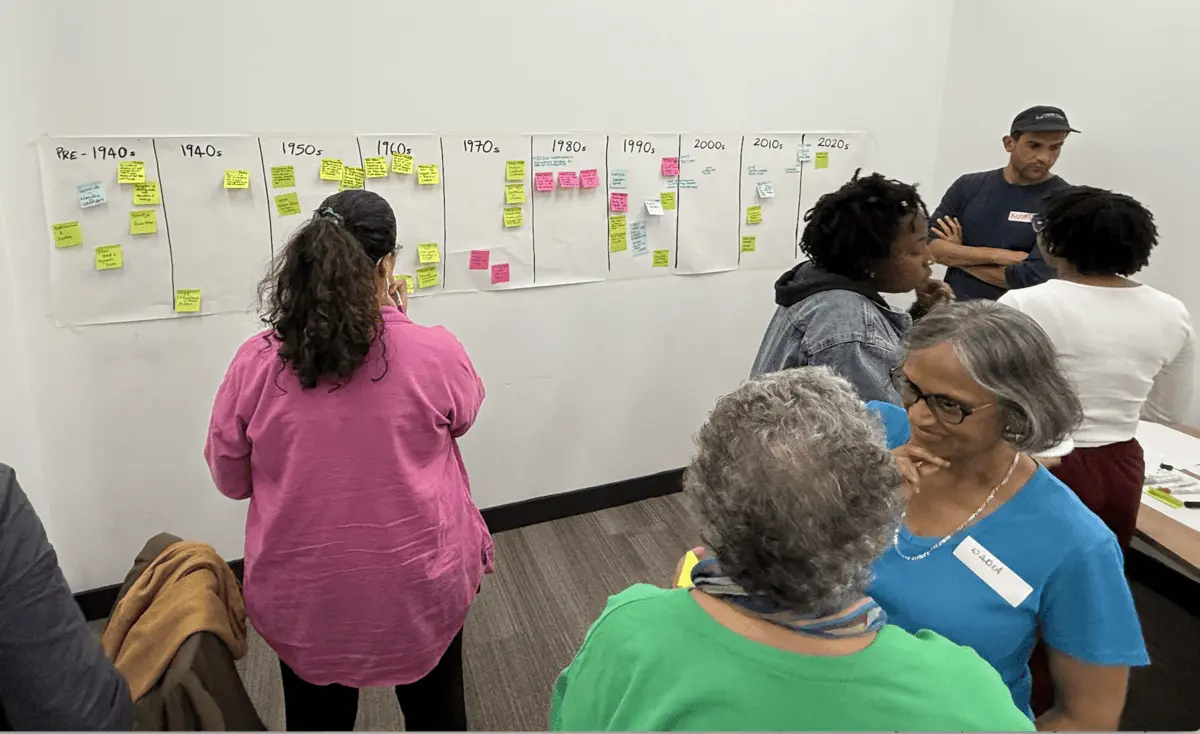
A core part of my research involves looking at how abstract values are “translated” into visual symbols. During our first workshop, we collectively mapped key moments and figures. What emerged was not a neat timeline but a layered picture of memory. Some recalled specific campaigns, organisations, or lesser-known activists that rarely appear in mainstream narratives while others drew on widely recognised moments or symbols.
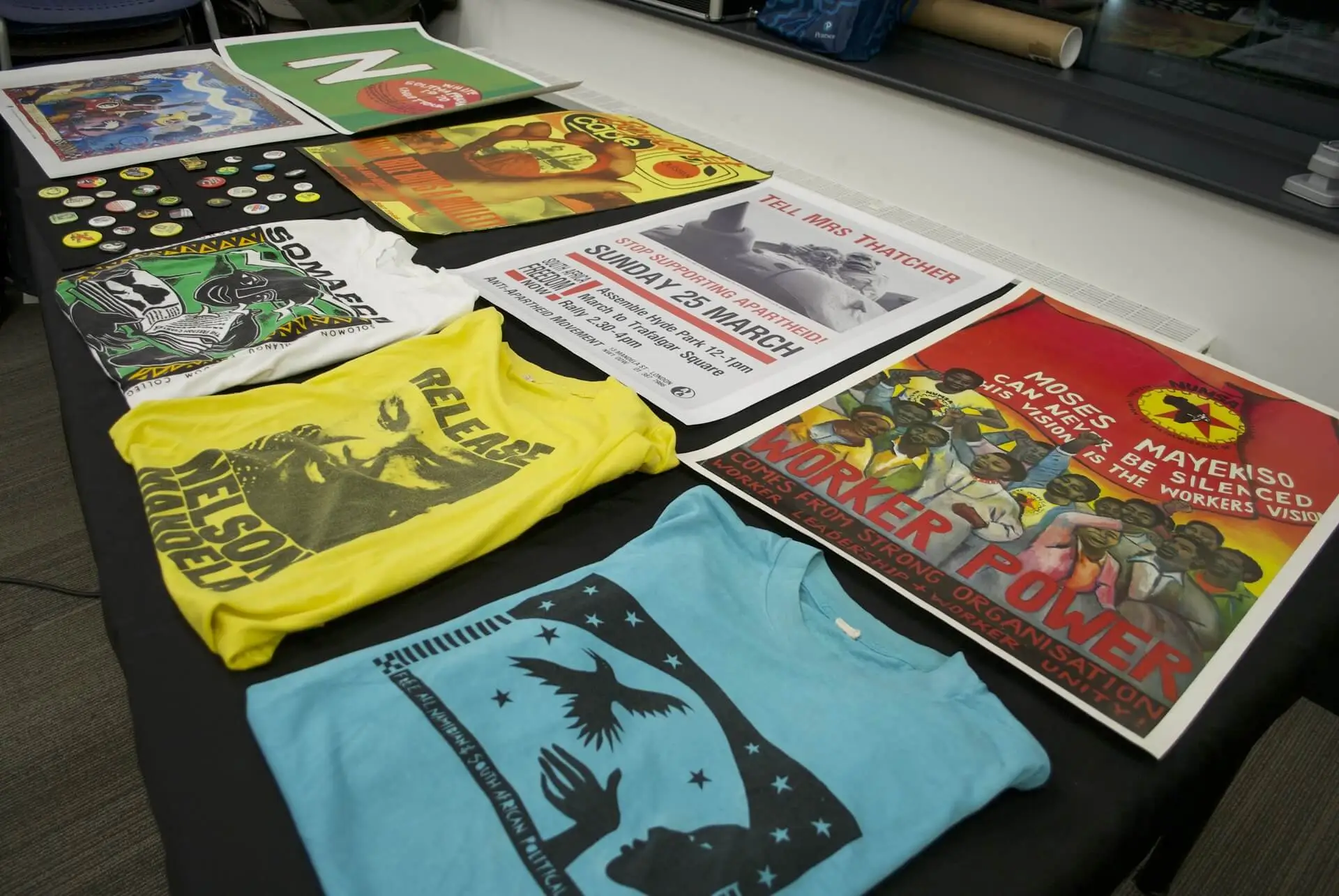
As the workshops progressed, we explored how these memories could be translated into visual form. Working with drawing, collage, posters and zines, participants discussed the colours, icons and imagery that felt most meaningful to them. Well-known images of resistance, such as raised fists, protest placards, broken chains, appeared alongside more unexpected references. Everyday objects such as oranges, tins of food, or shop tills became powerful symbols of international boycotts and the behind-the-scenes labour that sustained the movement. Senior participants described how these objects functioned historically, while younger participants reimagined them visually as posters and collages.
This process was not about producing polished artworks; it was a way of memorising and remembering together. By testing ideas and questioning familiar imagery, we expanded the visual language of the Anti-Apartheid legacy. These co-designed materials are now informing the professional development of the final mural.
Shared authority and global solidarity in a living space
At its heart, this project is about shared authority. Participants were not simply asked for feedback; they were invited to decide what counted as significant and worth making visible. By focusing on co-creation and co-designing, the project shifts power towards our workshop participants and recognises their knowledge as central to heritage-making.
For many participants in the UK, this was also an opportunity to reflect on the movement as an emotional struggle. Feelings of anger, pride, grief, and hope surfaced through conversation and creative exploration. These affective dimensions, which are often absent from institutional heritage displays, are crucial to how people live with political legacies. Conversations highlighted the role of exile, cultural activism, and international allies—the “diasporic heroes” whose contributions are often sidelined in official histories. Visually, this led to ideas that connected the Anti-Apartheid struggle to wider, contemporary histories of anti-racist activism.
Participants identified what they described as “diasporic heroes”: community organisers, cultural workers, and international allies whose contributions are less recognised in official histories. These discussions challenged nation-centred versions of the past and foregrounded the global networks that made the movement possible
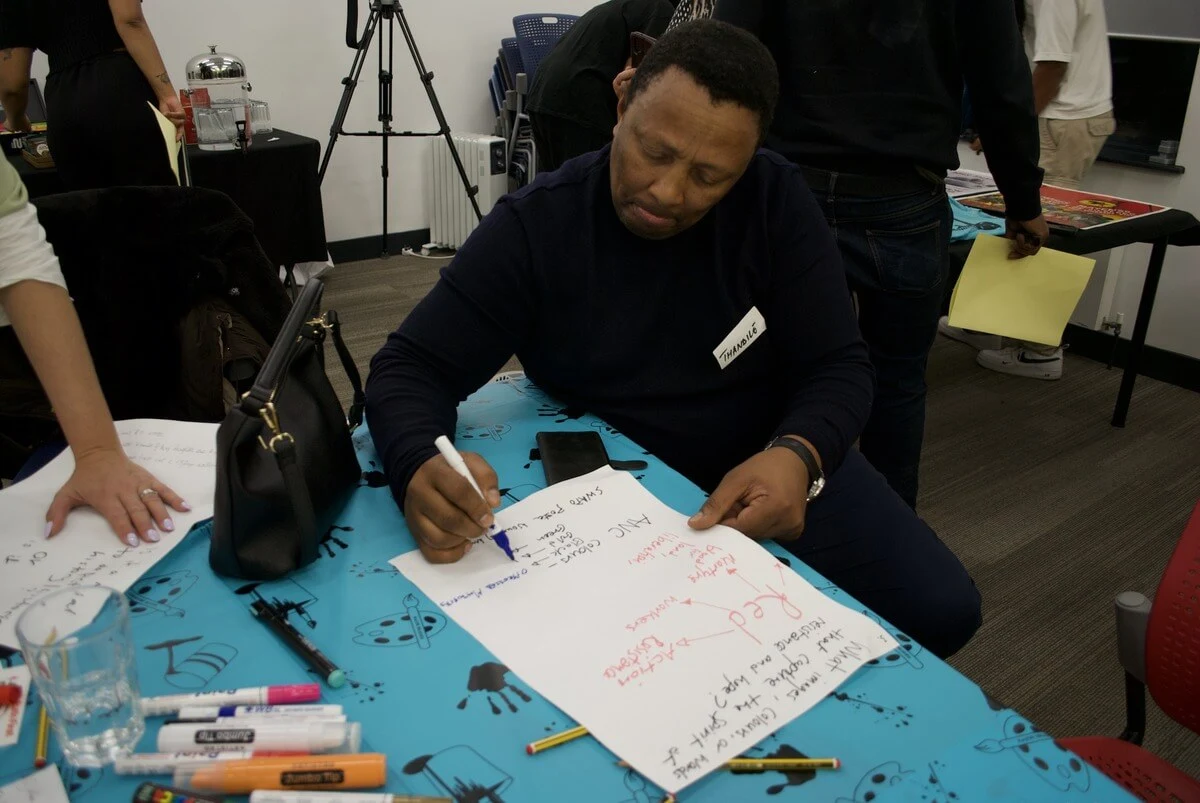
Visually, this led to ideas that connected the Anti-Apartheid struggle to wider histories of anti-racist and social justice activism. Maps, slogans, and references to contemporary movements appeared in the co-design materials, underlining that the values of the movement remain relevant and unfinished.
So, when the mural is finalised based on this collective design process with images, themes, and values shaped by the community, the mural will not stand as a single authoritative statement. It will be a visual outcome of shared thinking and collective memory. The mural co-design project and the mural itself will demonstrate how co-design can help keep histories of resistance open, inclusive, and relevant.
Blog by Hoyee Tse, Anti-Apartheid Legacy Centre Mural Project – Research Assistant, London Met University, 2026