From Distance to Connection: Learning Through Women in the Anti-Apartheid Struggle
A blog by Lakshina Bajracharya (studying for an MA in Visual Communications)
I Began with Almost Nothing…
When this project was handed out to us, I knew almost nothing about apartheid. All that I knew was somewhere in the world, people were treated differently because of their skin colour. That was it.
I come from Nepal, a country that was never colonized. The concept of apartheid felt distant from my lived reality. It was not the history I had grown up with, so honestly, at first this project didn’t resonate with me.
But the brief asked me to look closer.
Finding My Way In
Since the brief was to make a timeline, I was reading lots of articles. I came across the section on Women in the Anti-Apartheid Movement on the Anti-Apartheid Legacy Centre website.
That changed everything.
I was mesmerized by the women’s resistance, leadership, organizing, and courage. I found my connection. I realized that although I had not lived this history, I could connect to it through womanhood, through shared struggles, through the universal fight for dignity and justice.
What began as a university assignment became something deeply personal.
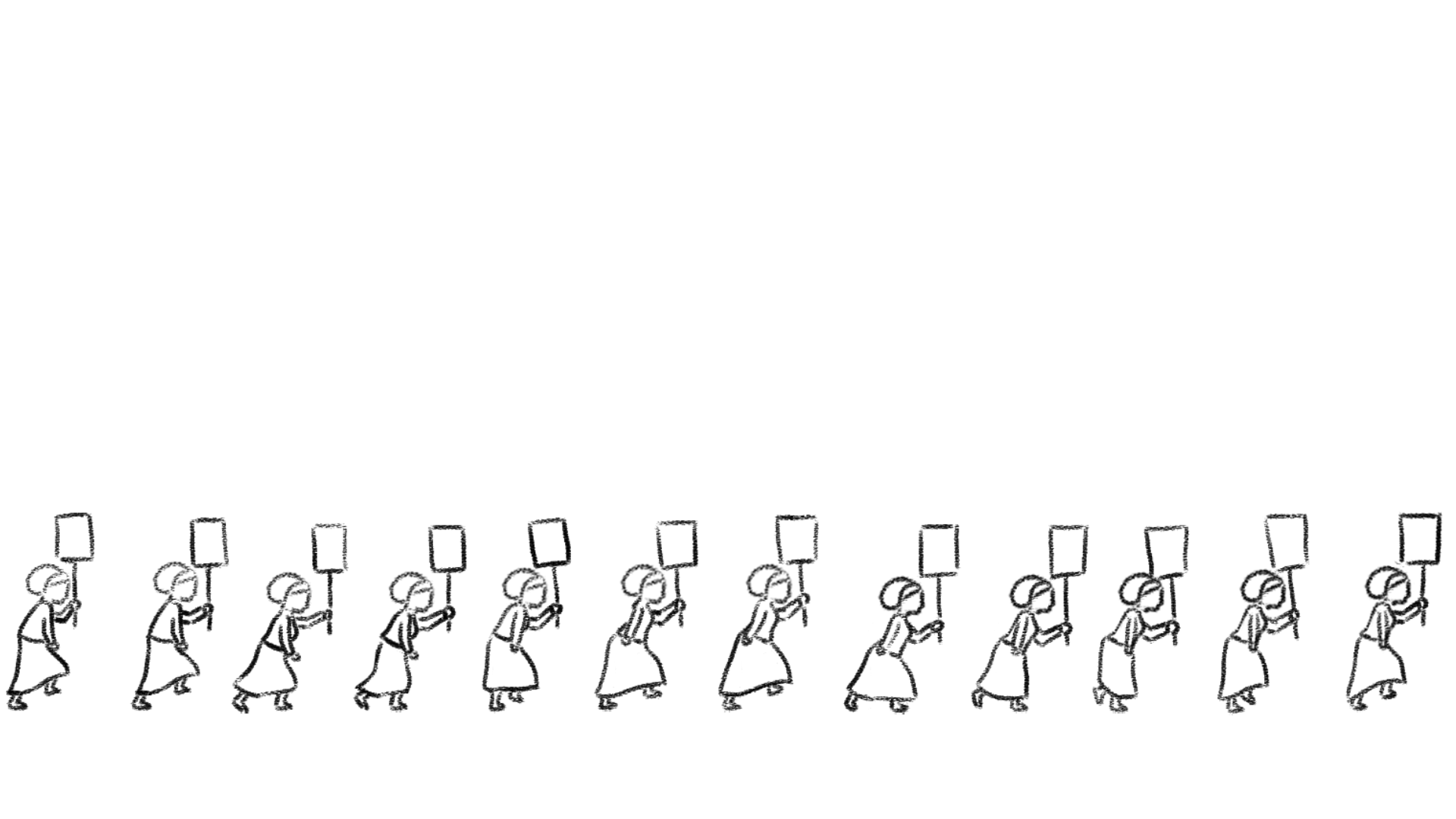
Figure 1: Walk cycle sketches from Women & Anti-Apartheid Movement
Shaping the Story
Initially, I wanted to create a five-minute factual narration covering the entire timeline. But it was too ambitious. So, I had to change my direction.
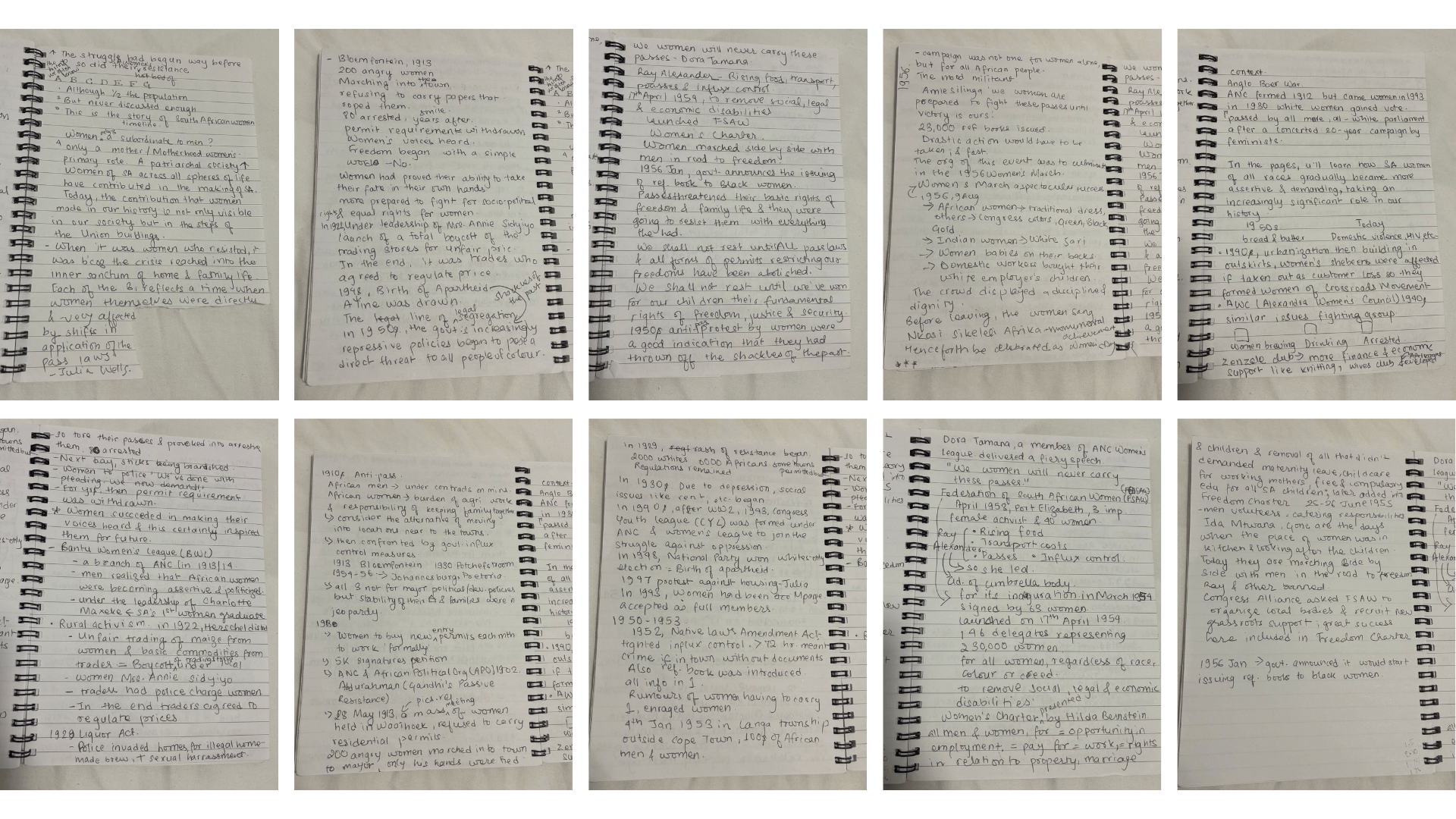
Figure 2: Notes from the research
The time of Apartheid is not a thing of the past. Even as a primary school kid, it was difficult to unsee its traces in the everyday experience.
I began reading articles, studying archives from London Met University’s Special Collections, including the Trade Unions Archive which contains many anti-apartheid related materials, and observing South African textile patterns from museum visits. I started gathering words, and these fragments slowly formed a poem. This poem then became my structure for the timeline.
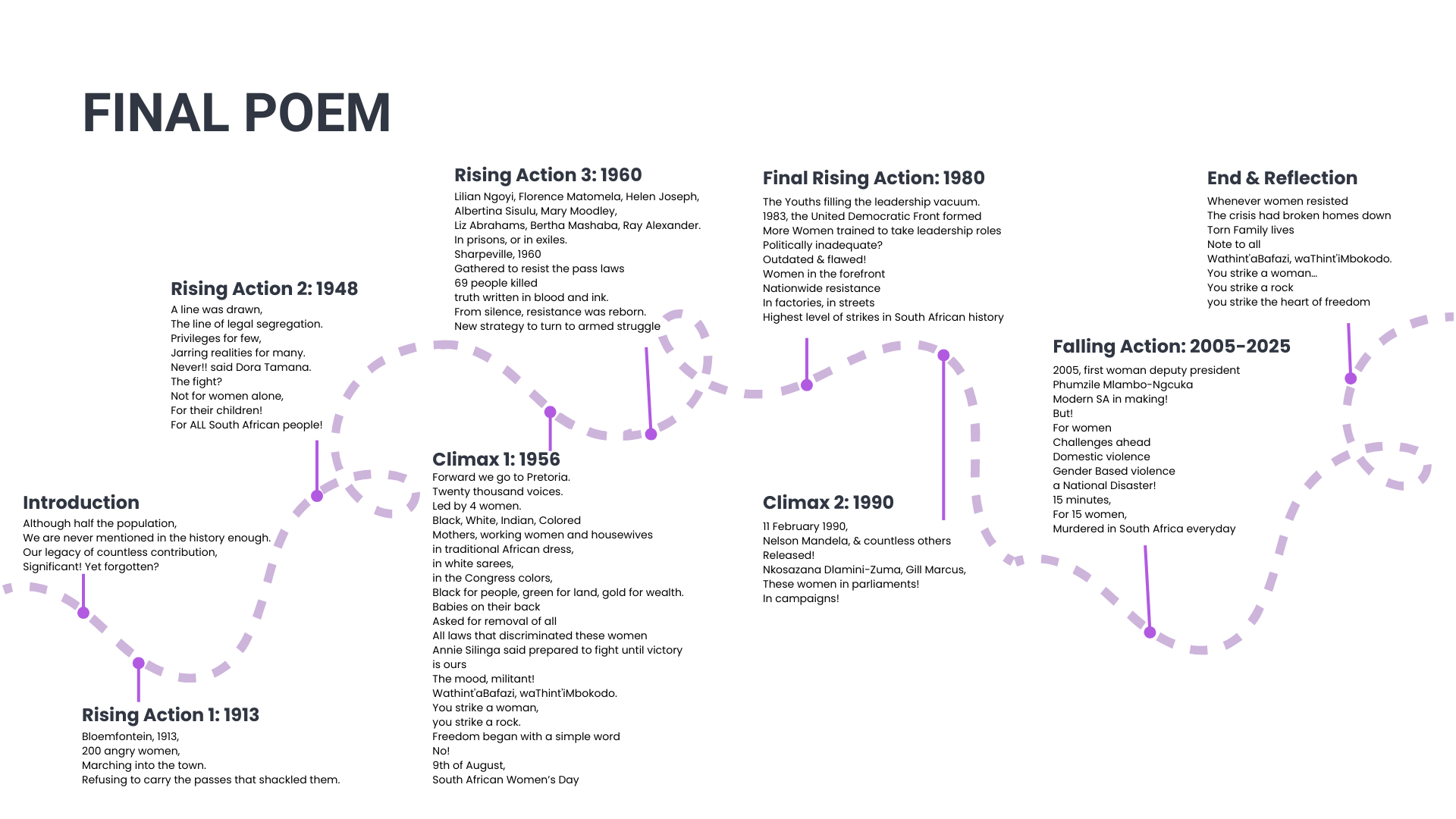
Figure 3: Final Poem with Timeline, a linear story structure adopted with two types of plot structure, Freytag’s Pyramid and Fichtean Curve.
Meantime I was also experimenting with the visuals. I tried stop motion, motion graphics, collage, typography, bold red-black palettes.
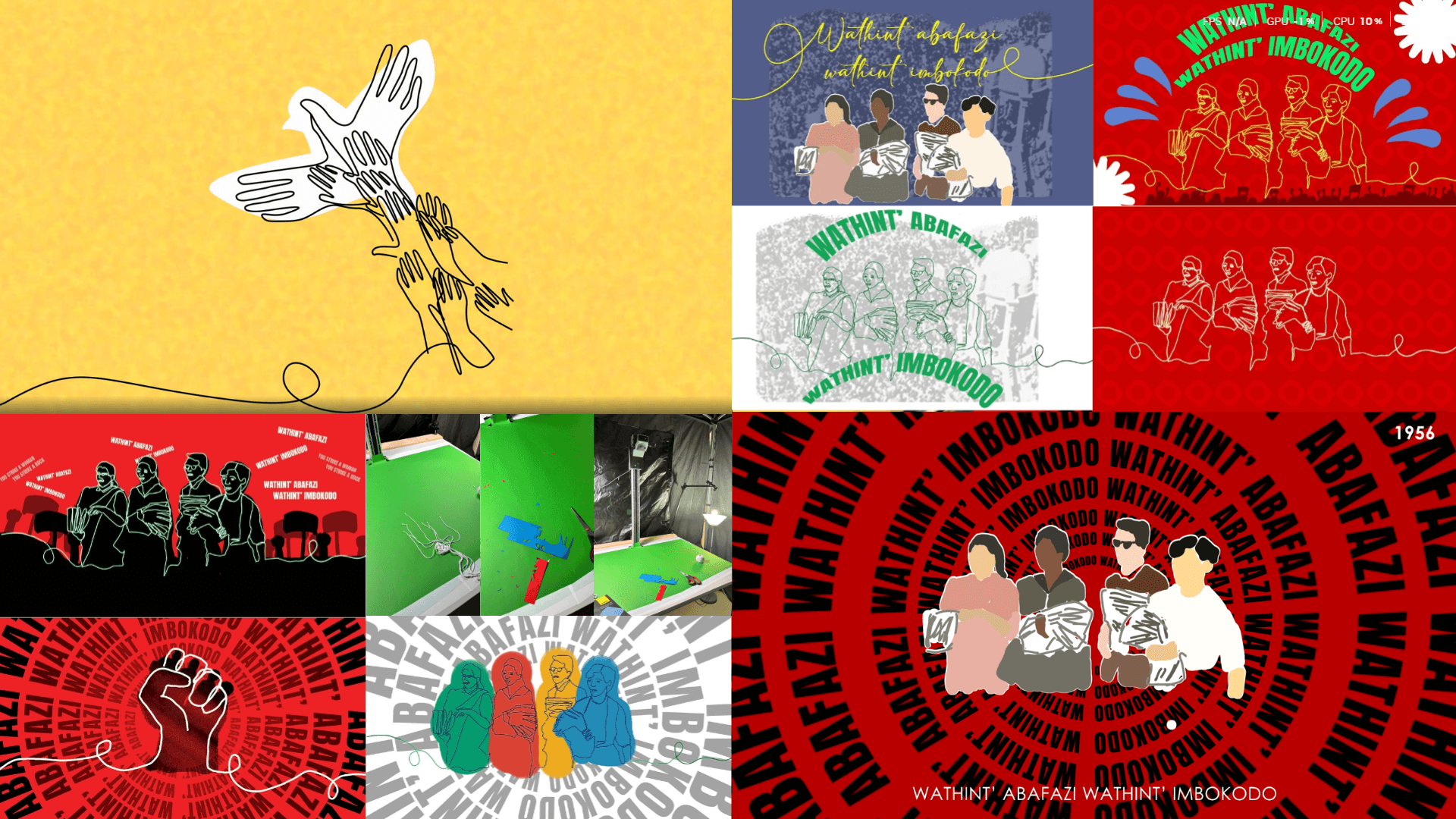
Figure 4: Exploration of different styles for the project
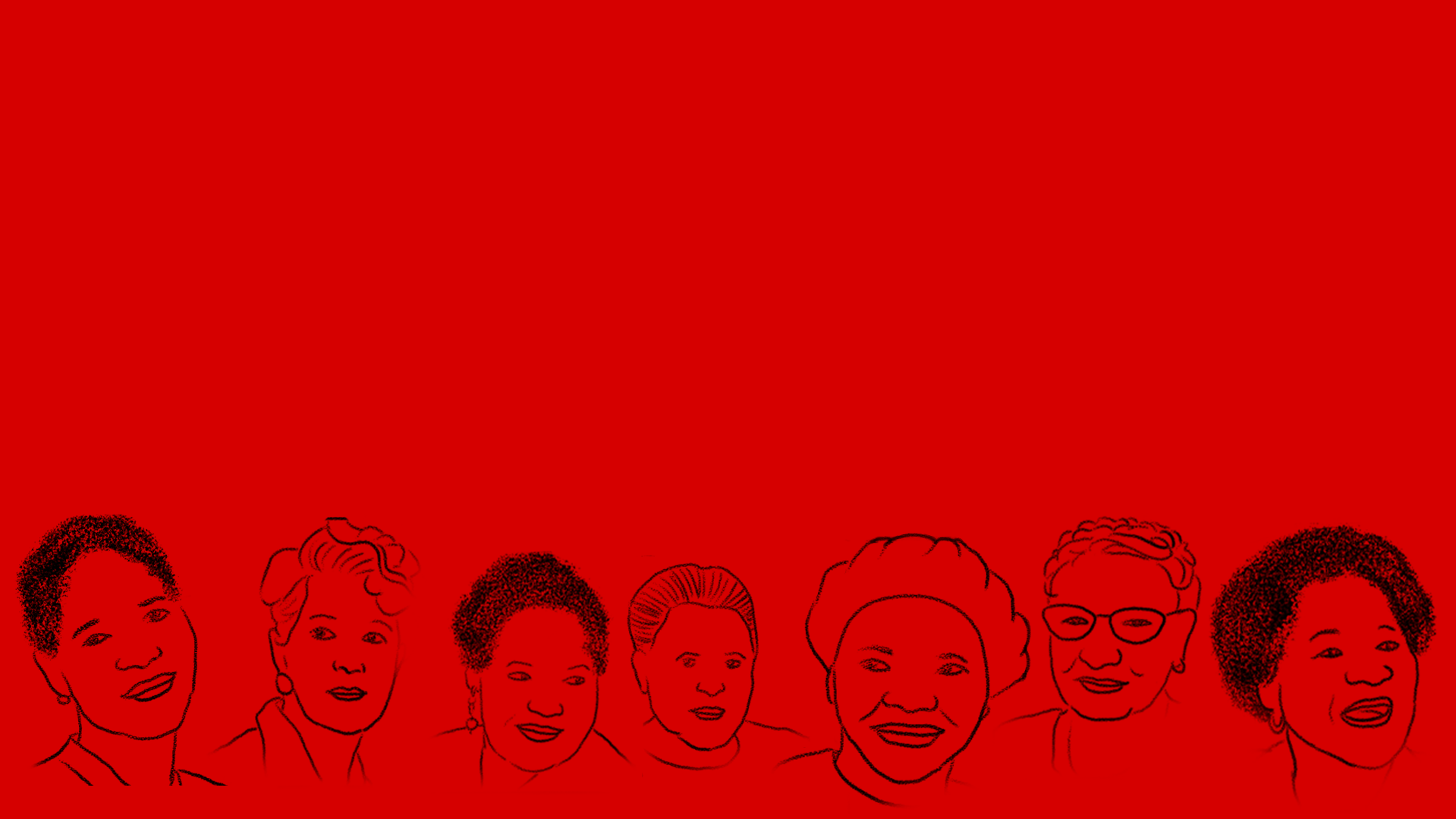
But during early animatics, something unexpected happened, the rough pencil sketches made its own unique style.
The imperfections became the language of the final piece and simplicity became the strength.
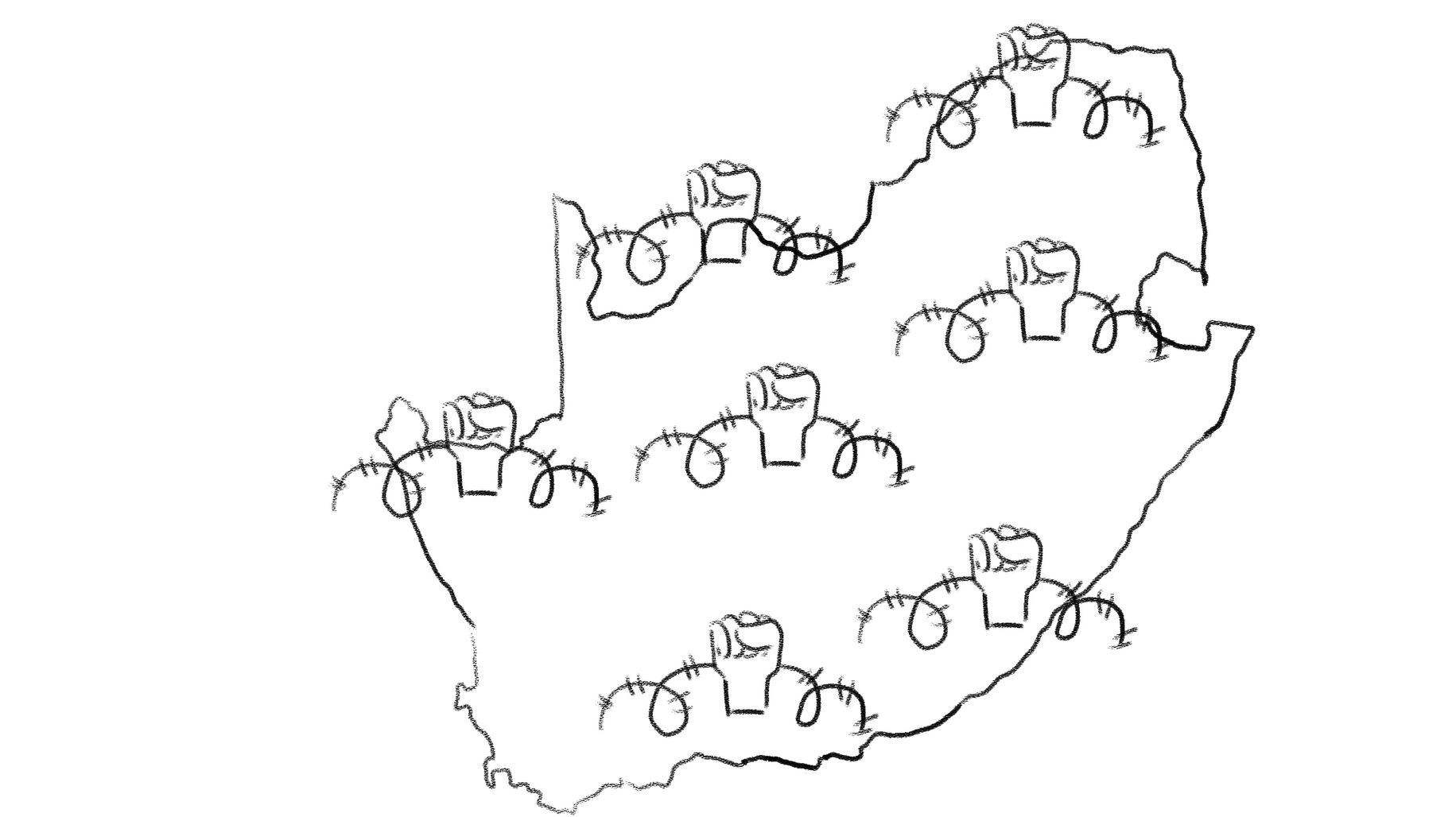
Figure 5: First Animatics
Iteration, Feedback and Final Animation
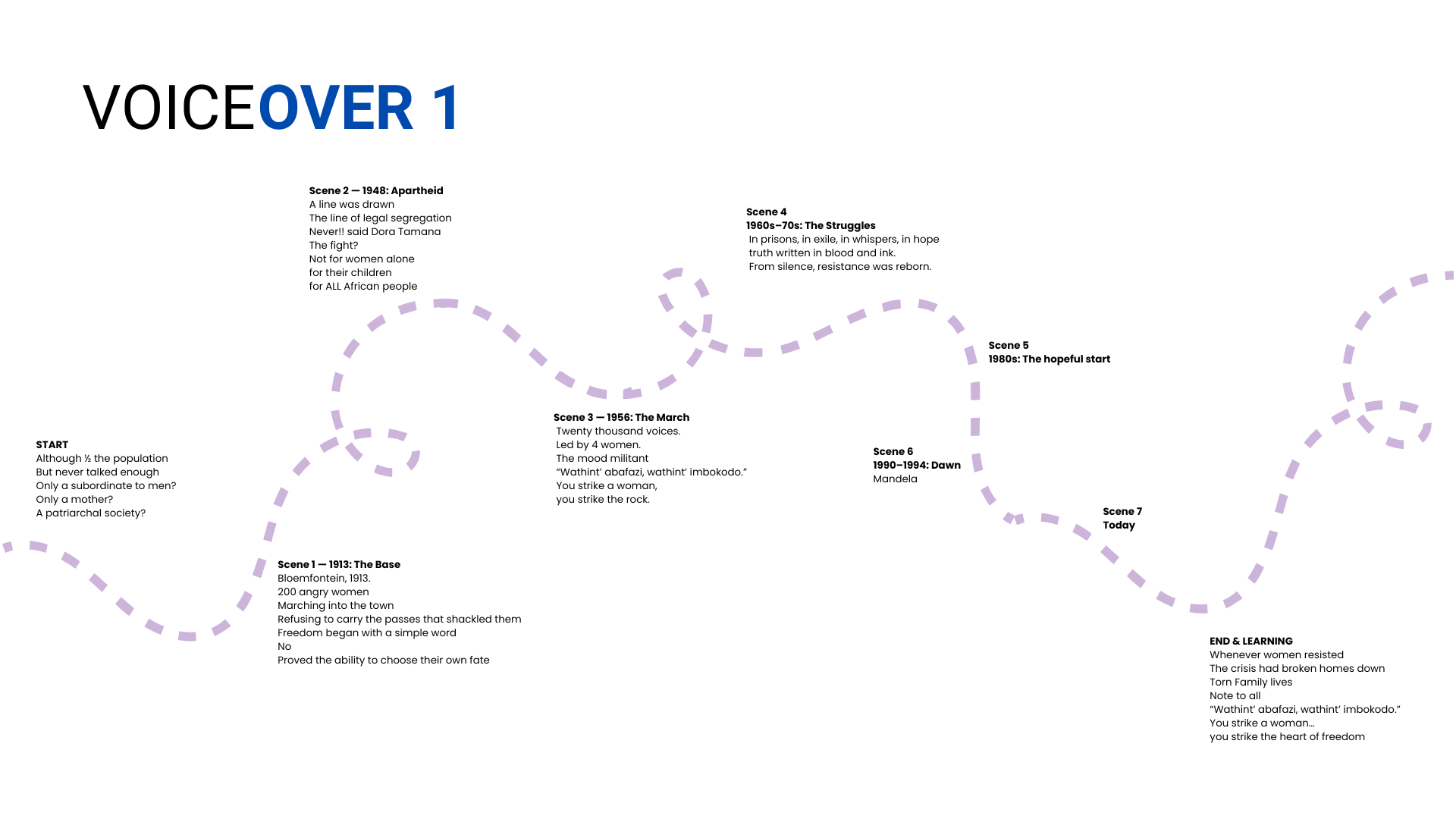
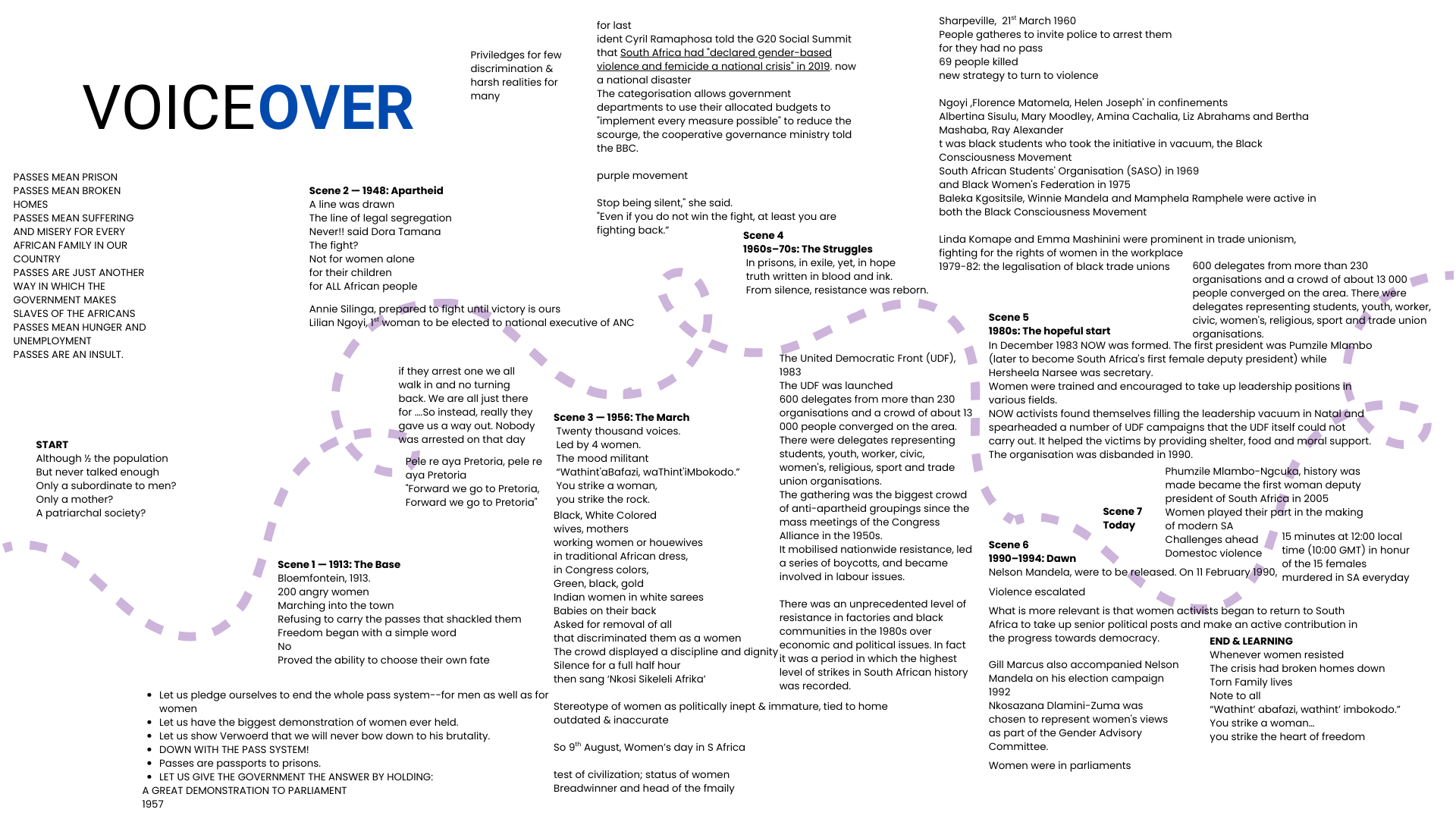
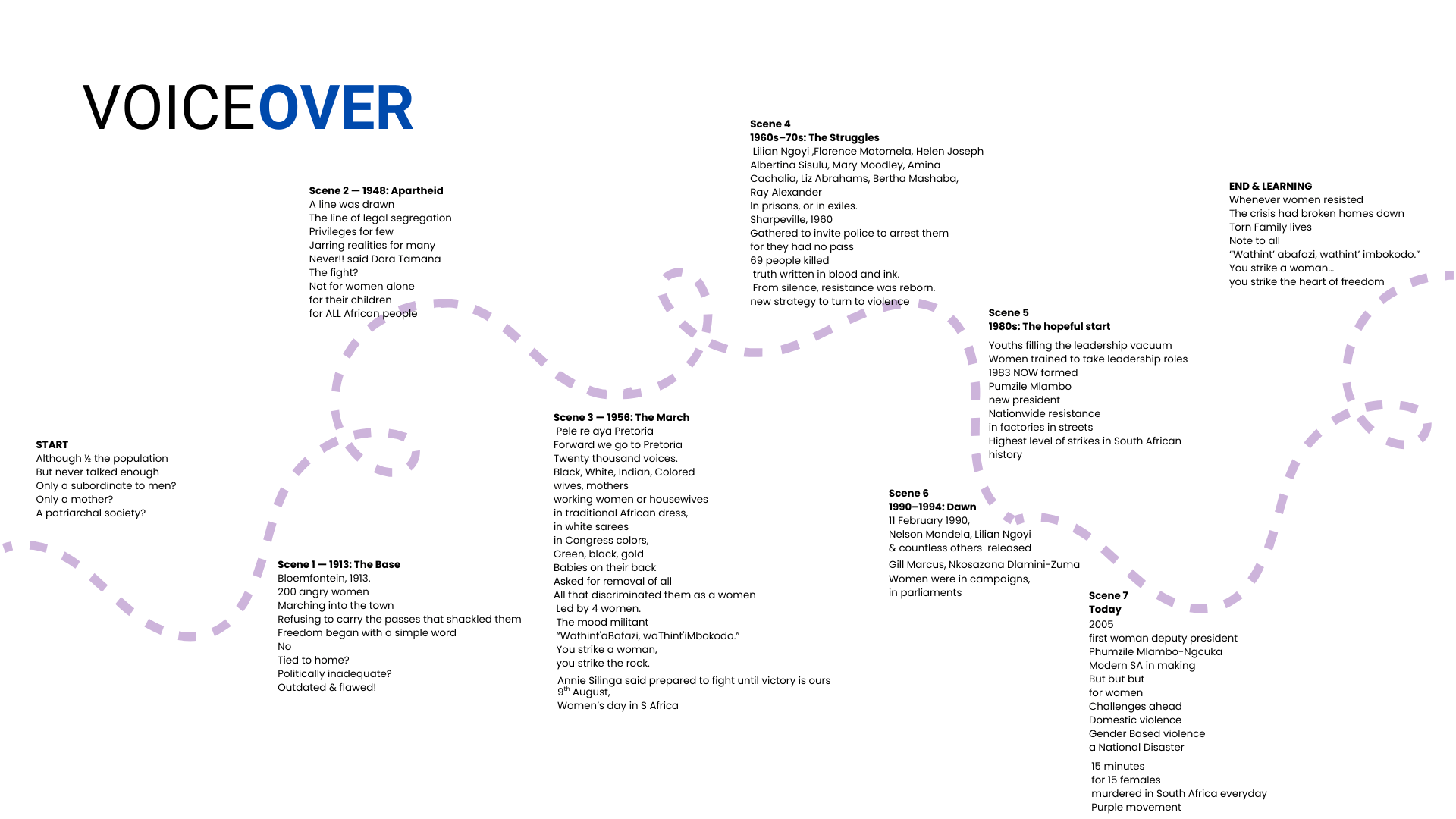
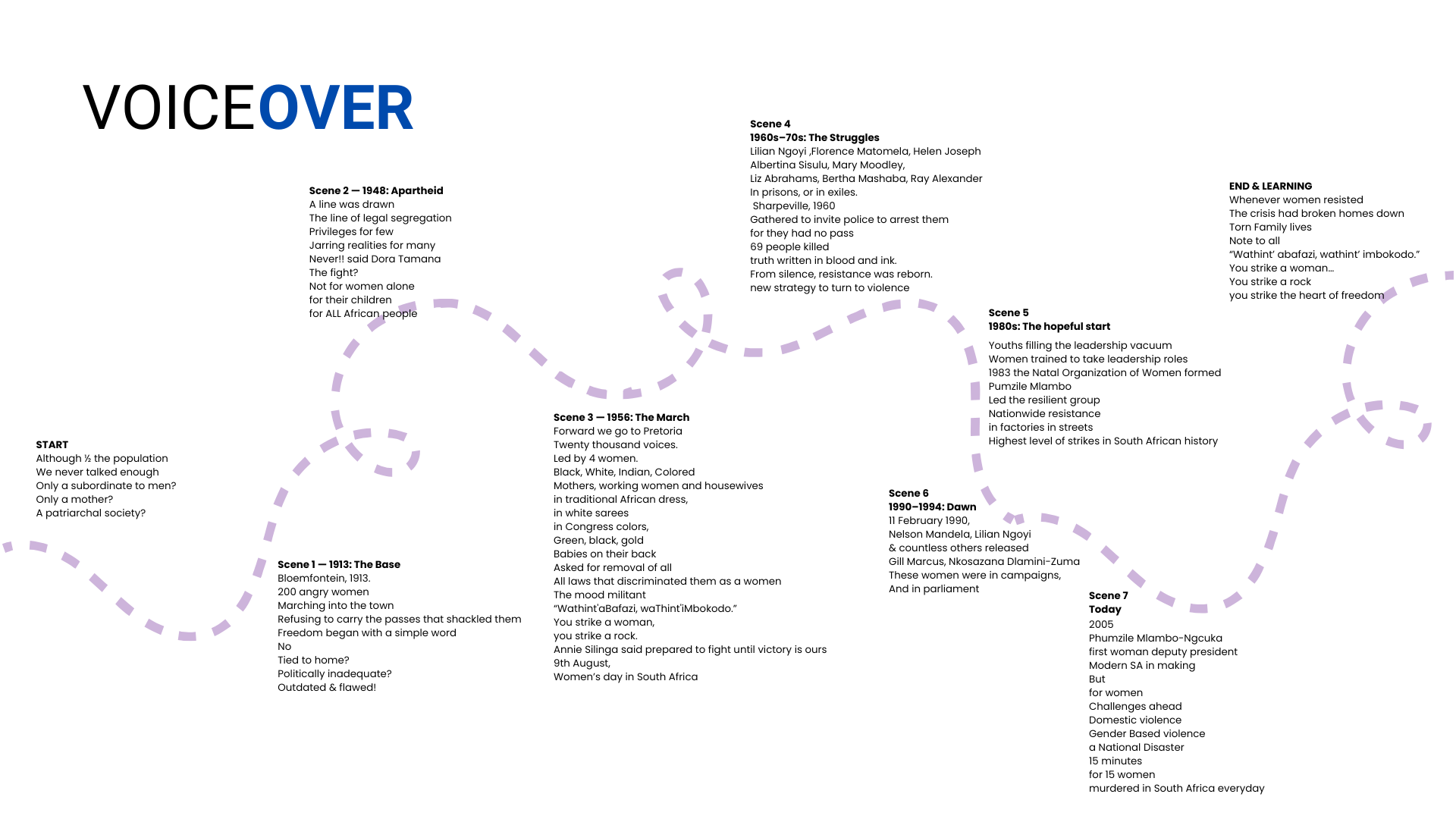
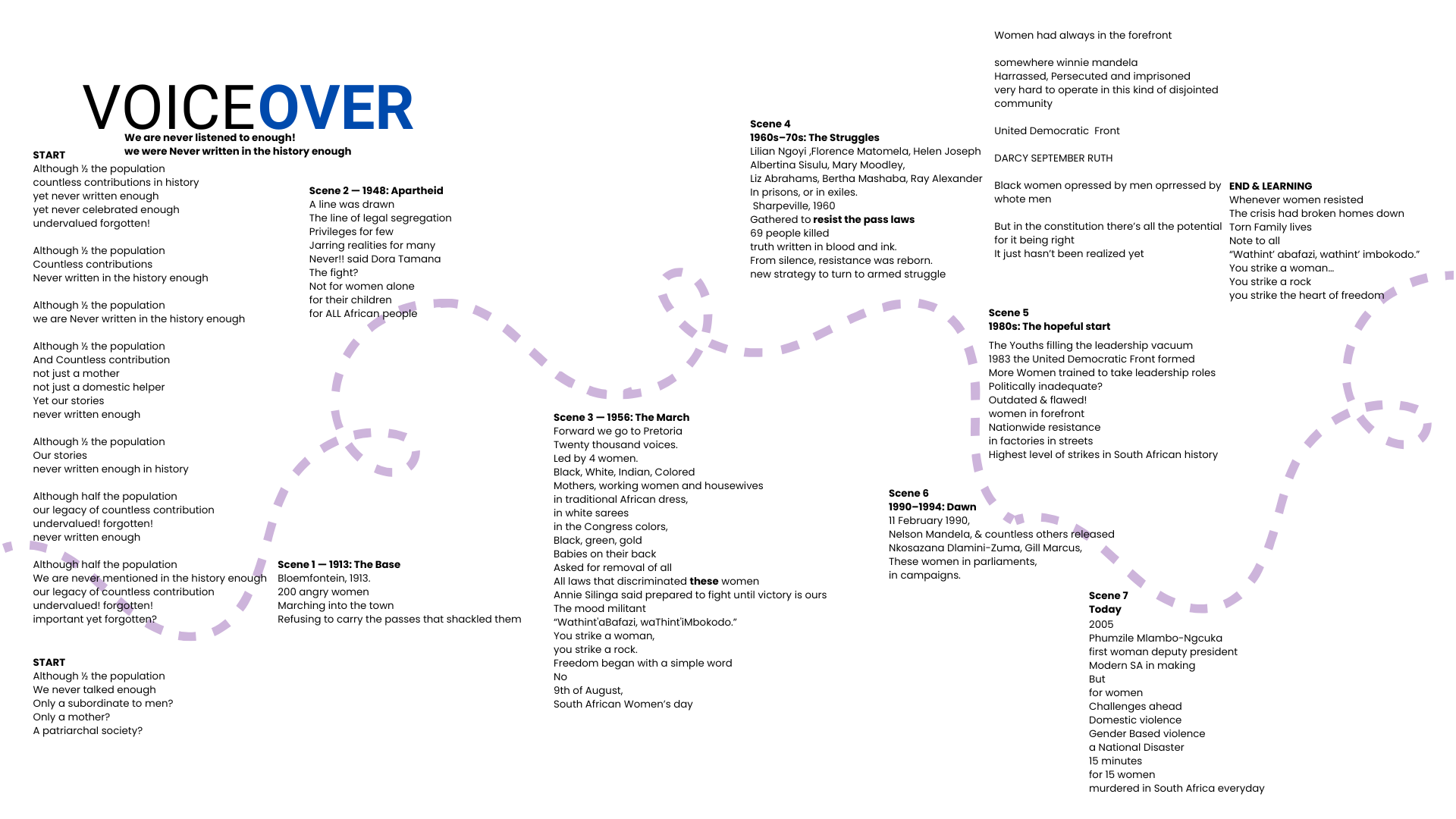
Figures 6-11: Poem Development Process
There were technical issues with voice recordings. In the early animatics, the voiceover was recorded by a fellow South African student peer, Esihle Enele Mthethwa, who generously contributed her time to support the project and helped me get deeper insights for the project. It also had factual inaccuracies in the early drafts. There were moments of re-writing and re-structuring of the poem after thoughtful conversations with Caroline and Nadia from The Anti-Apartheid Legacy Centre.
Their constructive feedback, with guidance from the tutors at London Metropolitan University, supported as I reshaped the work.
The final piece is not the result of a single idea, but the result of dialogue, correction, listening and humility.
A Life-Changing Shift
I began in ignorance. I finished with a deeper understanding of apartheid, and the crucial role women played in resistance movements.
This project changed me. I now see art not only as aesthetics, but as a medium for awareness and advocacy. It can bridge distance. It can move someone from indifference to reflection.
Coming from an academic background where I would submit work and receive a mark, this collaborative process, with tutors, clients, and ongoing feedback pushed me to experiment, rethink, and expand my creative boundaries.
I just did not learn history. I understood that art about history also carries responsibility.
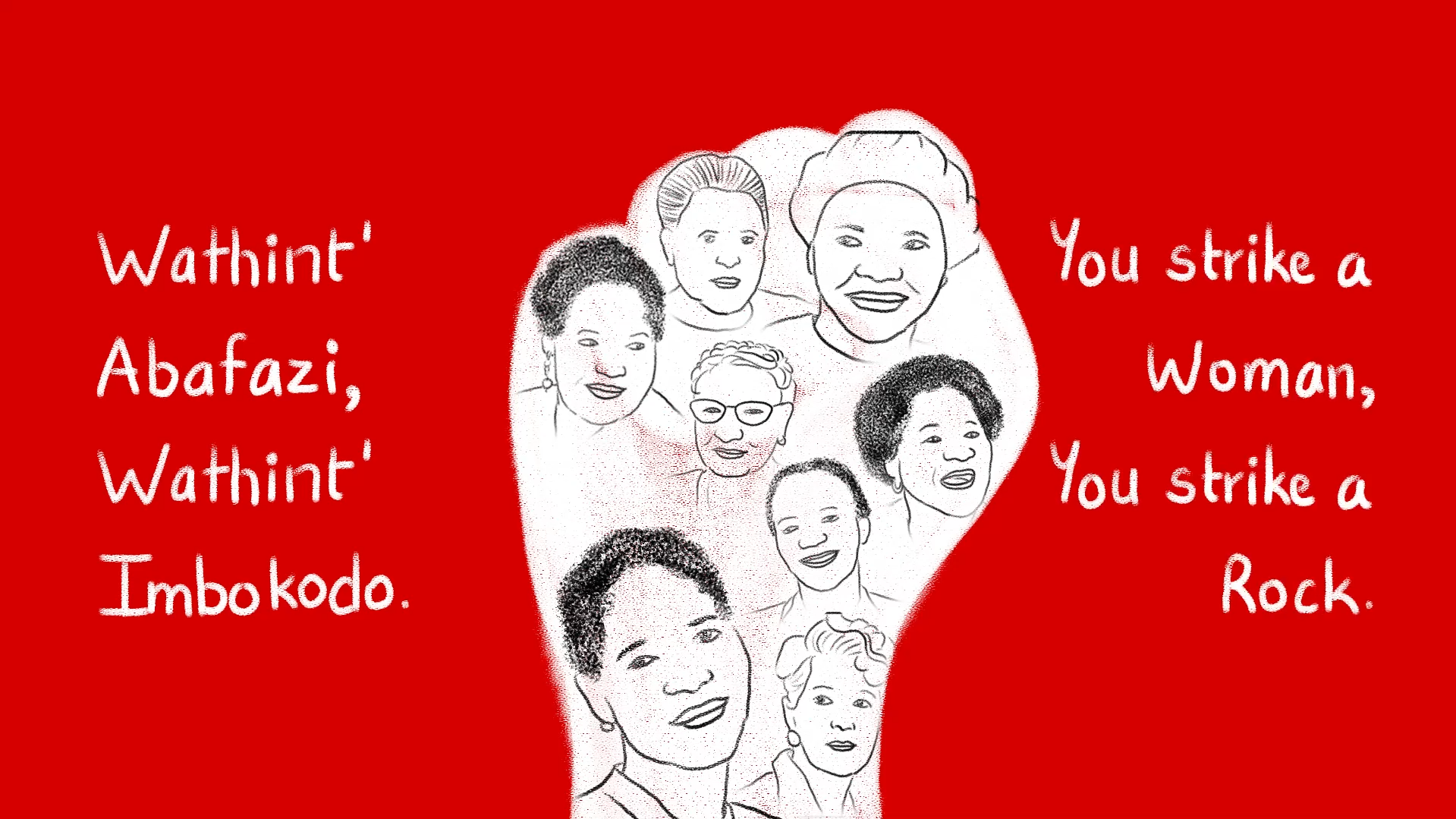
Figure 12: Still from Final Animation
Why This Matters Now
This animation is not only about apartheid.
It is about celebrating women. It is about recognising strength in resistance.
It is also about reflecting on the struggles women still face today, including domestic violence and systemic inequality.
It is a reminder that women are not secondary figures in history. We co-create the world.
If this animation helps even one person, especially someone who, like me, once knew very little about apartheid, to pause, learn, and reflect, then it has done its work.
I, now, invite you to watch the animation and allow yourself to sit with the voices, the resistance, and the strength of the women who shaped this history.
Blog written and works contributed to The Anti-Apartheid Legacy Centre by Lakshina Bajracharya, March 2026