More Than a Monument:
Our community co-created art keeps the visual language of resistance alive

Following my first post about how we developed our Mural Co-Design Project community workshops, in this post, I am diving deeper into the creative works made by our workshop participants. My research interest is not only in what the icons of the movement are but also how these icons became icons. This lens has shaped how I observed and participated in the workshops, thinking how and why images are important to a community to reflect on their struggle.
This blog explores how ideas and memories from these sessions were translated into a shared visual language. Through posters, zines, and collaborative design, participants experimented with symbols, colours, and imagery to express both the history of the anti-apartheid struggle and its relevance today. This process has directly informed the artist of the mural, Ham, on how visual forms of resistance carry political meanings and allow multiple perspectives to sit side by side. Rather than aiming for a single style, the mural will emerge as a layered composition — bringing together diverse voices and global connections into a collective visual expression of ongoing struggle and solidarity.
Exploring visual resistance and memory
The mural at the Anti-Apartheid Legacy Centre (AALC) site is more than a commemorative artwork; it is an exploration of how visual resistance shapes memory and community identity. Working alongside activists and members of the Southern African diaspora, we moved away from purely textual narratives to look at how images can preserve politically charged cultural assets that might otherwise be lost to time.
In our workshops, heritage became something actively produced through lived experience. Our participants explored how visual symbols are tools for redefining the struggle and challenging the “national story.” They represented the diasporic voices that have often been marginalised. So, our creative activities meant much more than art-making. Through the co-creations of posters and zines, we decided how the struggle against apartheid should be remembered while remaining relevant to our present and future.
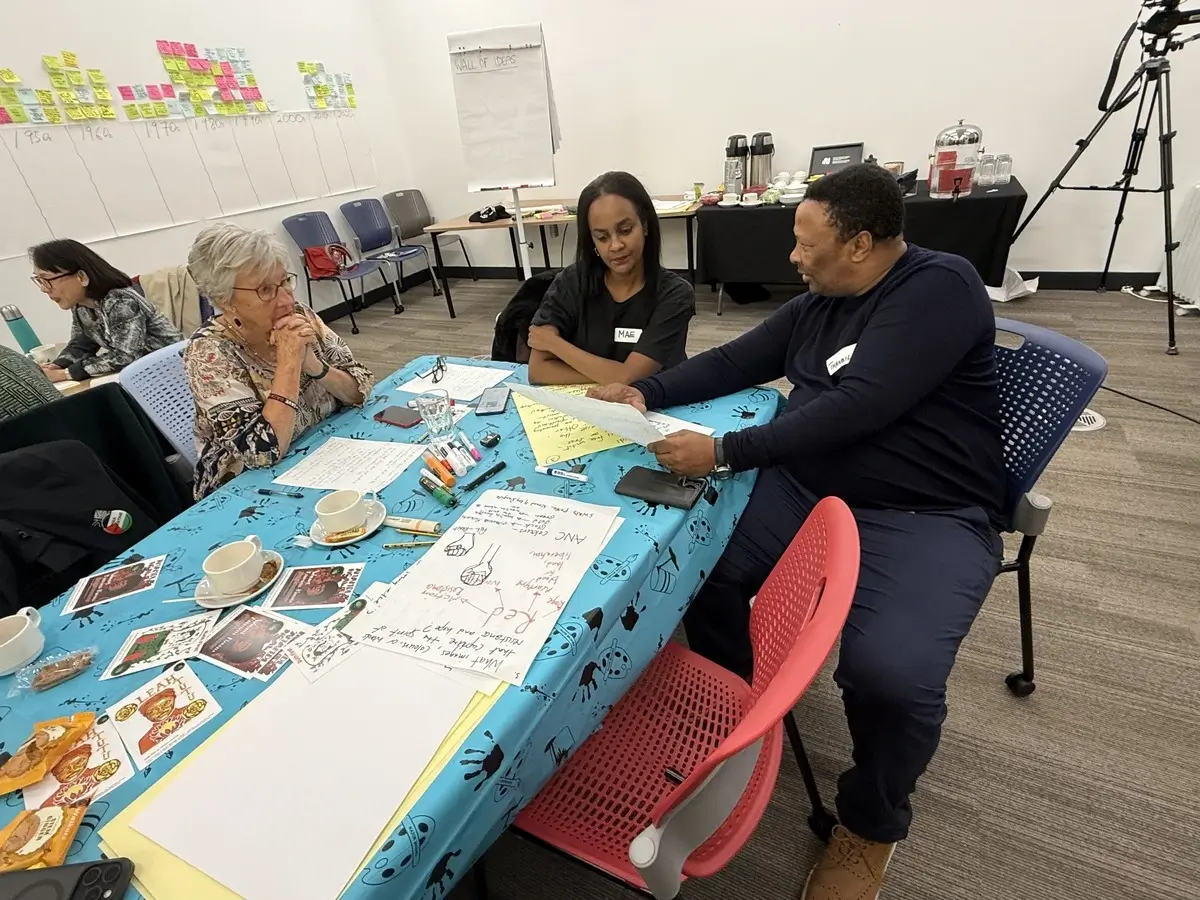
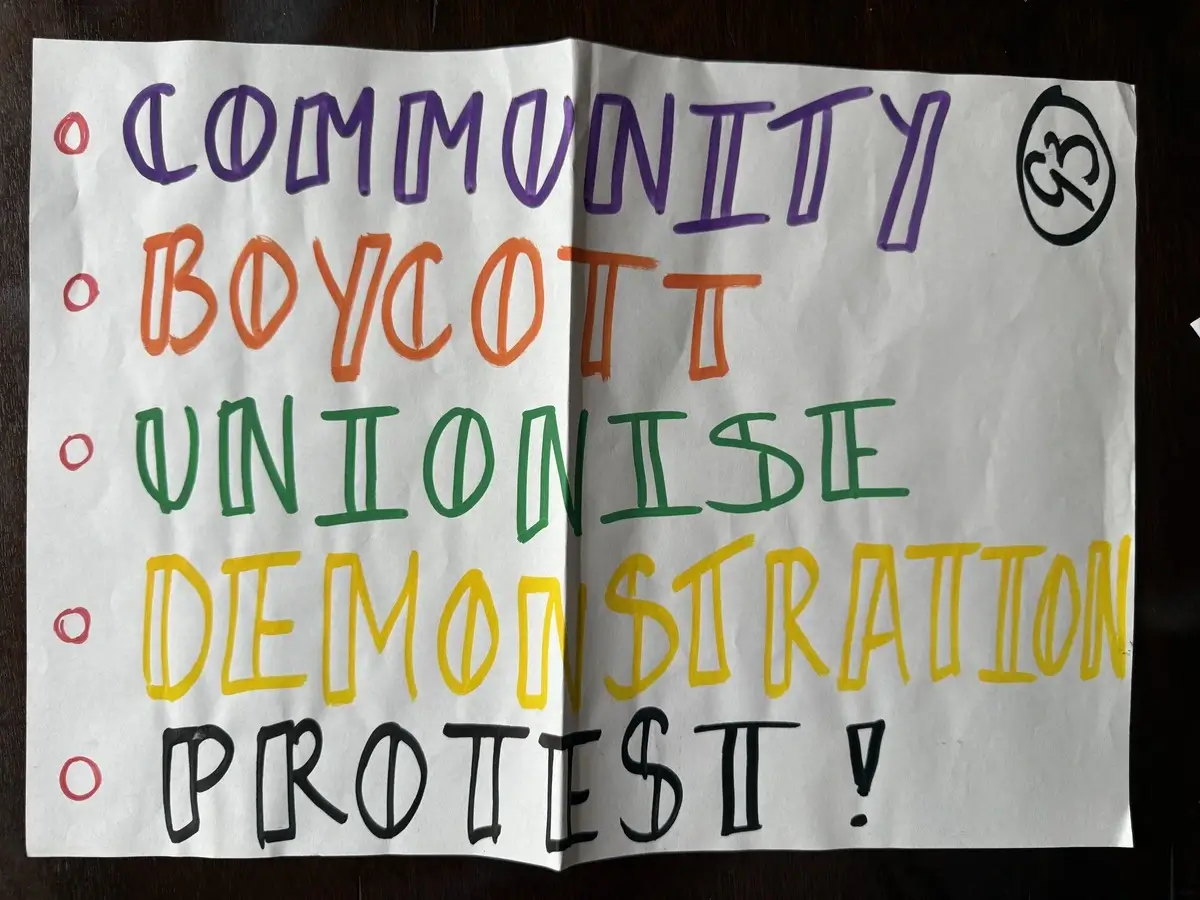
This idea became visible in our poster-drawing activity when our participants worked in groups, translating their experiences of the movement into visual forms. They designed their posters in multiple visual styles: some with bold graphic symbols sat alongside handwritten text while the others put abstract shapes next to figurative drawings. This diversity was not a problem to resolve, but a strength to preserve. The mural, as it develops from these materials, is therefore not about visual uniformity. It is about holding different perspectives together, like the movement itself.
Connecting activisms through design
A central theme in this work was the connection between the Anti-Apartheid Movement and contemporary struggles for justice. In our zine-making activities, it became clear that the struggle for equality is a continuous thread, linking historical resistance to modern-day issues like climate change, fair wages, and structural racism.
I found how participants connected the visual icons of the Anti-Apartheid Movement to other forms of activism striking. Symbols like the raised fist or specific protest typography were not seen as belonging to one single social movement. They are all part of a transnational language of shared expression and resistance. Their overlaps highlight how the global community of resistance and for social justice is connected across time and space. By situating the Anti-Apartheid Movement within this broader network of global activism, the mural becomes a tribute to the collective power of the movement itself, rather than a monument to a specific figure or group.
The politics of colour and the “everyday”
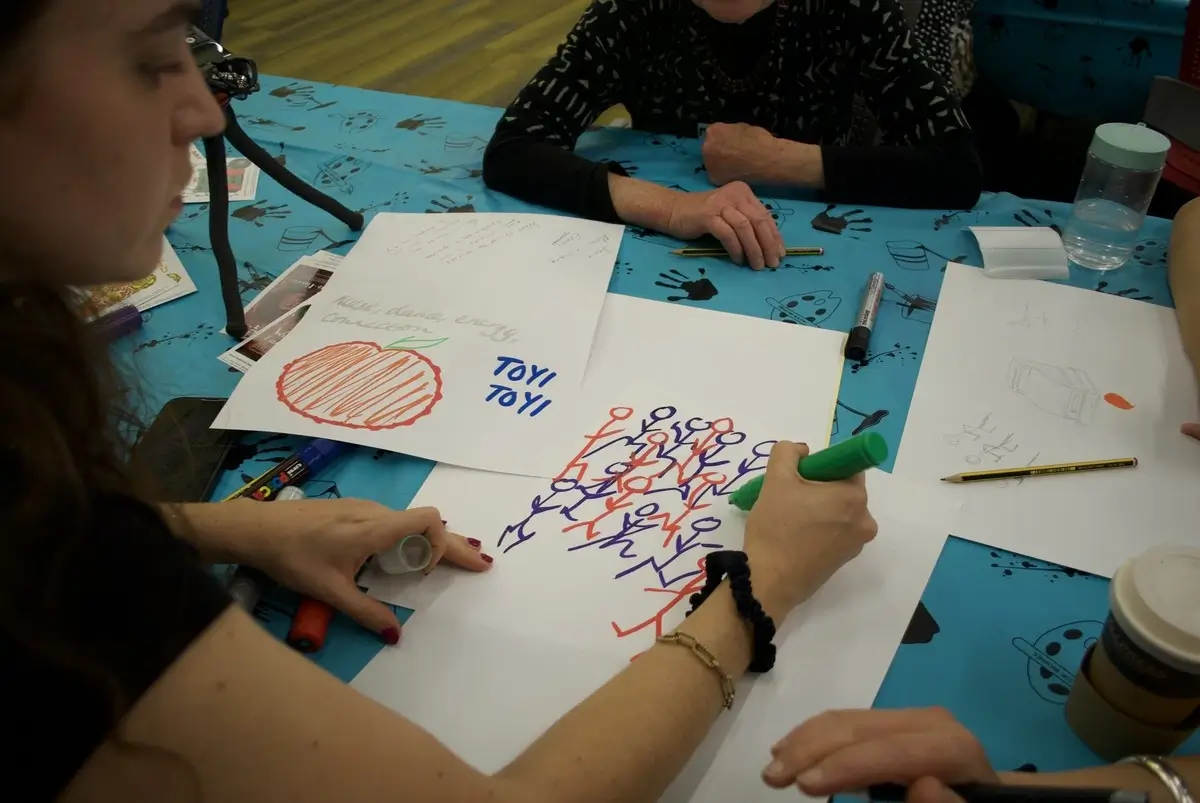
Colour also played a particularly complex role in these conversations. Participants drew inspiration from historical posters associated with the Anti-Apartheid Movement, many of which use bold, high-contrast palettes. However, translating this style into new designs raised important challenges because, in the context of activism, colour is not neutral. It carries histories, associations, and implications about visibility and representation.
Our zine-making activity further explored this by mixing personal reflections with archival materials. In these zines, familiar protest imagery sat alongside everyday objects like tins of food, personal notes, or domestic scenes, echoing the idea that political histories are lived through ordinary, everyday experiences.
Towards a collective visual language
What our participants and our project offered through these creative activities is a way of thinking about the mural not as a final artwork. It is a composition and collection of visual memories. The images co-created by our participants illustrate how to actively shape our understanding of the past. They are evidence of the movement’s enduring legacy because they show that the visual language of resistance is still being written.
Drawing from these community inputs, the mural is like an album cover. It does not need to tell every detail of the Anti-Apartheid Movement in a linear way. Instead, it will be a visual entrance representing the many stories held within our new centre at 28 Penton Street. It will gather the symbols, colours, gestures, and references of the Movement into a shared visual field. Each contribution holds its own meaning, but also connects to others, creating a layered and collective narrative. The mural will stand as a testament to the fact that the struggle for freedom is a shared journey, one that requires us to keep drawing, keep writing, and keep remembering together.
Blog by Hoyee Tse, Anti-Apartheid Legacy Centre Mural Project – Research Assistant, London Met University, 2026