Two Children, One Country, Two Different Worlds
A blog by Sofia Reitano, June 2026
A Gif created as part of the project to help connect with the target audience – it is a reproduction of page 7 of the graphic novel.
I had the pleasure of honouring the students of the Soweto Uprising through a university project ‘Soweto: Then, Now, Next’ as part of a collaboration with the Anti-Apartheid Legacy Centre, who set us a live-brief that involved creating materials to help share this important part of history with new audiences, specifically today’s school children.
The project focuses on the Soweto Uprising of 16 June 1976, when thousands of young people across South Africa stood up against apartheid education and the imposition of Afrikaans in schools. Their peaceful protest was met with state violence, but their resistance helped shift the course of the liberation struggle.
I choose to interpret that day’s events, by considering how life was for those who lived in South Africa during the Apartheid era. I believe that sometimes we forget that behind historical moments, the impact of these on the people who were directly affected. Families that were trying to survive, families that had their territory stolen by colonisers who felt entitled to alter the laws of their land, and families that were descendants of those colonisers. I created a graphic novel that I called “Dreams in the shadow of Soweto”
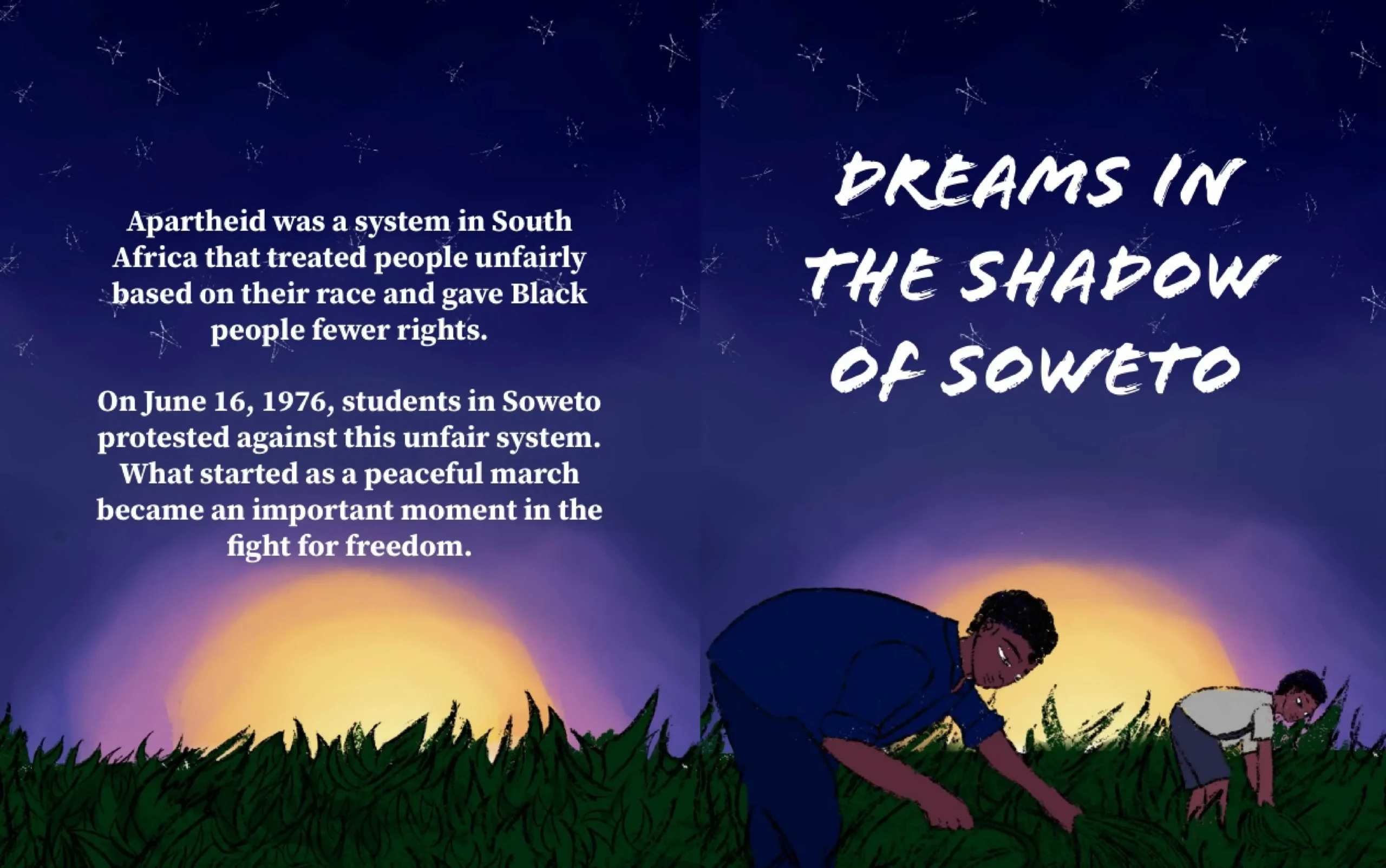
Front and back cover created for the graphic novel “Dreams in the shadow of Soweto”
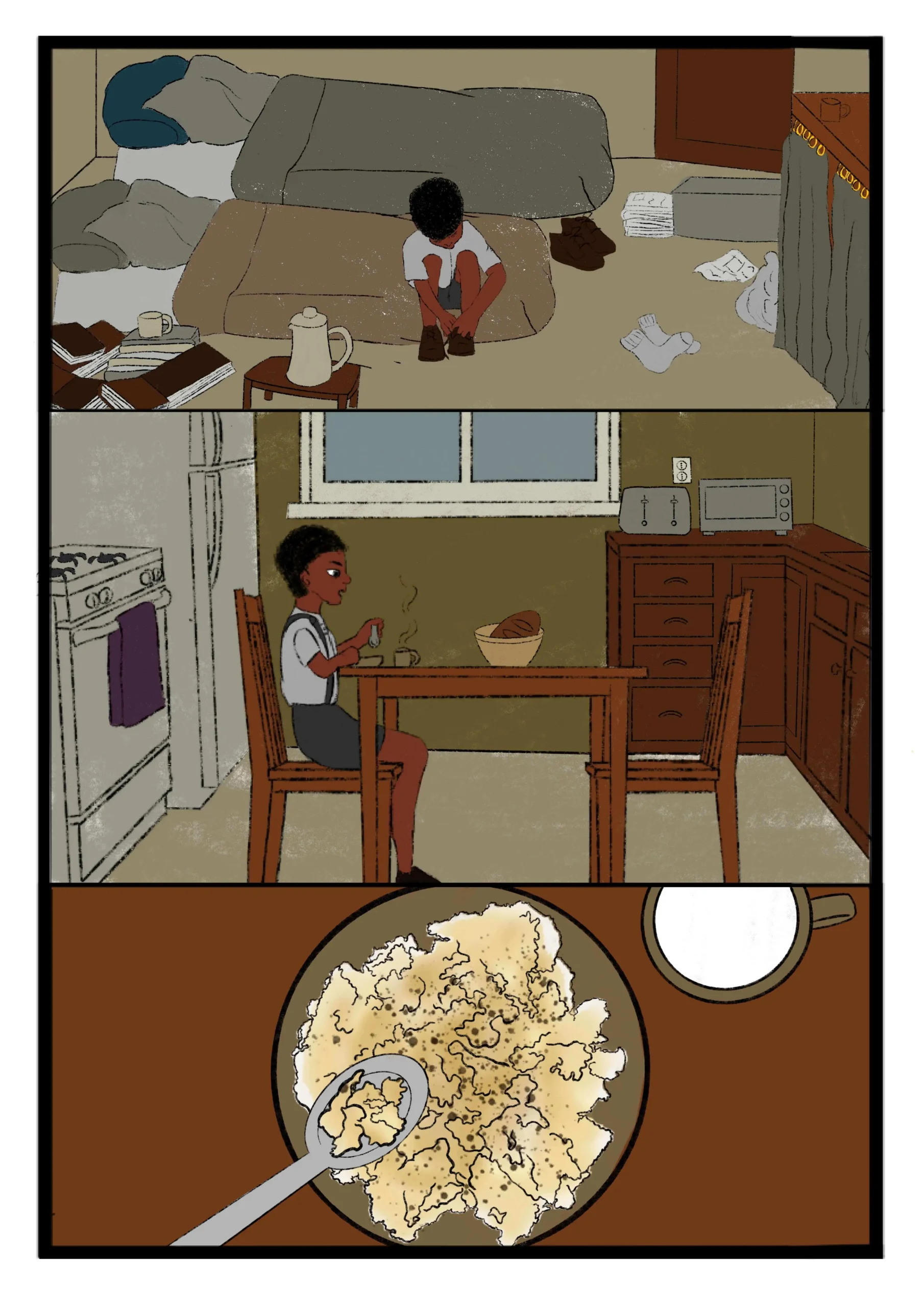
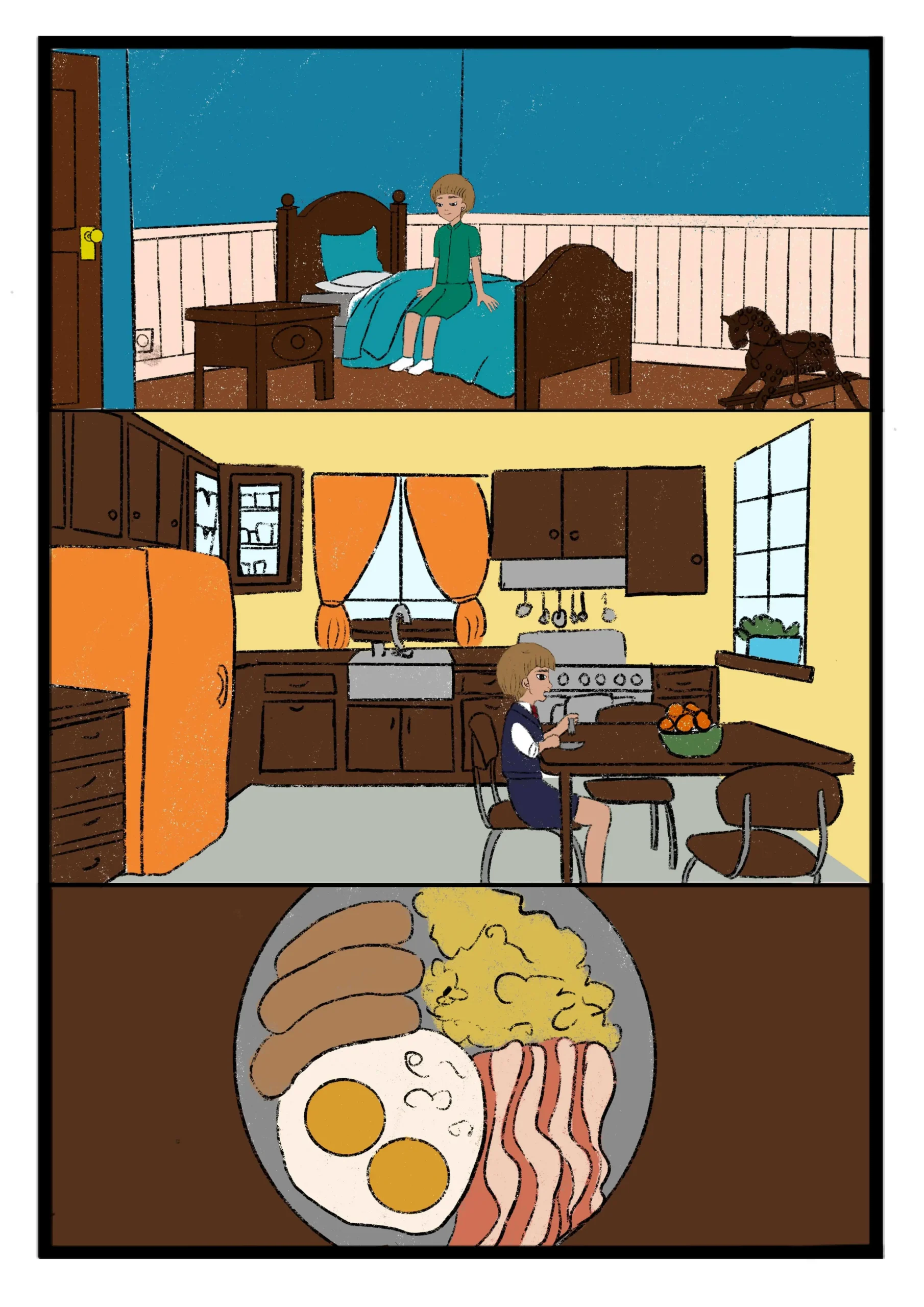
My project is about two children, one black and one white, living parallel lives during apartheid era. By placing these two children side by side, I wanted to show how apartheid was not only a political system, but something that shaped everyday life – where you lived, what education you received, how safe you were, and what future was possible.
Despite living during the same time and in the same land, their lives are entirely different. One is privileged, while the other is not. It shows the difference in their lifestyles, their perspective and an understanding of their surroundings and lifestyle shaped by their experiences.
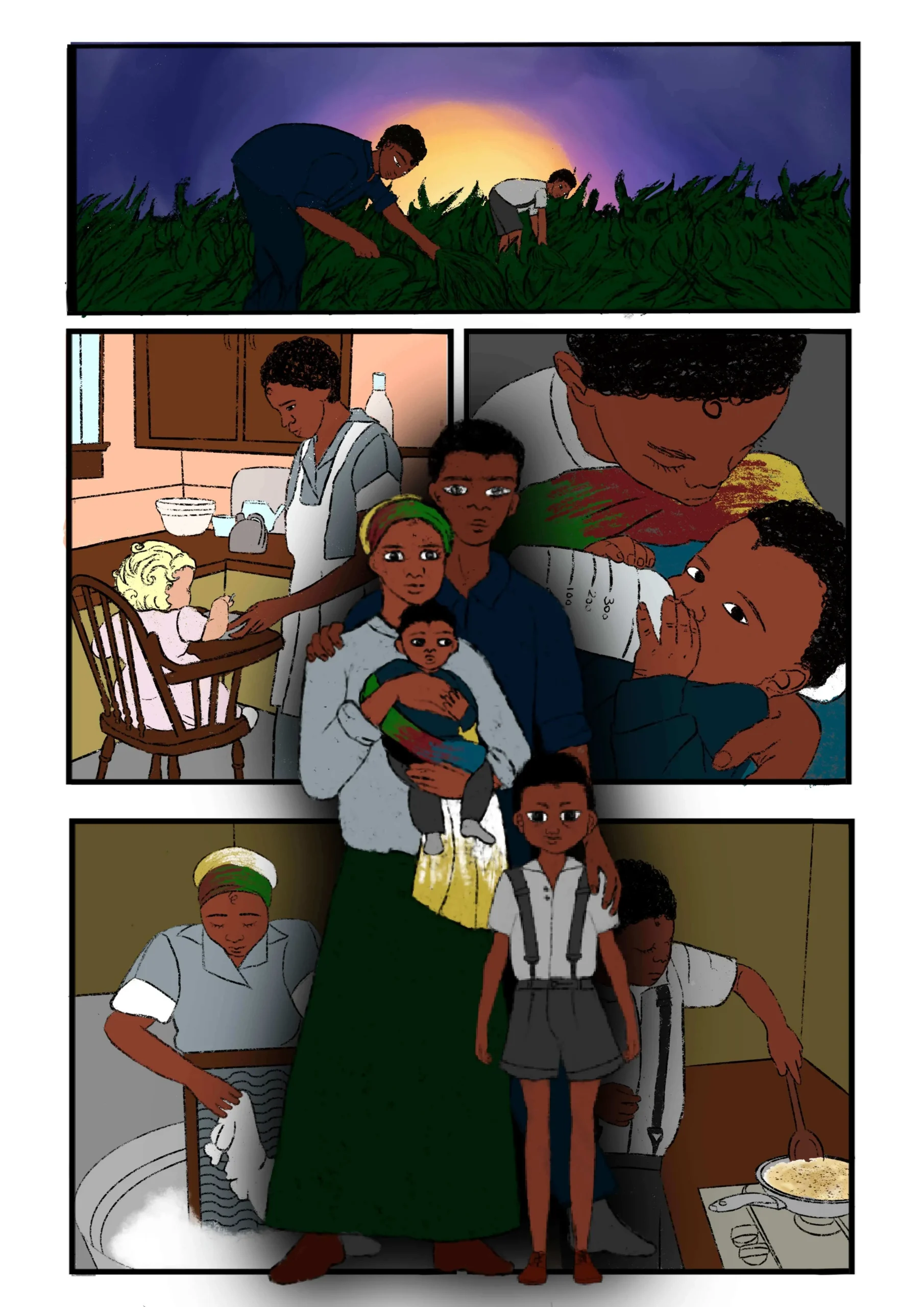
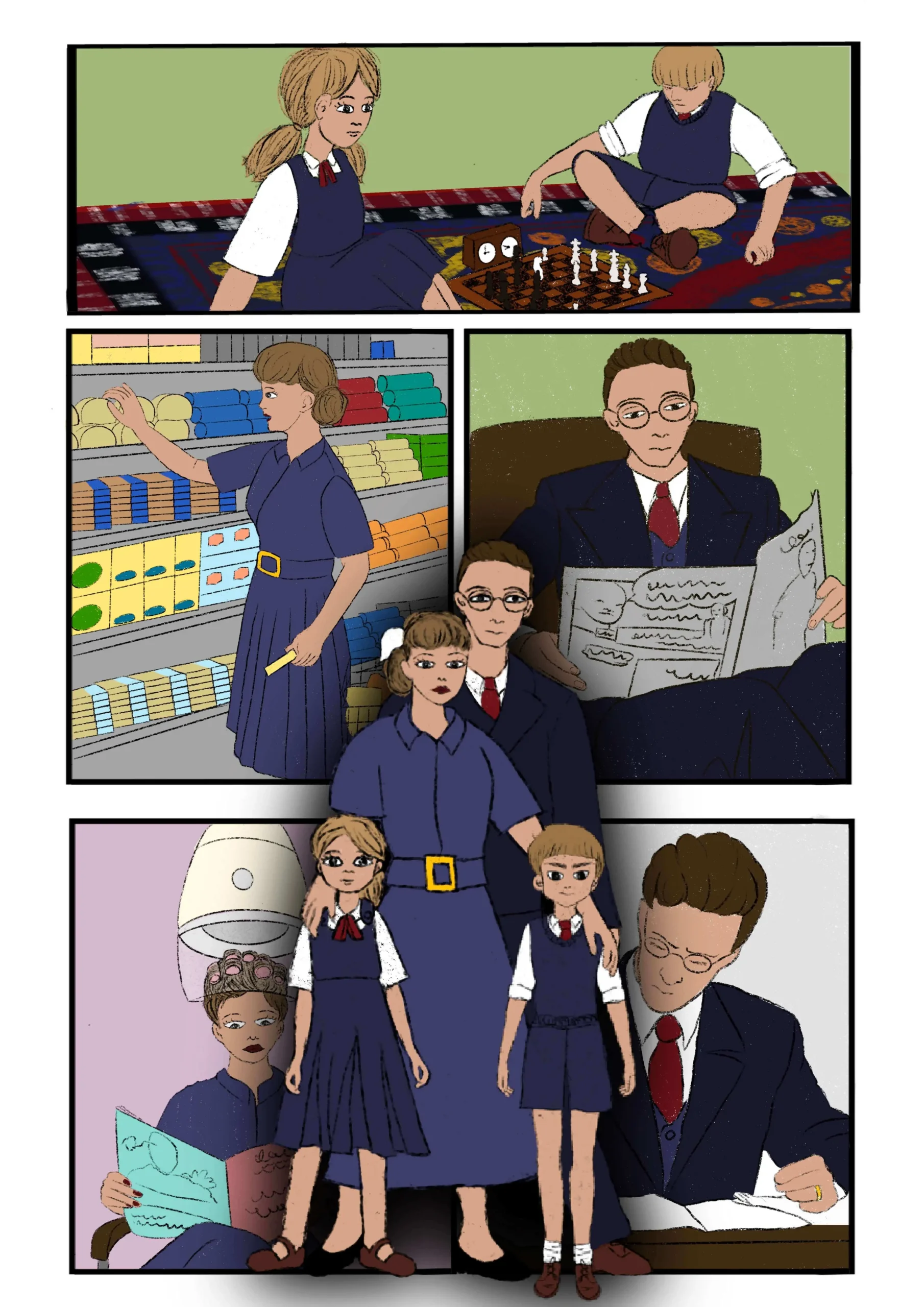
Pages 3 and 4, shown above, are intended to give an insight into the differences between the family set-ups of the two children who carry the narrative in the graphic novel.
My initial process began with gathering historical information about Apartheid and the Soweto Uprising and working up a storyboard to guide me along. The storyboards aided creating visual elements and ordering of the narrative for the graphic novel.
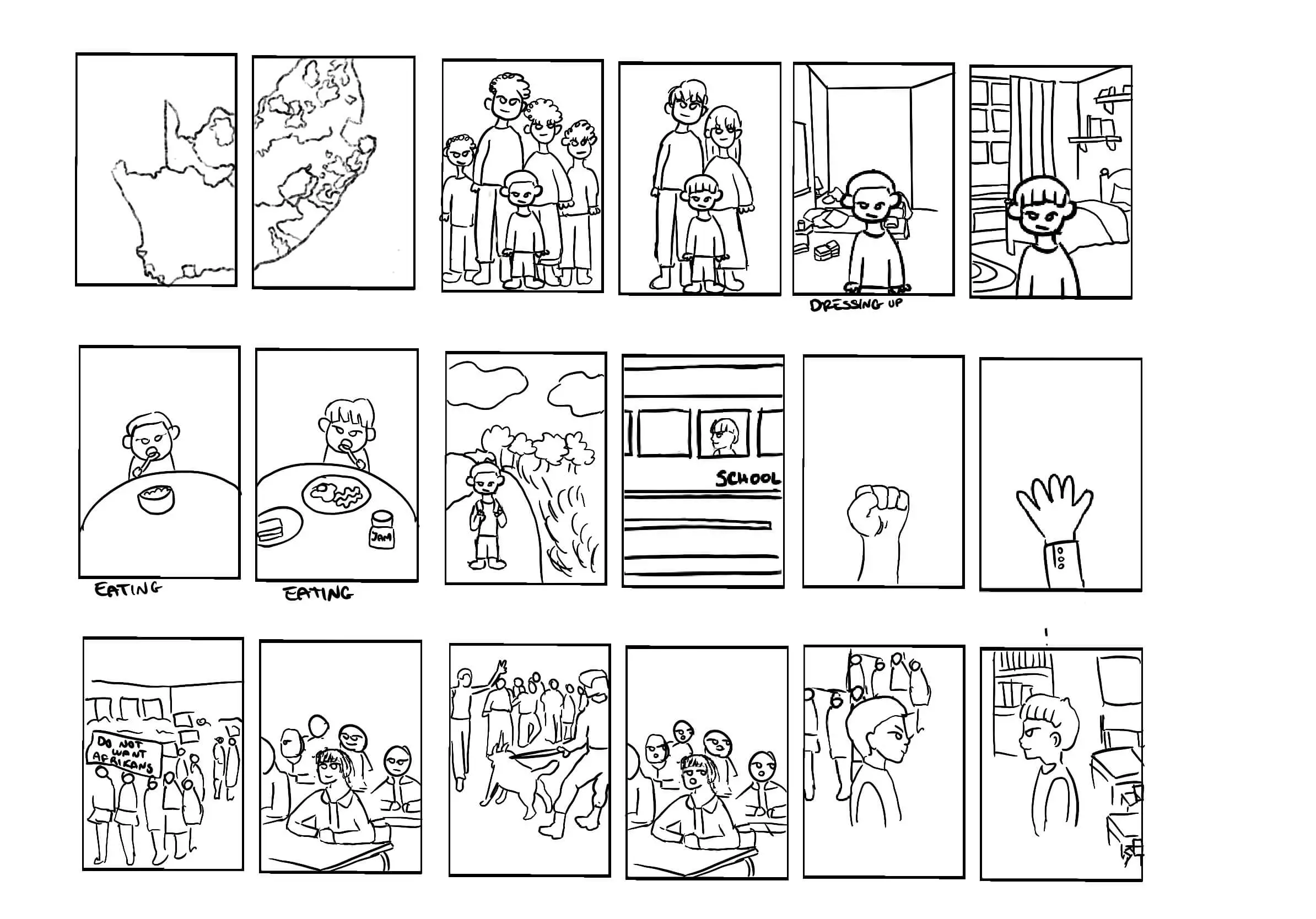
Initial storyboard for the graphic novel – there were changes to the story panels as you can see from the final output.
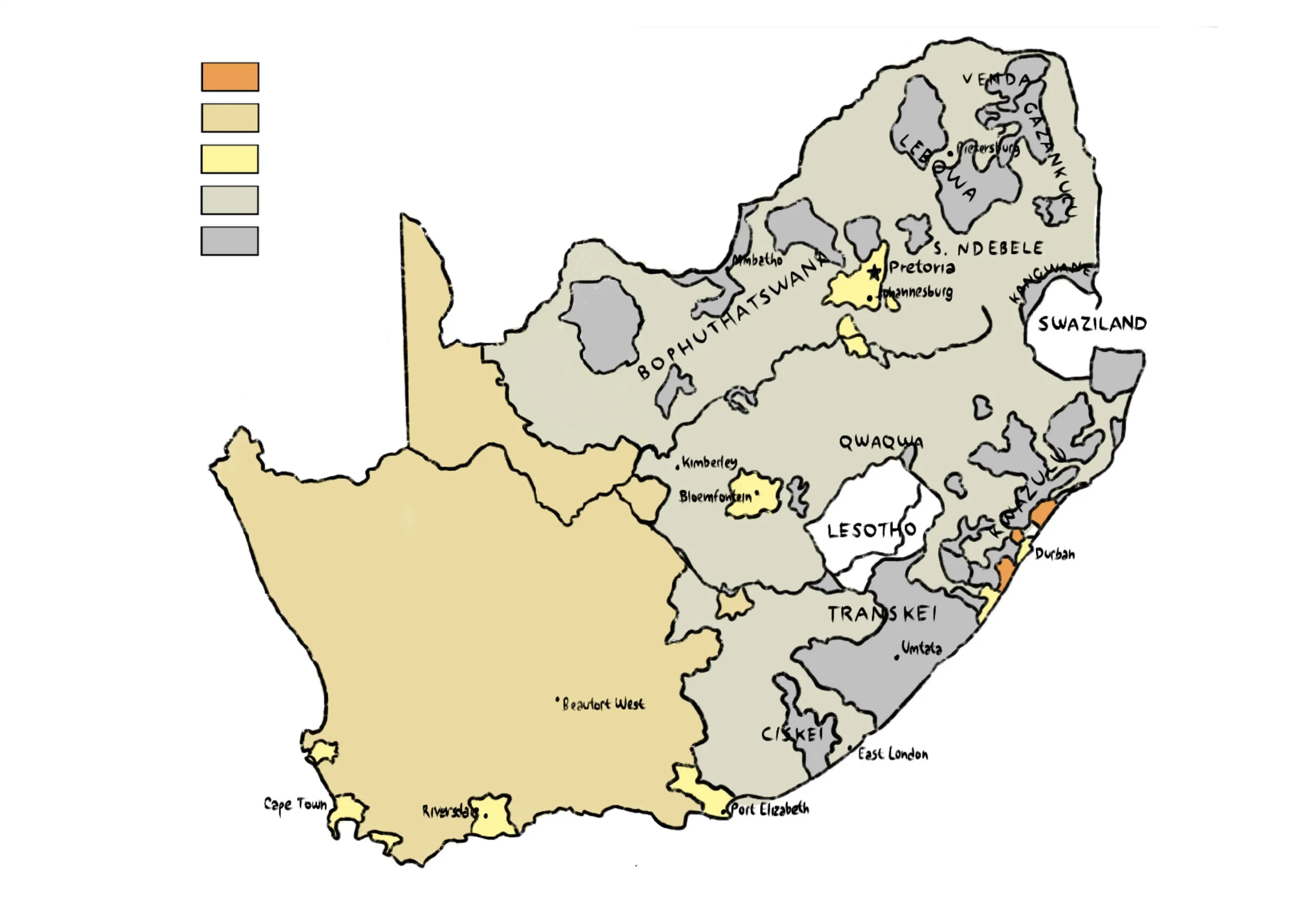
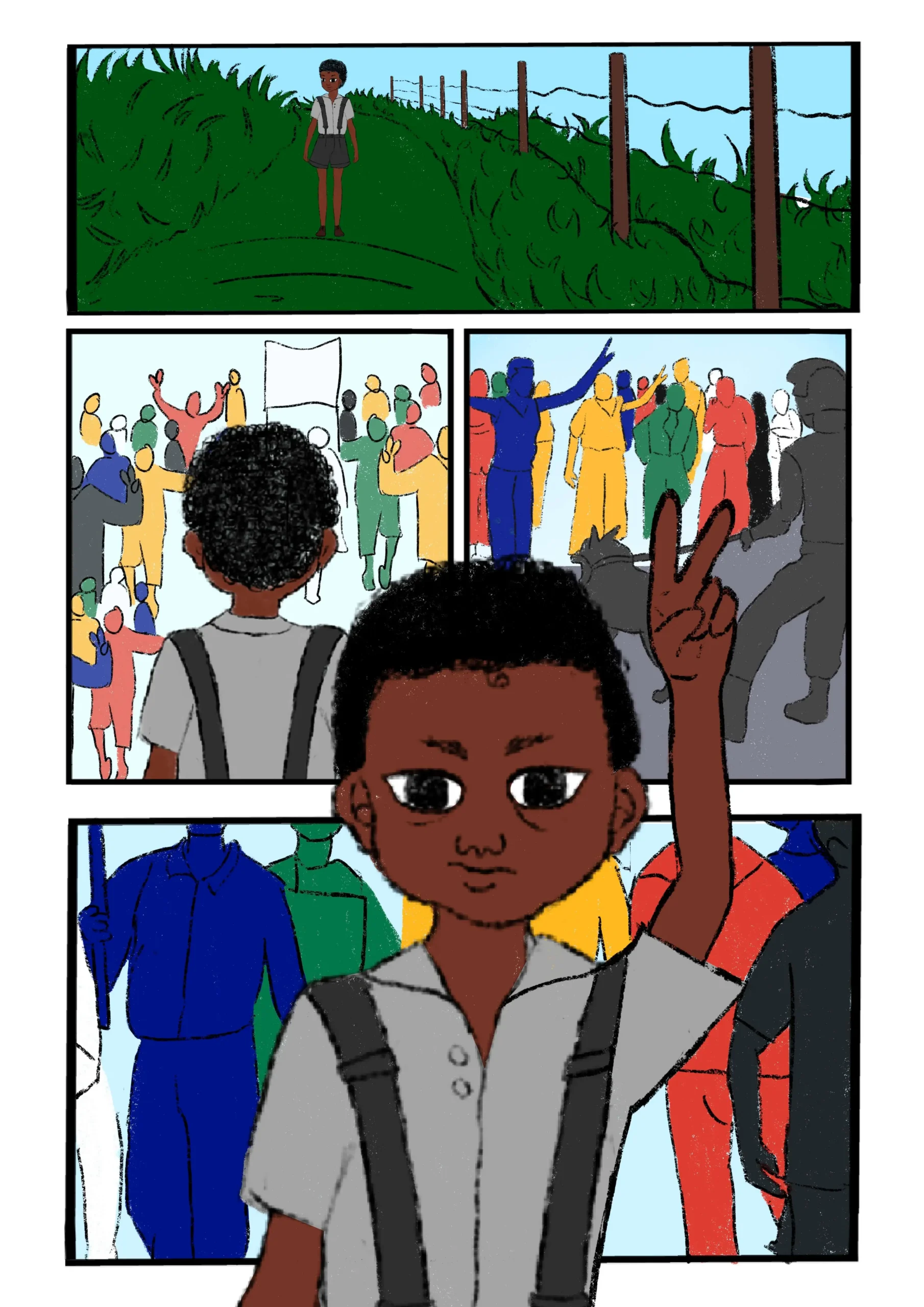
The story boards outcome content began with the first two pages of the south Africa map from the apartheid era to give context. The other pages explore the daily lives of each family, their school journeys and the Soweto protest. One of the children is participating in this whilst the other is not.
I then made modifications using Indesign, adding text and preparing it, ready to be printed in A4 Landscape, folded and stapled.
I then raised questions about the visual components, starting with:
How would children in South Africa in the 70 be styled?
I then gathered historical pictures – using archival photographs as visual references helped me think about authenticity in clothing, environment and gesture, making the story feel connected to its historical context.
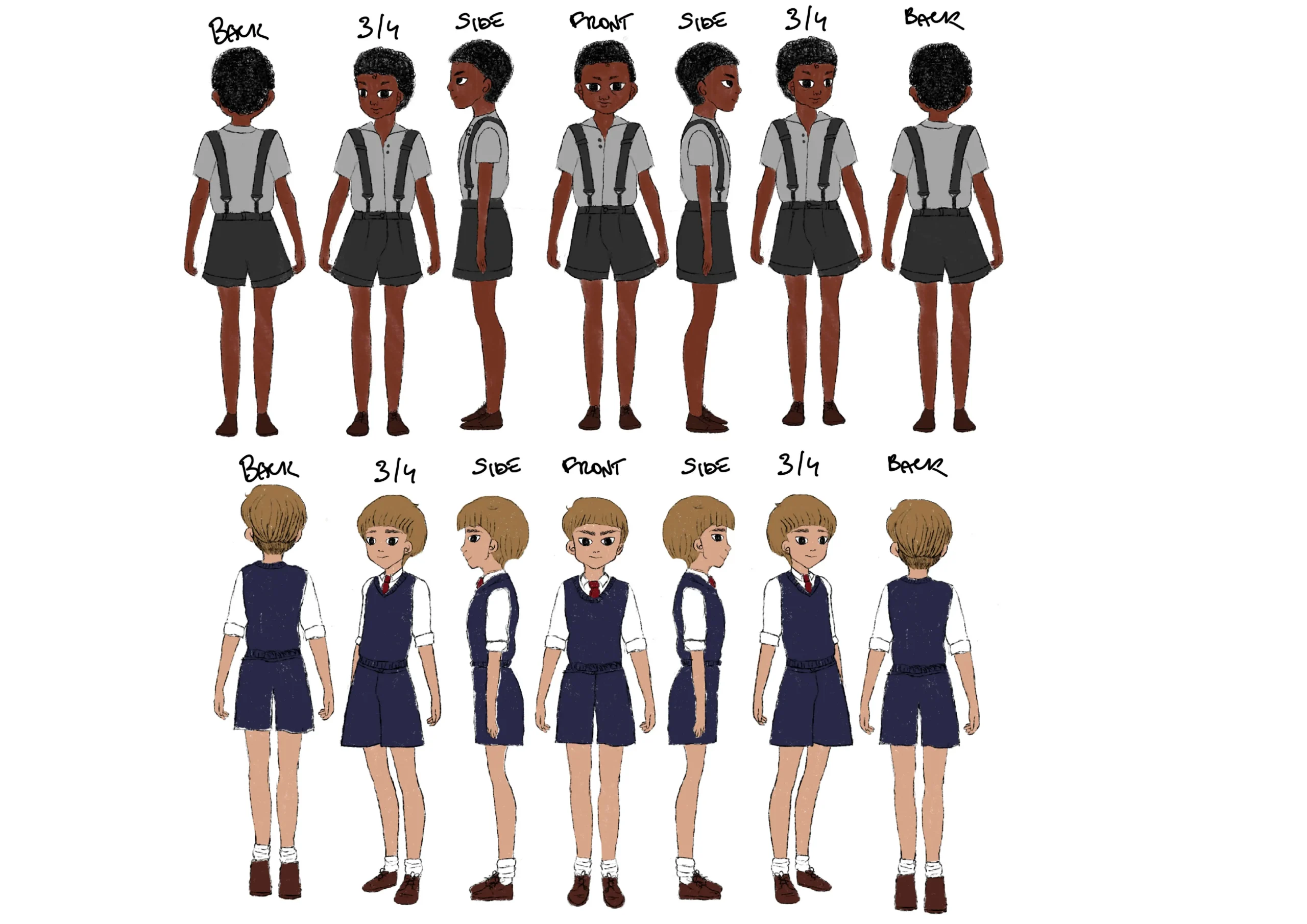
The story boards outcome content began with the first two pages of the south Africa map from the apartheid era to give context. The other pages explore the daily lives of each family, their school journeys and the Soweto protest. One of the children is participating in this whilst the other is not.
I then made modifications using Indesign, adding text and preparing it, ready to be printed in A4 Landscape, folded and stapled.
“Dreams in the Shadow of Soweto”
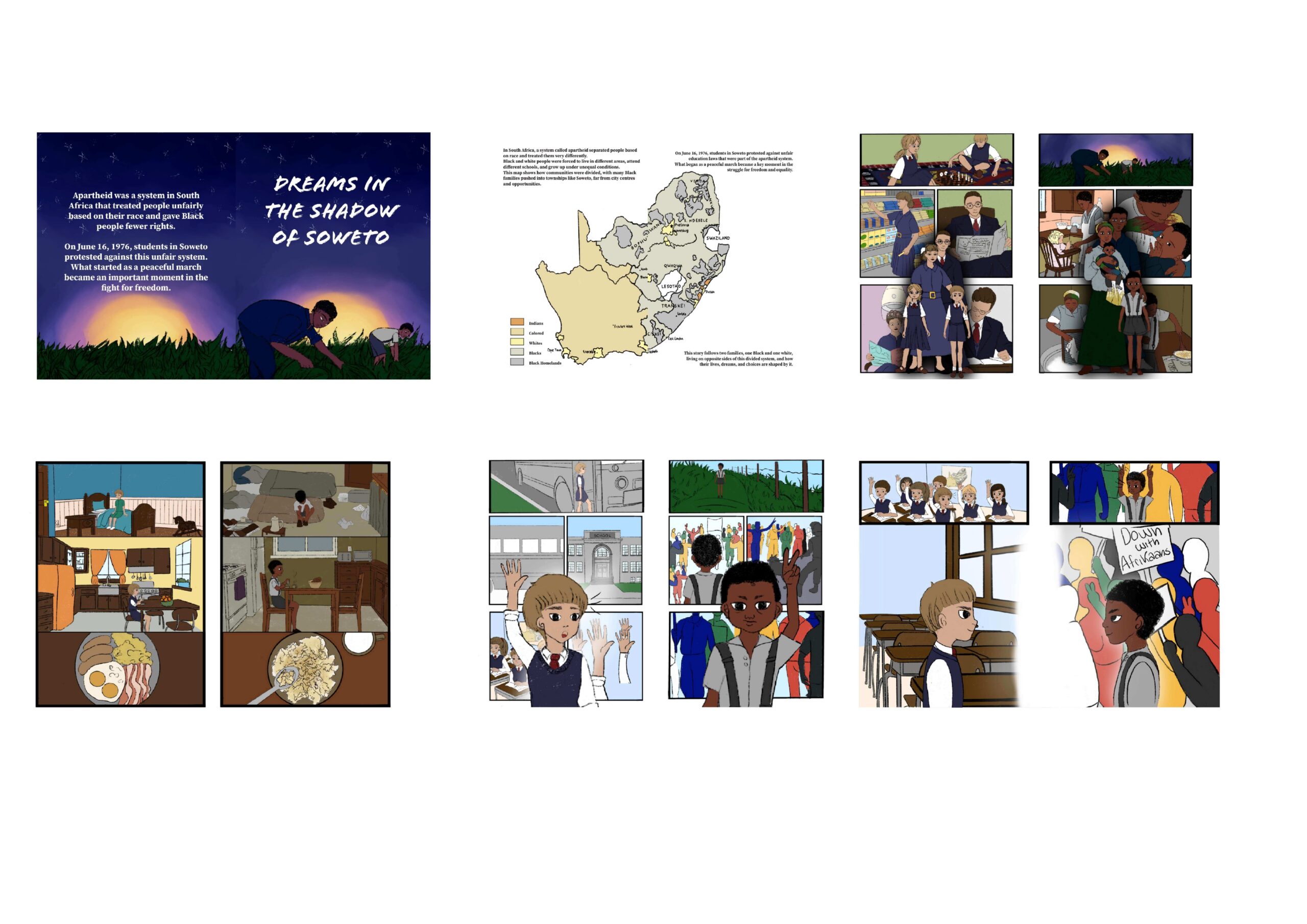
Layout showing all of the pages of the graphic novel.
My aim was to create an emotional connection between the audience and the lived realities of apartheid, encouraging people to understand the human impact behind the history.
I wanted to represent the life of people that were made invisible by the apartheid regime, including showing the contrast of how white and black families lived during this segregation. I wanted to foreground histories and experiences that are often overlooked, especially the voices of young people whose resistance shaped history.
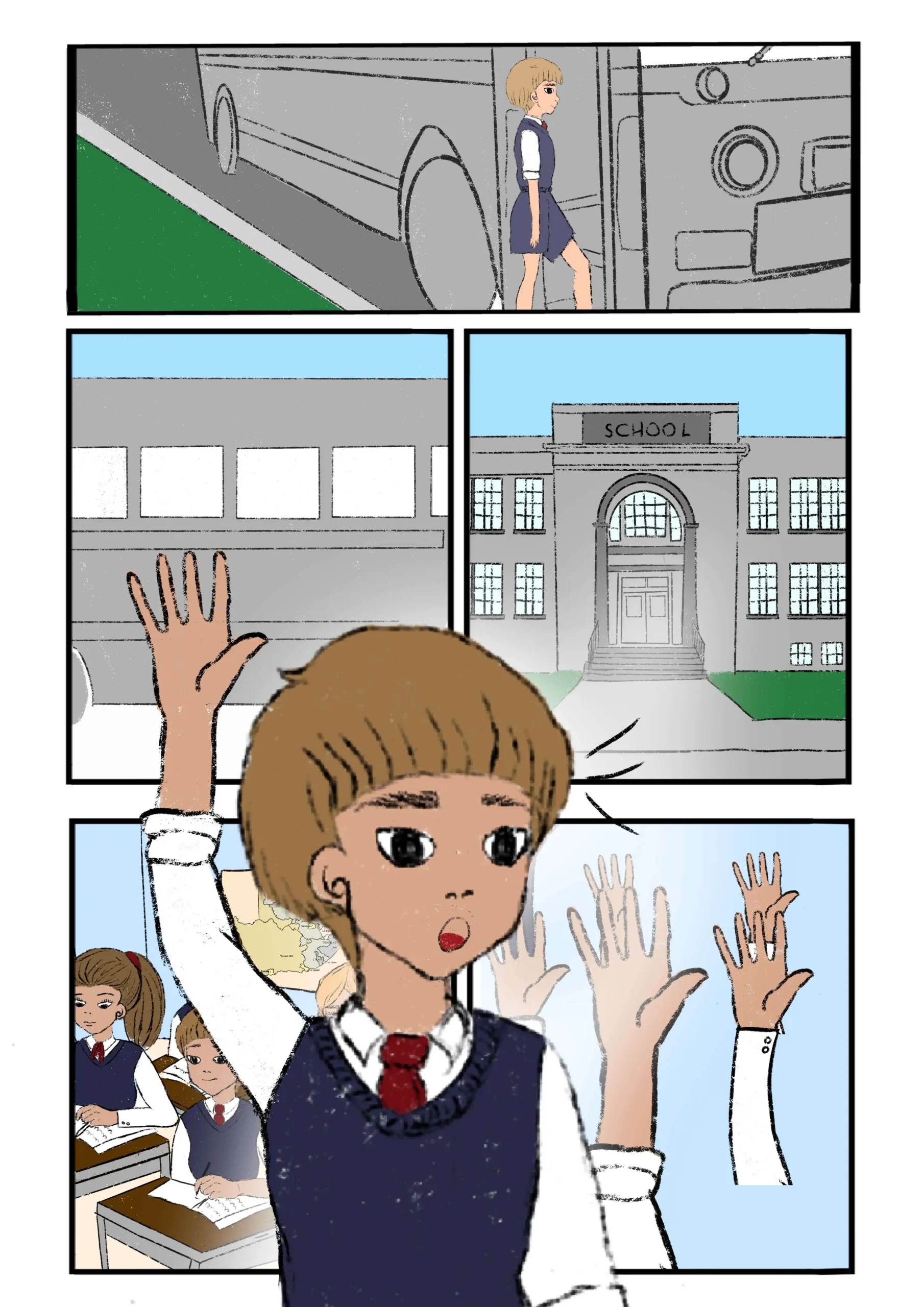
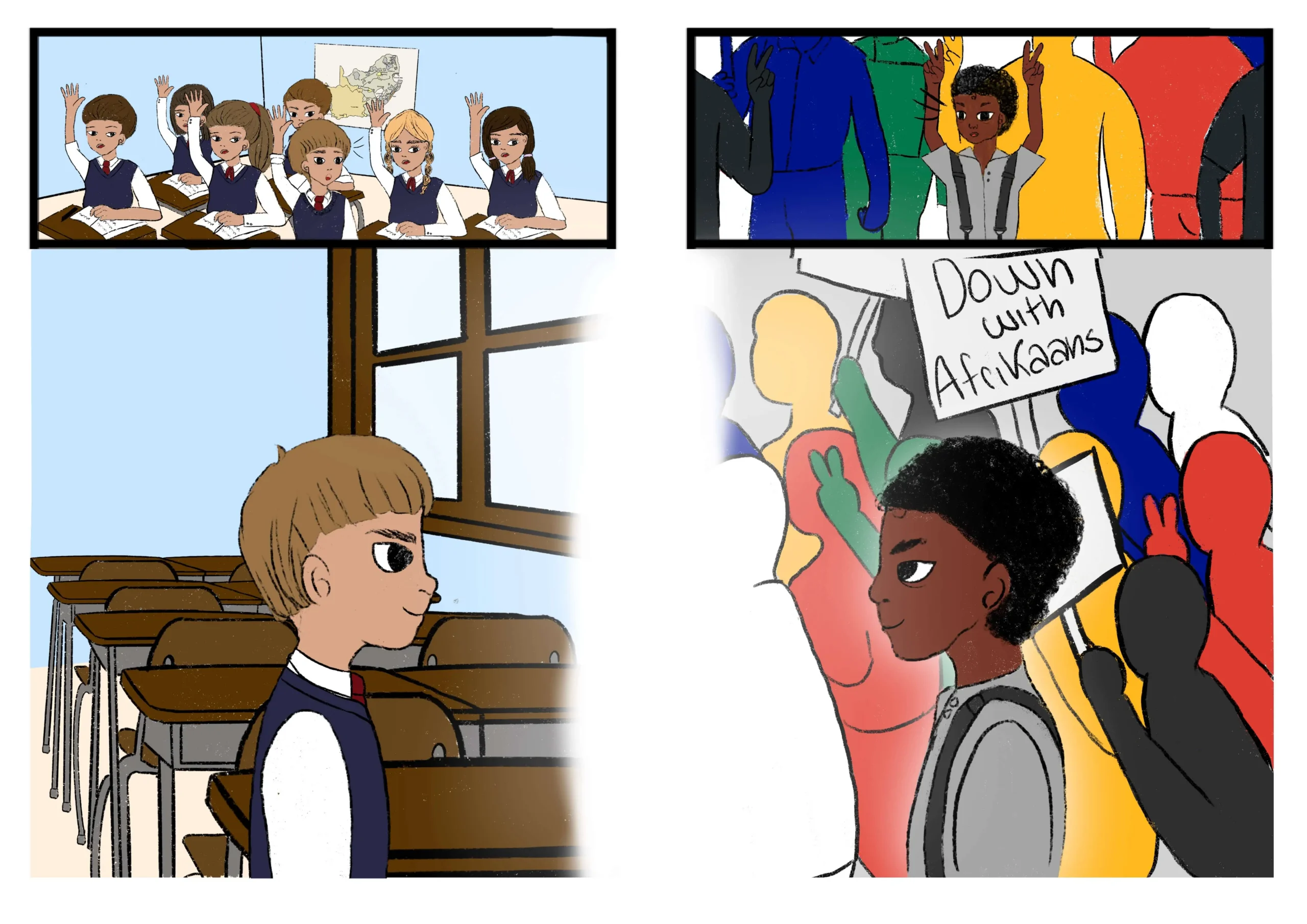
I want the audience to consider how history continues to shape the present and to appreciate the value of dignity, freedom, and social justice. Through this project, I hope audiences reflect on how systems of inequality continue to shape people’s lives today. The Soweto Uprising shows the power of youth voices, and reminds us that young people have always played a vital role in challenging injustice.
Blog written by Sofia, Illustration & Animation Level 5, London Metropolitan University, June 2026
Instagram: @srtsukii