

Soweto Uprising: Then. Now. Next.
A Paper Cut Stop-Motion Animation
By Rosie Boe

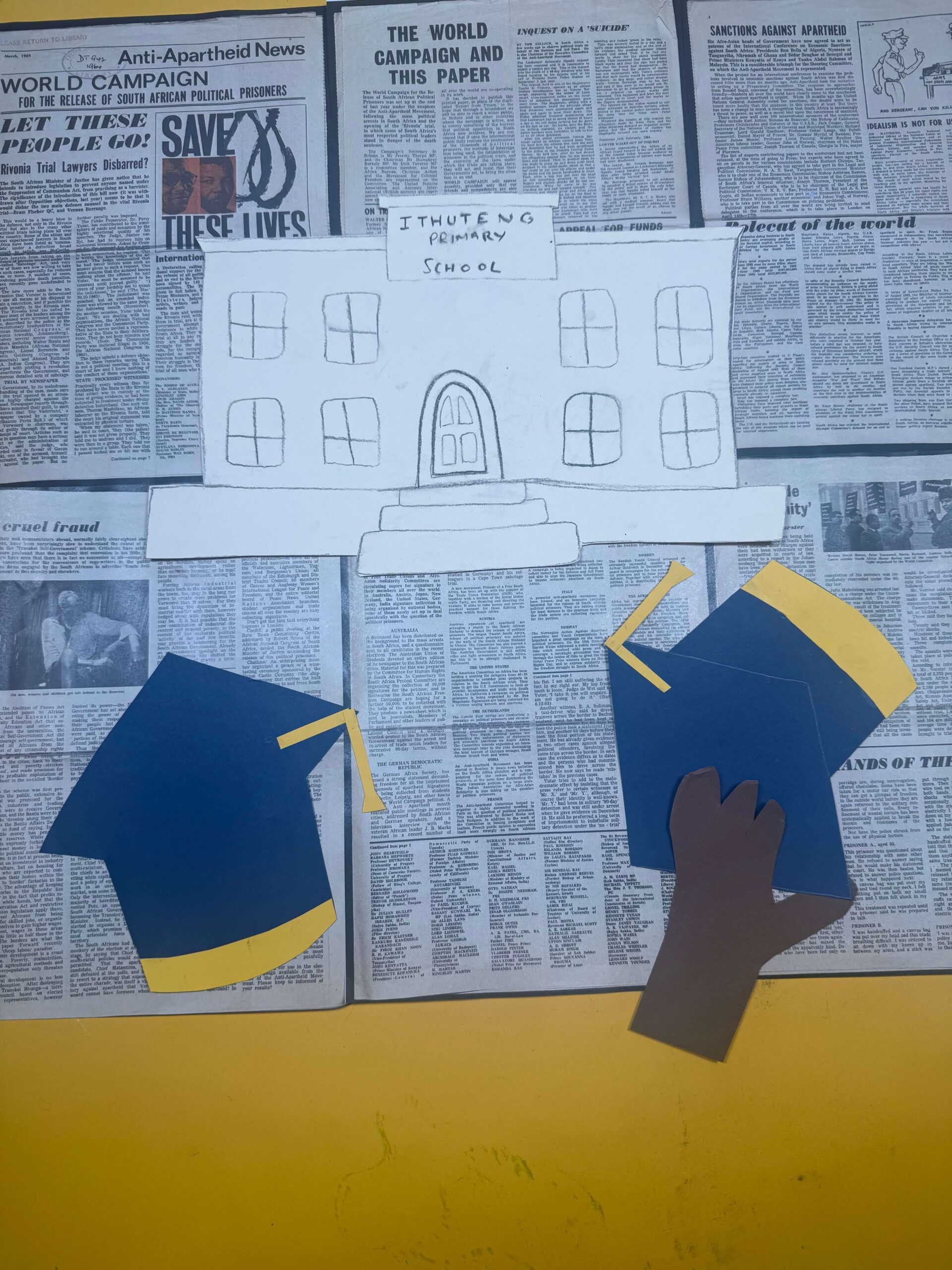
A still from my animation, using archival materials as a thematic background and with illustrations based on signs that the students created in 1976.
The story of the Soweto uprising is one that deserves to be told again and again. It was a movement led by young people who used their voices to challenge injustice, despite the risks they faced. I chose to tell their story through stop-motion animation because this medium can communicate the emotion and importance of these historical events in a way that is accessible for the youth of today.
The ‘Soweto Uprising’ was a series of protests that occurred across the country when thousands of black school children in South Africa refused to be silenced. One in particular, on 16th June 1976 that took place in Soweto, has given its name to the nationwide response by students. They were protesting about learning Afrikaans (labelled the language of the oppressor) in school. This short film is not just about the events of the past, it is about the future and what these events mean for the next generation.

A still from my animation, the steps taken by the students leave lasting imprints today…
I intend this stop-motion animation to encourage audiences to reflect on what those events can teach us today. The courage shown by the students of Soweto demonstrates how young people can influence society and stand up for what they believe in. I wanted viewers to reflect on how issues of equality, education and justice remain relevant, and to consider how they might use their own voices to create positive change.
It is designed for children aged 11-16 years old, is hand-made using analogue techniques and carries a message of hope.
Storyboard: Planning the Animation
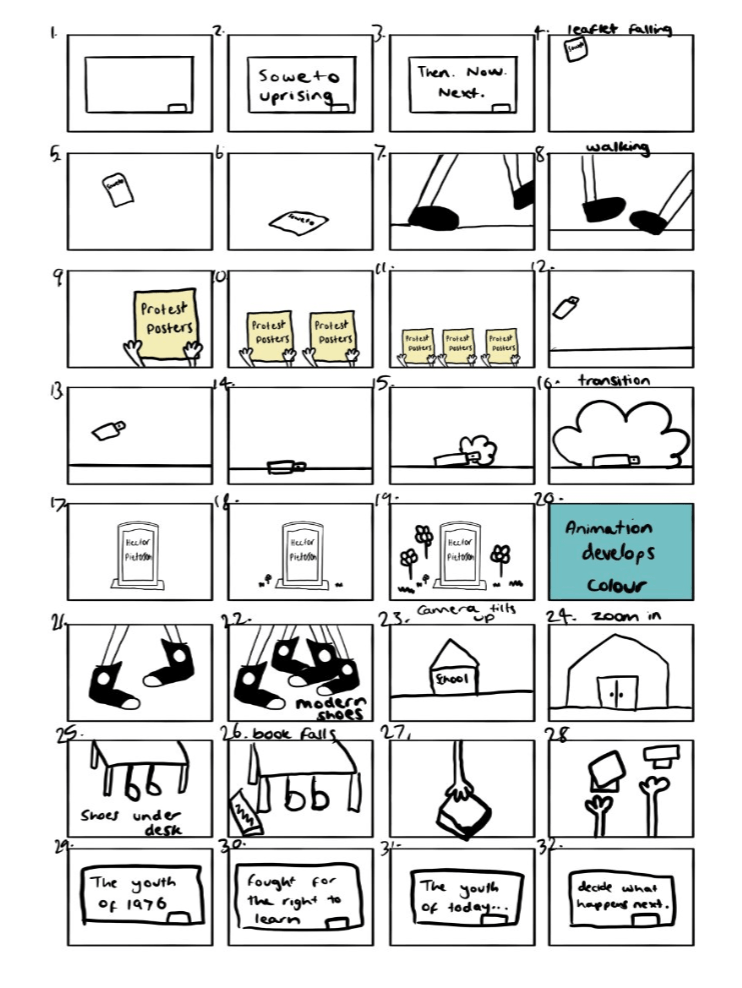
A sequence of quick sketches that map out each scene. It helped me to understand how I would show the three stages of my animation; then, now and next.
Paper Cut-Out Animation
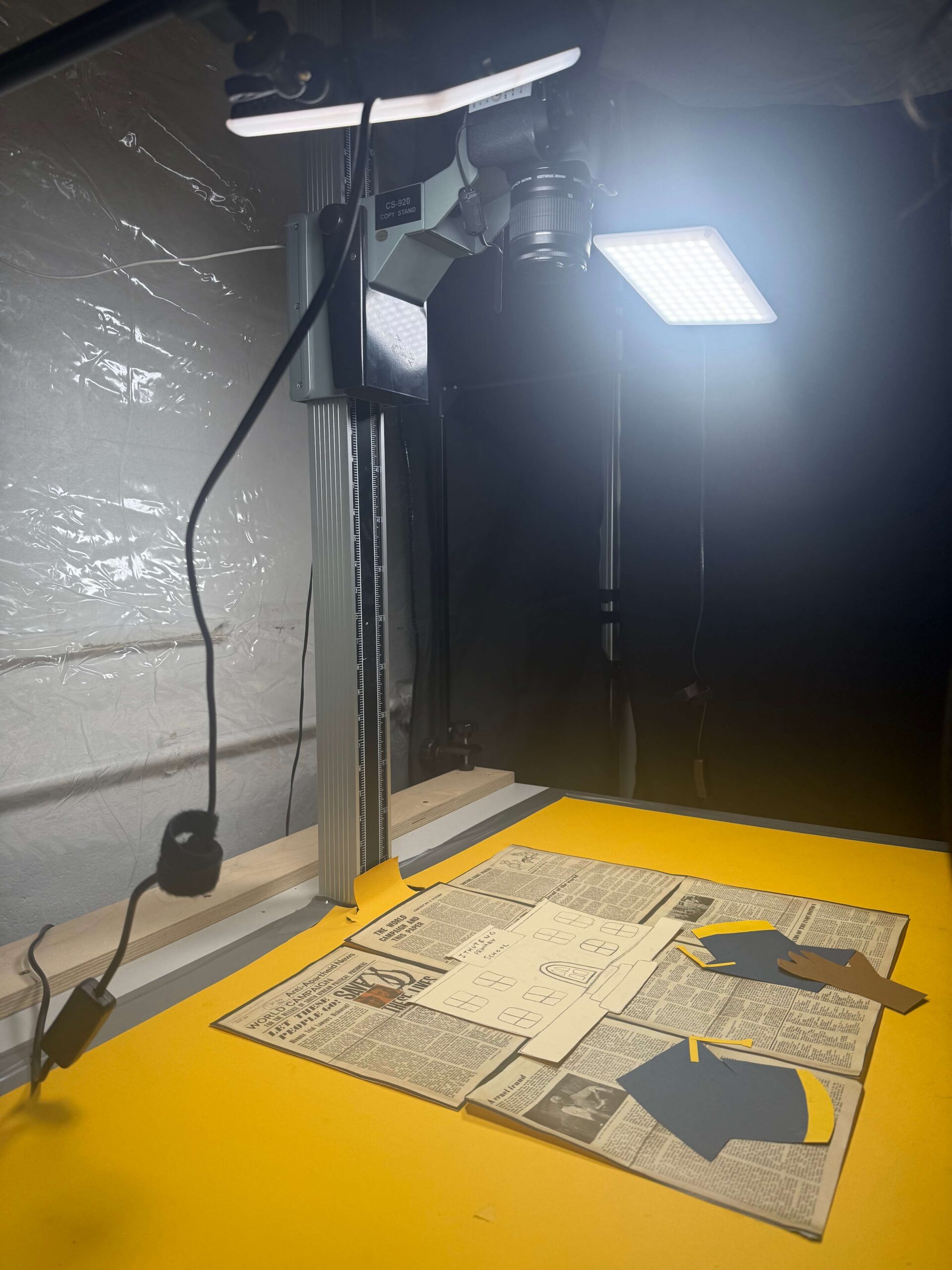
This animation was created by hand using paper, card, chalk, felt and then edited using digital techniques. I used reproductions of archival materials (images of newspapers from London Met’s Special Collections that contain anti-apartheid related materials) to create the background for some of the frames as a fitting theme.The stop-motion program I used to take the photos is called Dragonframe.
Creating the Paper Cut-Out Animation
This technique allowed me to convey a complicated story using simple materials which reflects the history of the movement. I animated, edited and added all the sound myself. I chose to work with handmade materials because it allowed me to break down a complex historical event into something visually clear, engaging and accessible to children.
My Paper Cut Stop Motion Animation
The paper-cut style reflects how the movement used fundamental materials, such as paper and a pen as powerful symbols and tools of social change. The frame by frame process allows for me as an artist, to sharply focus on how each moment of the story should be represented.
Through researching the movement and creating the film, I developed a deeper understanding of the experiences of the students involved in the uprising and the events of Soweto should not be forgotten. Their legacy can teach the youth of today that protest can be a catalyst for change.
Blog written by Rosie Boe, Illustration & Animaton Level 5, London Metropolitan University, June 2026
Instagram: @Rosie.illustrates_